How to Identify aBroad-tailed Hummingbird
Selasphorus platycercus · 3.1–3.5 in (8–9 cm)
Male vs. female
Male
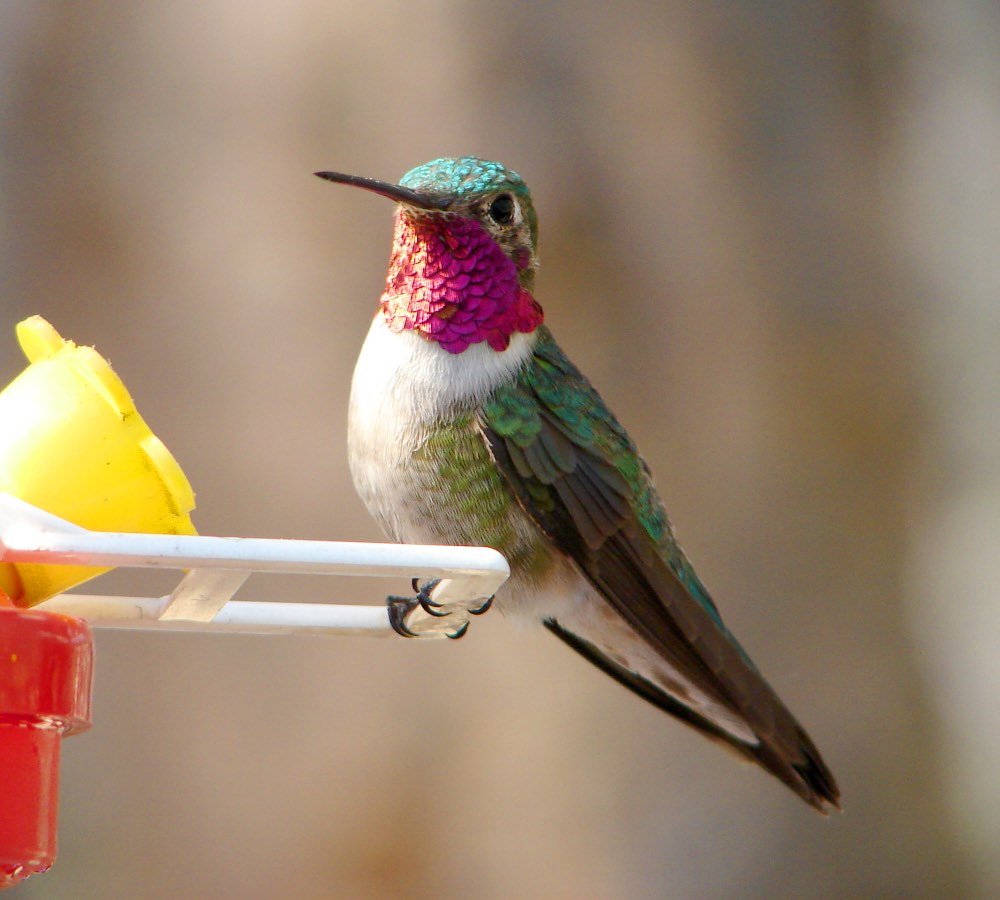
Bright metallic green above with a rose-magenta throat and a white chest.
Female
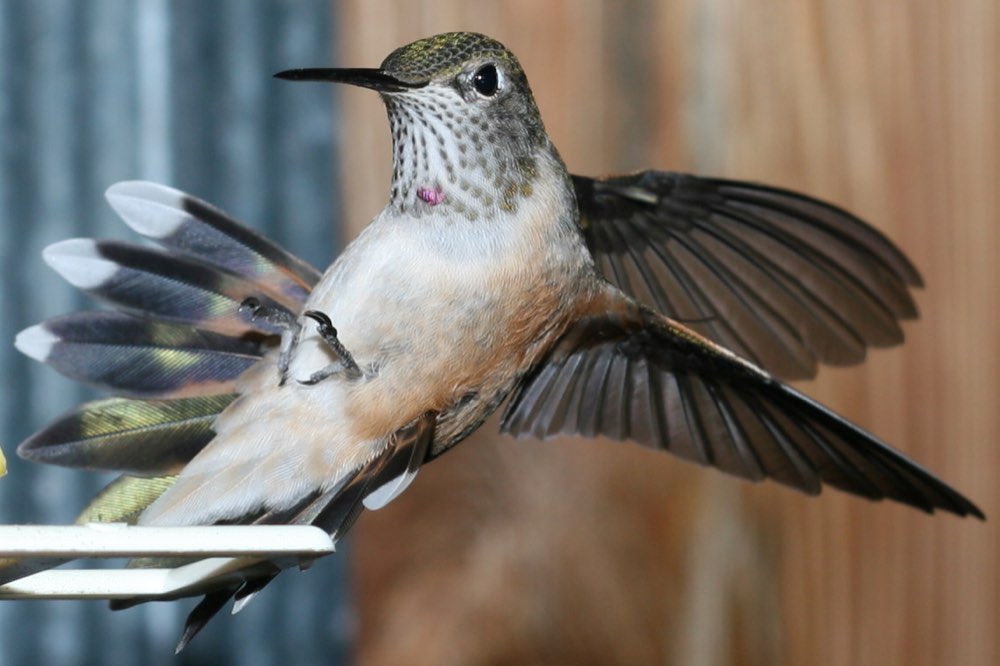
Green above with buffy, lightly speckled flanks and a plain throat with fine dark spotting.
Male photo: Michelle Lynn Reynolds / Wikimedia, CC BY-SA 3.0 · Female photo: Danorton / Wikimedia, CC BY-SA 3.0
Field marks
- Loud cricket-like trill made by the wings in flight
- Rose-magenta gorget on the male
- Green back with a white chest band
- Buffy flanks on the female
Similar species
What it sounds like
A sharp "chip", but the loud metallic wing trill of the flying male is the real identifier.
Behaviour that gives it away
Slows its heart rate and drops into torpor on cold mountain nights, letting it nest at elevations other hummingbirds cannot use.
Habitat & range
Mountain meadows, pine-oak woodland and gardens across the Rockies and Great Basin.
When you'll see it
A summer visitor that arrives to breed in western and southwestern North America.
What it eats
Nectar, small insects and sugar water.
Did you know?
It enters torpor overnight, dropping its heart rate and body temperature so far that it can survive freezing mountain nights.
Spot one yourself?
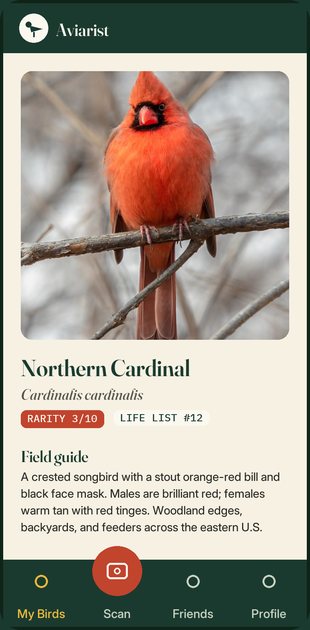
Point your camera at any bird and Aviarist identifies it in seconds — then logs it to your life list.
Get Aviarist on Google Play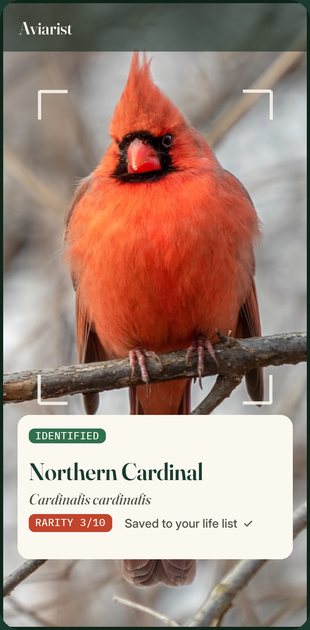
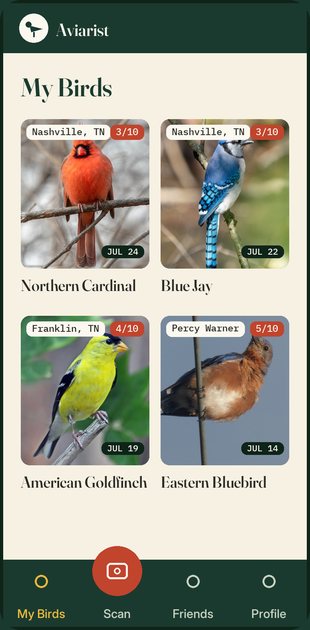
More backyard birds


Other apps we make