How to Identify aBarred Owl
Strix varia · 16–25 in (40–63 cm)
Male vs. female
Male
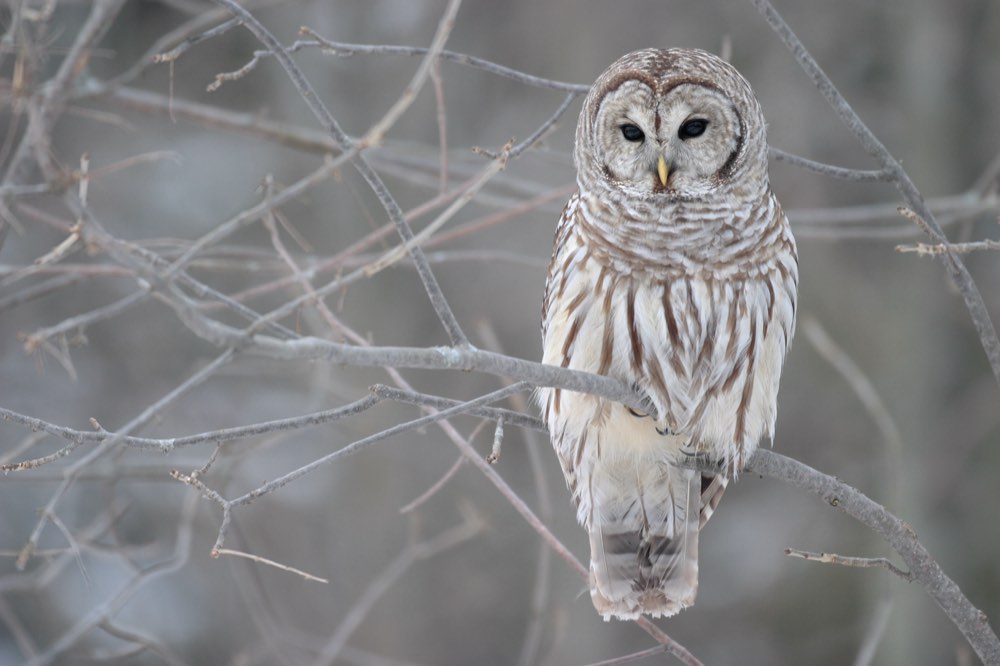
Mottled brown and white, with a barred upper chest, streaked belly, no ear tufts and deep brown-black eyes. Sexes look alike.
Female
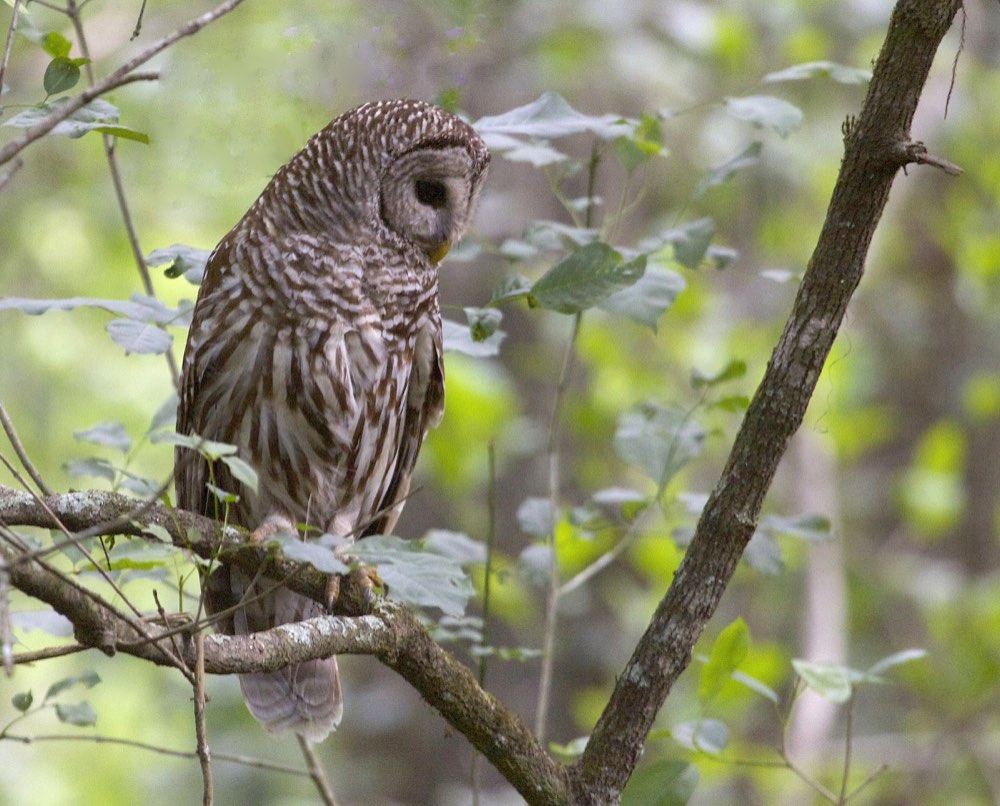
Identical in plumage but larger.
Male photo: Mdf / Wikimedia, CC BY-SA 3.0 · Second photo: Gregory "Slobirdr" Smith / Wikimedia, CC BY-SA 2.0
Field marks
- Dark brown-black eyes, unusual among North American owls
- Smoothly rounded head with no ear tufts
- Horizontal bars across the chest, vertical streaks on the belly
- Pale face with concentric rings
Similar species
What it sounds like
A rhythmic, carrying hoot commonly rendered "who cooks for you, who cooks for you-all", plus wild caterwauling duets.
Behaviour that gives it away
Calls readily in daylight, especially on overcast days, and will answer an imitation of its hoot — the easiest large owl to find by voice.
Habitat & range
Mature and swampy forest across the eastern United States and Canada, now spreading through the Pacific Northwest.
When you'll see it
Present all year in North America.
What it eats
Small mammals, birds, amphibians, reptiles and crayfish.
Did you know?
Its westward spread into old-growth forest has brought it into direct competition with the threatened Spotted Owl.
Spot one yourself?
Point your camera at any bird and Aviarist identifies it in seconds — then logs it to your life list.
Get Aviarist on Google Play
More backyard birds


_(9732594639).jpg)
Other apps we make