How to Identify aWestern Bluebird
Sialia mexicana · 6.3–7.5 in (16–19 cm)
Male vs. female
Male
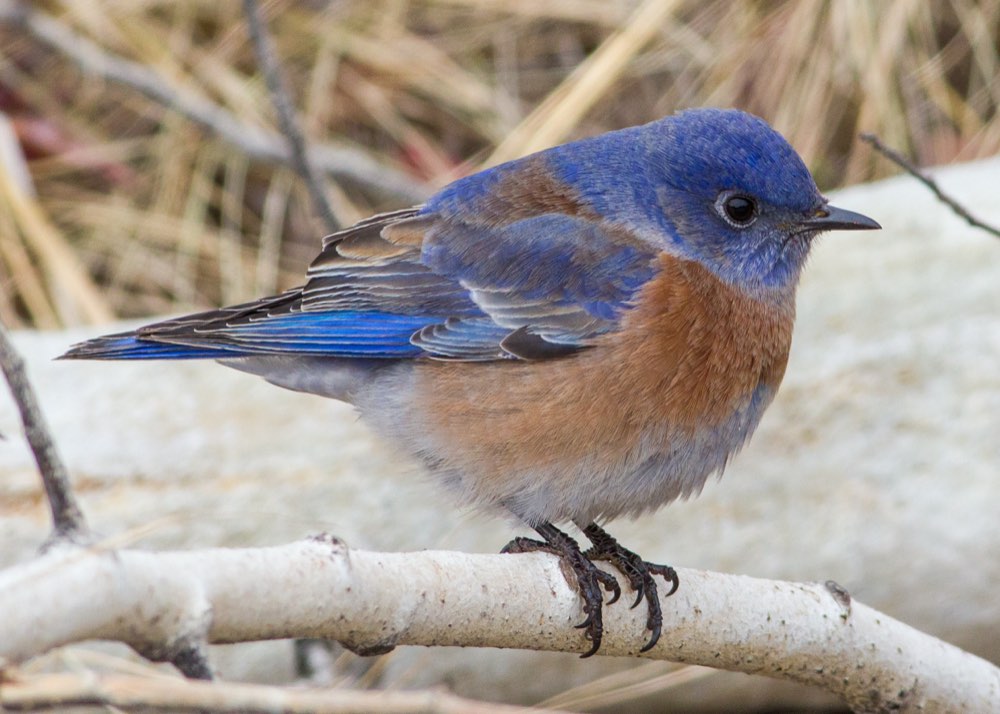
Deep blue head, throat, wings and tail with a rusty-orange breast and shoulder patch and a gray belly.
Female
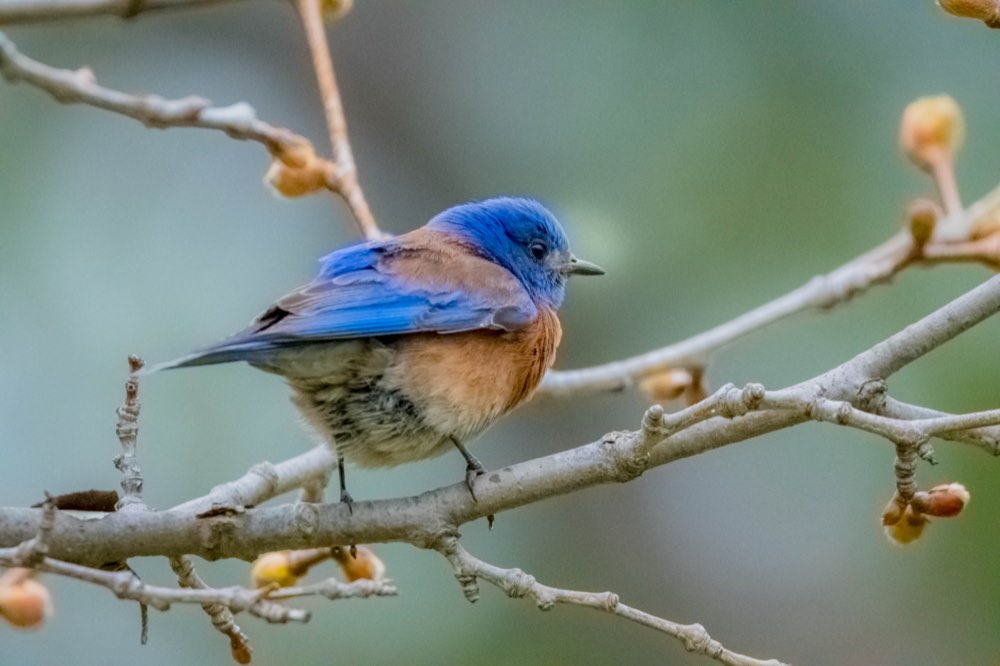
Gray-brown with soft blue tinges in the wings and tail and a pale orange wash on the breast.
Male photo: Blalonde / Wikimedia, CC BY-SA 4.0 · Second photo: Pranav Tadepalli / Wikimedia, CC BY-SA 4.0
Field marks
- Blue throat on the male, not orange
- Rusty patch extending onto the upper back and shoulders
- Gray belly rather than white
- Upright perching posture, dropping to the ground for insects
Similar species
What it sounds like
A soft, mellow "few" call repeated quietly, and a short subdued warbling song.
Behaviour that gives it away
Hunts by perching low and dropping onto insects on the ground, and readily takes to nest boxes along fence lines.
Habitat & range
Open oak and pine woodland, burned forest, farmland edges and parks across the western states.
When you'll see it
Present all year in western and southwestern North America.
What it eats
Insects taken from the ground, plus berries and mistletoe fruit in winter.
Did you know?
It nests readily in boxes, and bluebird trails set up along western fence lines have measurably increased local populations.
Spot one yourself?
Point your camera at any bird and Aviarist identifies it in seconds — then logs it to your life list.
Get Aviarist on Google Play
More backyard birds
.jpg)

Other apps we make