How to Identify aCommon Merganser
Mergus merganser · 21.3–27.9 in (54–71 cm)
Male vs. female
Male
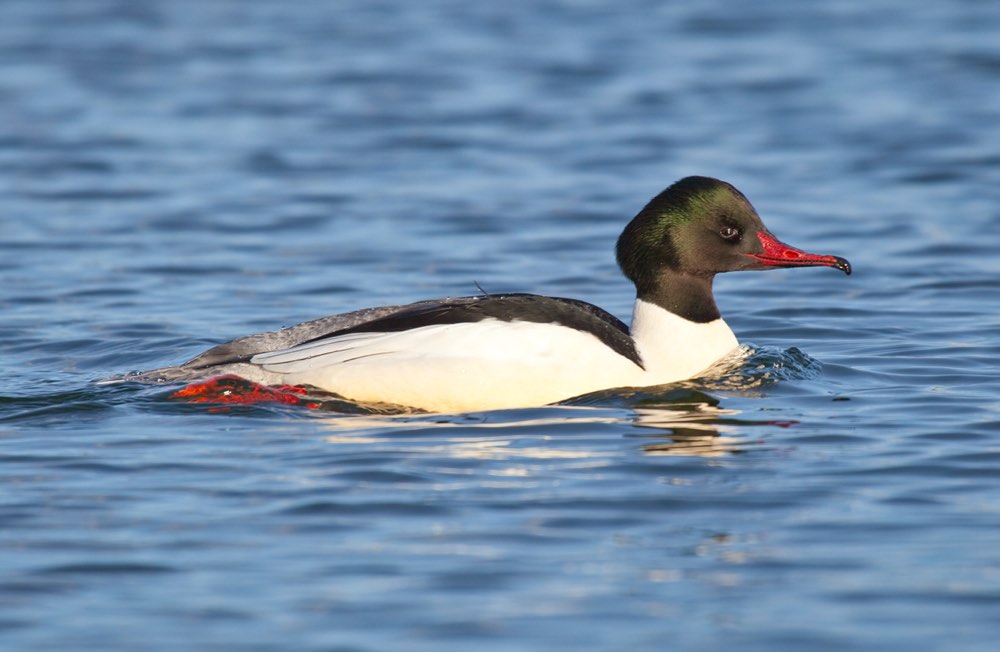
Clean white body with a glossy dark-green head, black back and a slender red bill.
Female
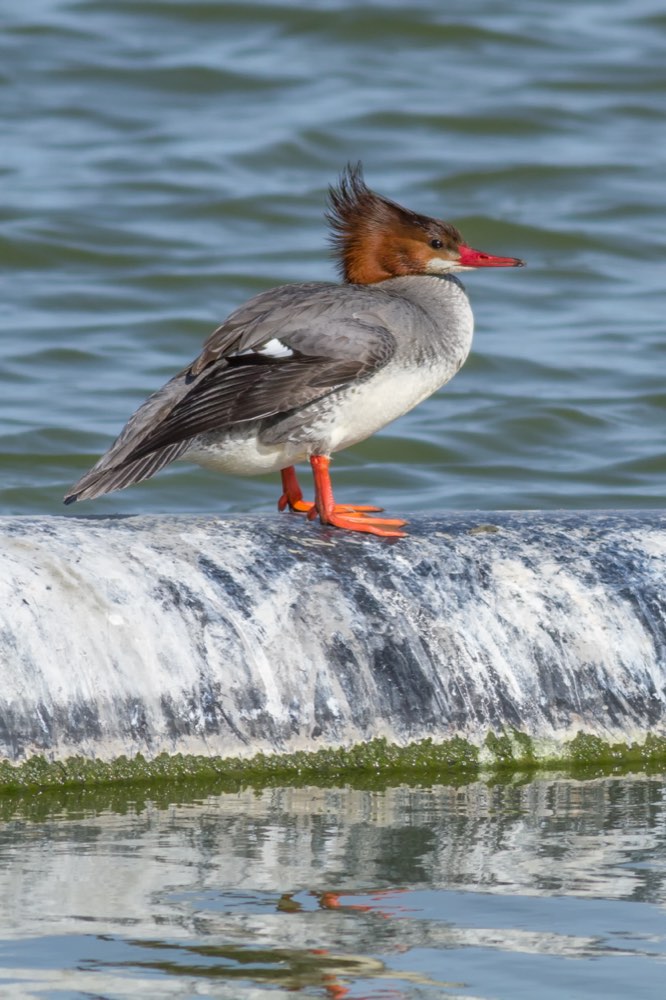
Gray-bodied with a sharply defined rusty head, shaggy crest and a clean white throat.
Male photo: Bengt Nyman from Vaxholm, Sweden / Wikimedia, CC BY 2.0 · Female photo: Frank Schulenburg / Wikimedia, CC BY-SA 3.0
Field marks
- Long, slim, low-riding body
- Thin red saw-toothed bill, not a broad duck bill
- Male’s white body glowing against dark water
- Female’s rusty head cut sharply from a gray neck
Similar species
What it sounds like
Mostly silent; a low croak or harsh grunt near the nest.
Behaviour that gives it away
Swims with its face submerged to look for fish before diving, and ducklings ride on the female’s back.
Habitat & range
Large clear rivers and lakes across the northern states, Canada and the western mountains.
When you'll see it
Depending on where in North America you are, it is present all year and a winter visitor.
What it eats
Fish caught by diving, plus aquatic invertebrates.
Did you know?
Its bill is lined with backward-pointing serrations that grip fish, which is why mergansers are called sawbills.
Spot one yourself?
Point your camera at any bird and Aviarist identifies it in seconds — then logs it to your life list.
Get Aviarist on Google Play
More backyard birds

.jpg)

Other apps we make