How to Identify aBufflehead
Bucephala albeola · 12.6–15.8 in (32–40 cm)
Male vs. female
Male
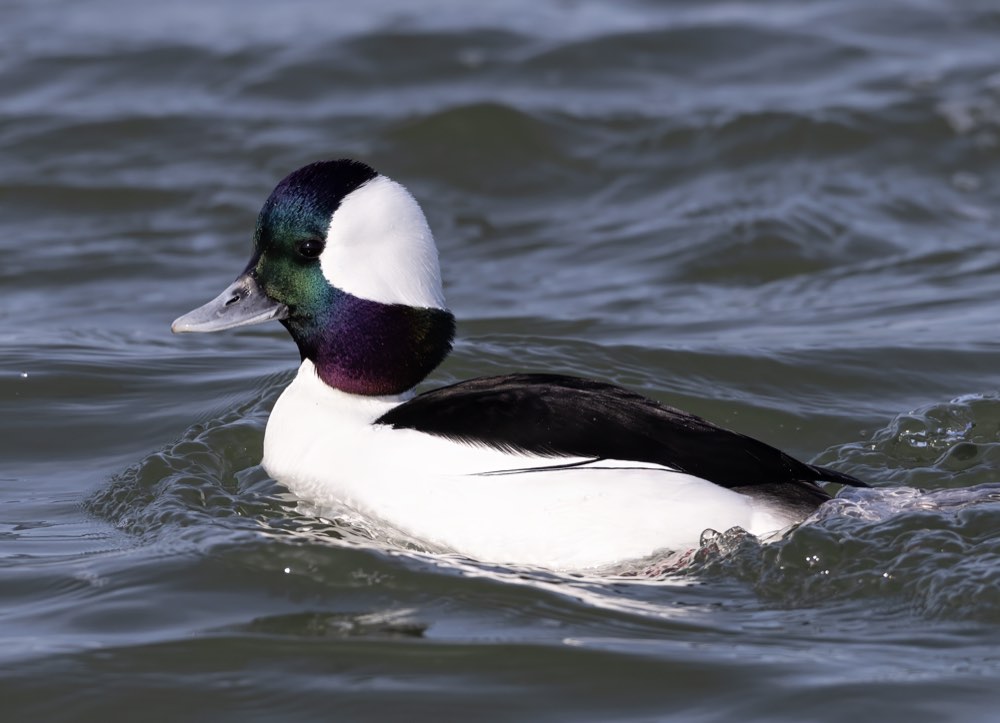
Brilliant white body with a black back and a large iridescent green-purple head carrying a broad white patch.
Female
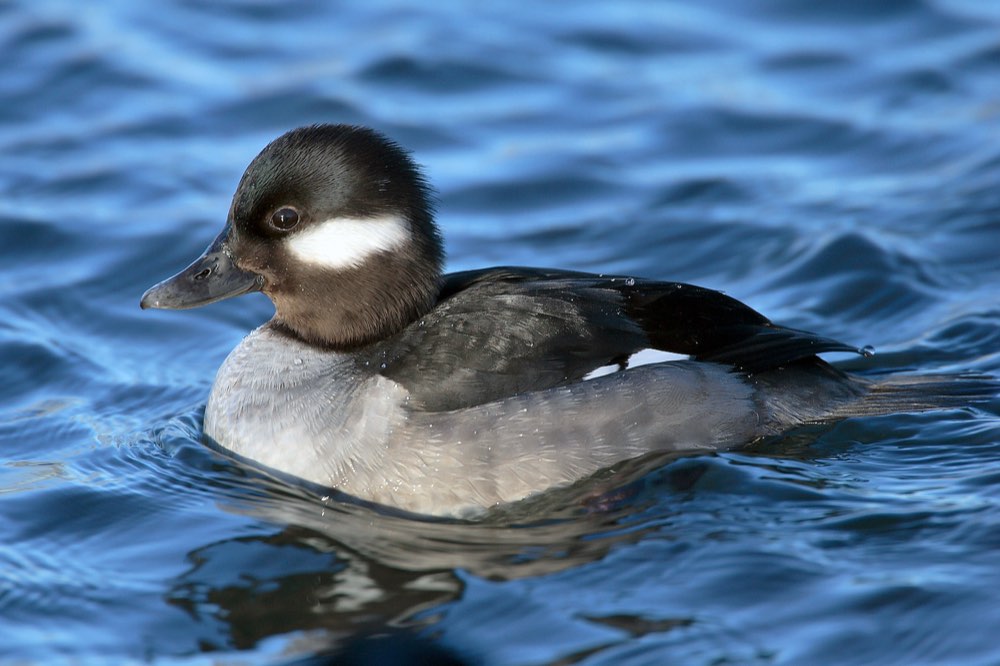
Dusky gray-brown with a single small oval white cheek patch.
Male photo: Chuck Homler, Focus On Wildlife / Wikimedia, CC BY-SA 4.0 · Second photo: Mdf / Wikimedia, CC BY-SA 3.0
Field marks
- Very small — the smallest common diving duck
- Oversized, puffy, angular head
- Bold white patch behind the eye
- Dives constantly, popping up like a cork
Similar species
What it sounds like
Mostly silent; the male gives a soft squeaky whistle in display.
Behaviour that gives it away
Nests almost exclusively in old Northern Flicker holes, which limits where it can breed.
Habitat & range
Ponds, lakes, rivers and sheltered coastal bays in winter; boreal lakes in summer.
When you'll see it
Depending on where in North America you are, it is a winter visitor and a passage migrant, seen mainly in spring and autumn.
What it eats
Aquatic insects, crustaceans and molluscs taken on dives.
Did you know?
It is small enough to use old flicker holes for nesting, and its breeding range closely tracks where those woodpeckers live.
Spot one yourself?
Point your camera at any bird and Aviarist identifies it in seconds — then logs it to your life list.
Get Aviarist on Google Play
More backyard birds
.png)

Other apps we make