How to Identify aSpotted Sandpiper
Actitis macularius · 7.1–7.9 in (18–20 cm)
Male vs. female
Male
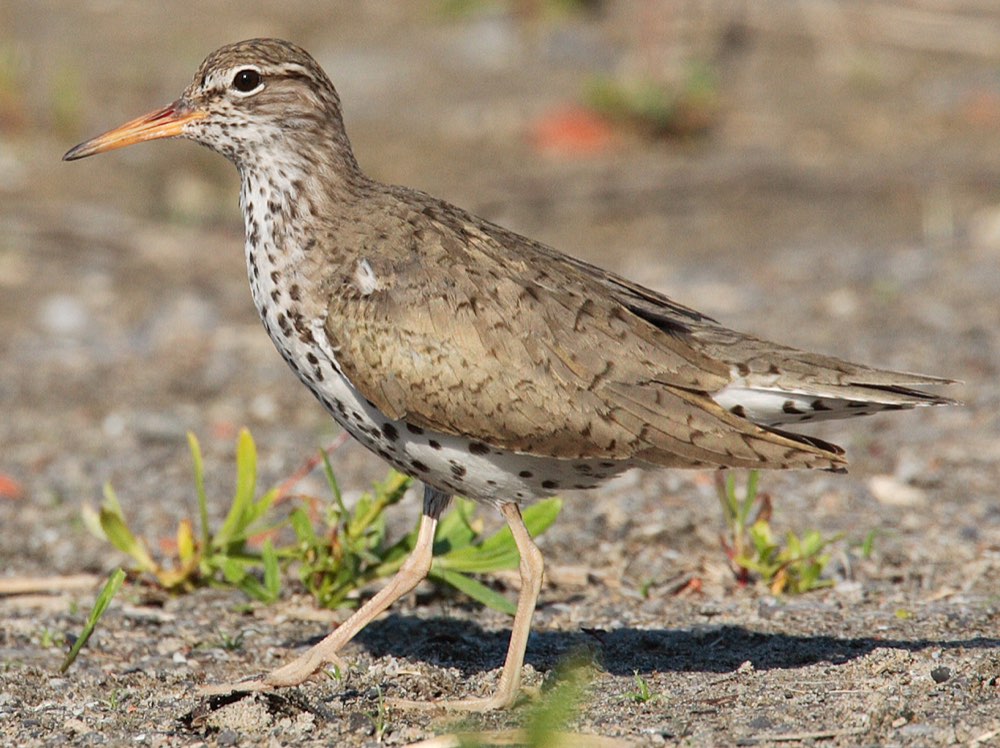
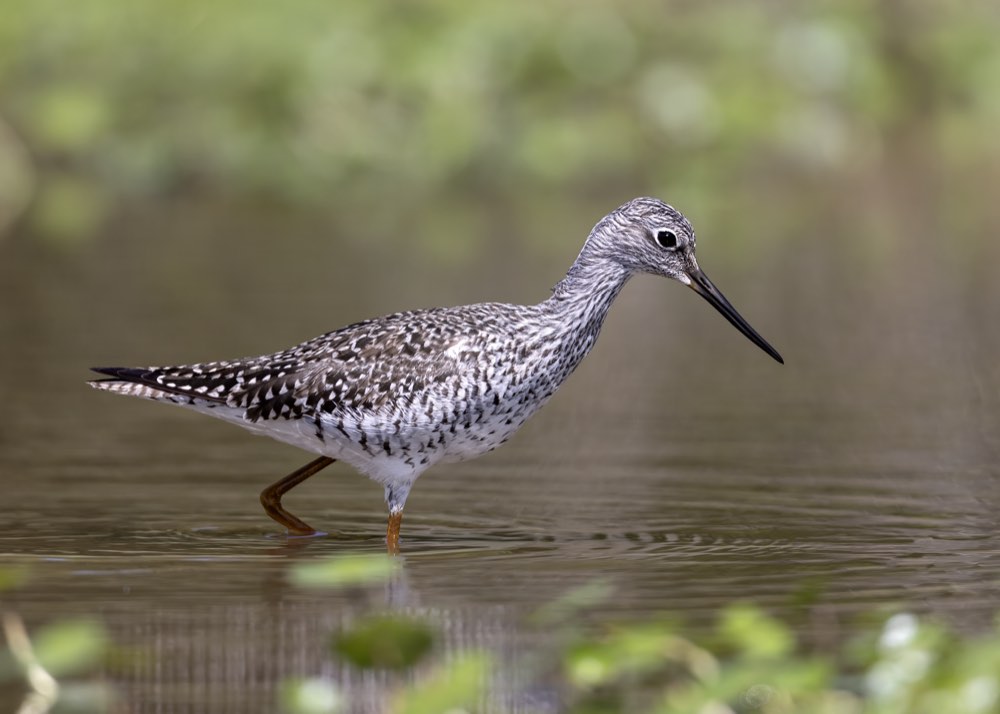
Warm brown above, white below with crisp black spots in breeding season, and an orange bill. Sexes look alike.
Female
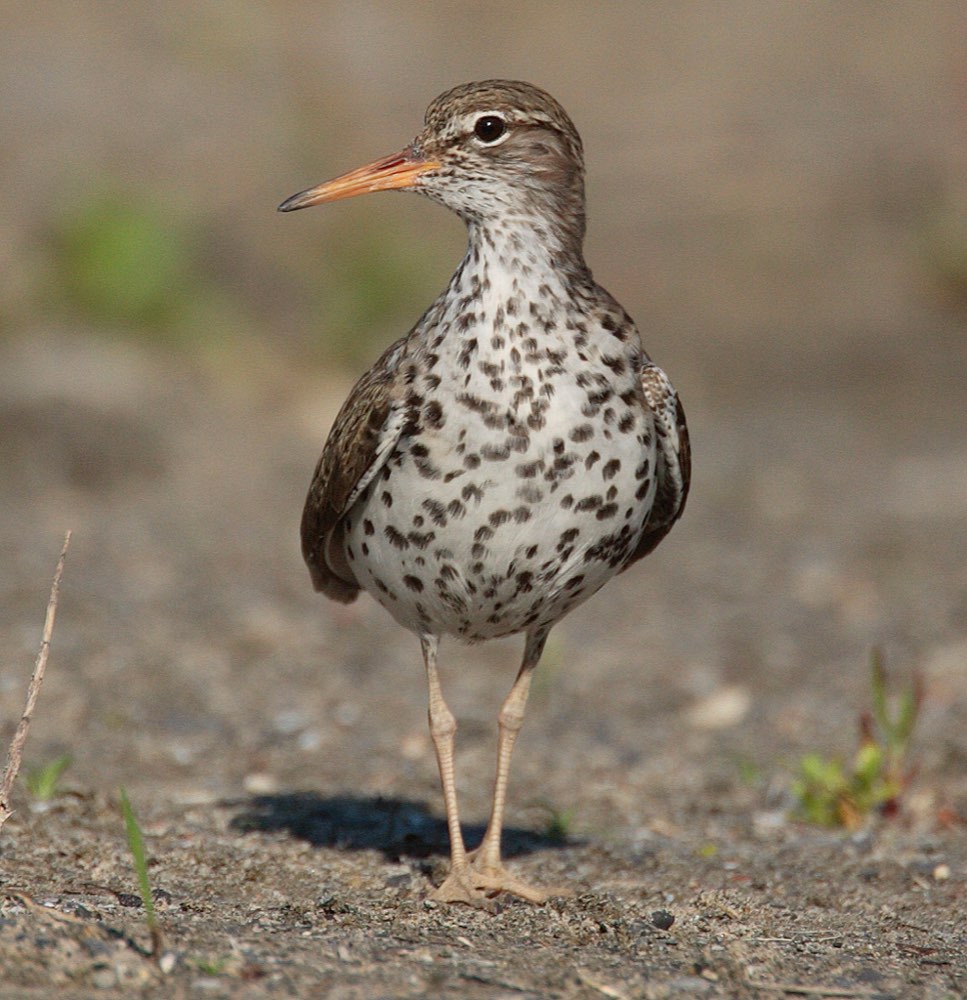
Like the male but often more heavily spotted, and larger.
Male photo: No machine-readable author provided. Factumquintus assumed (based on copyright claims). / Wikimedia, CC BY-SA 3.0 · Second photo: No machine-readable author provided. Factumquintus assumed (based on copyright claims). / Wikimedia, CC BY-SA 3.0
Field marks
- Constant bobbing and teetering of the rear body
- Round black spots on white underparts in summer
- Stiff, shallow, fluttering wingbeats low over water
- White wedge in front of the folded wing
Similar species
What it sounds like
A clear, sharp "peet-weet" given as it flushes along a shoreline.
Behaviour that gives it away
The female holds the territory and mates with several males, and each male incubates and raises a clutch on his own.
Habitat & range
Almost any shoreline — streams, ponds, lakes, ditches — across North America.
When you'll see it
Depending on where in North America you are, it is a summer visitor that arrives to breed and a passage migrant, seen mainly in spring and autumn.
What it eats
Insects, small crustaceans and other invertebrates picked from the water’s edge.
Did you know?
Sex roles are reversed: females compete for territory and mates, and males do nearly all the incubating.
Spot one yourself?
Point your camera at any bird and Aviarist identifies it in seconds — then logs it to your life list.
Get Aviarist on Google Play
More backyard birds


Other apps we make