How to Identify aGreater Yellowlegs
Tringa melanoleuca · 11.4–13.4 in (29–34 cm)
Male vs. female
Male
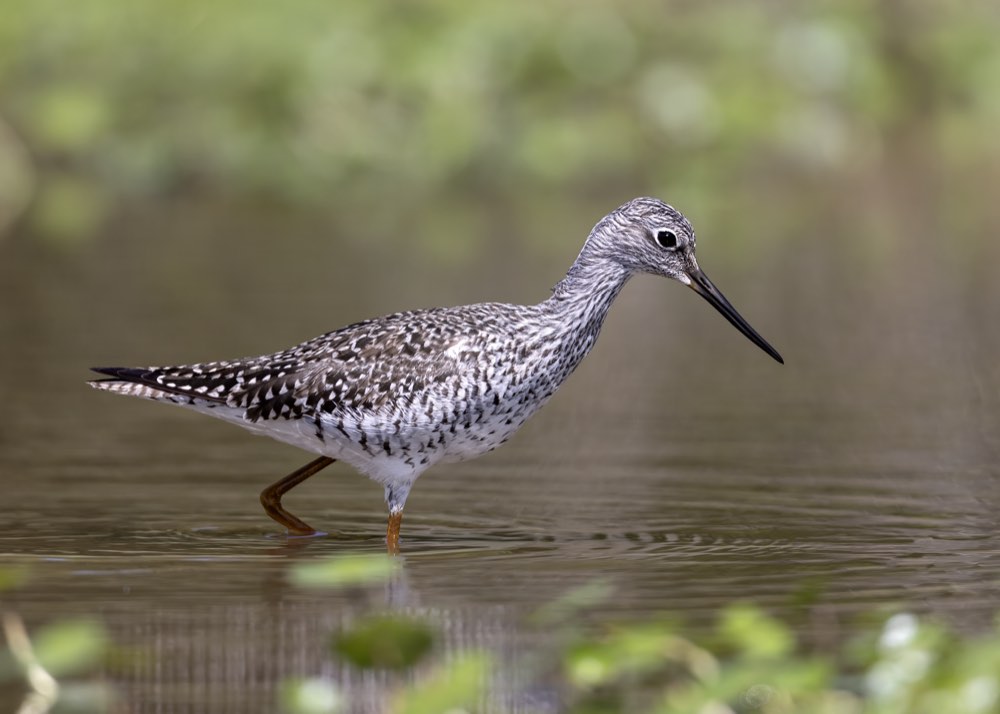
Gray-brown and heavily flecked above, whitish below, with long yellow legs. Sexes look alike.
Female
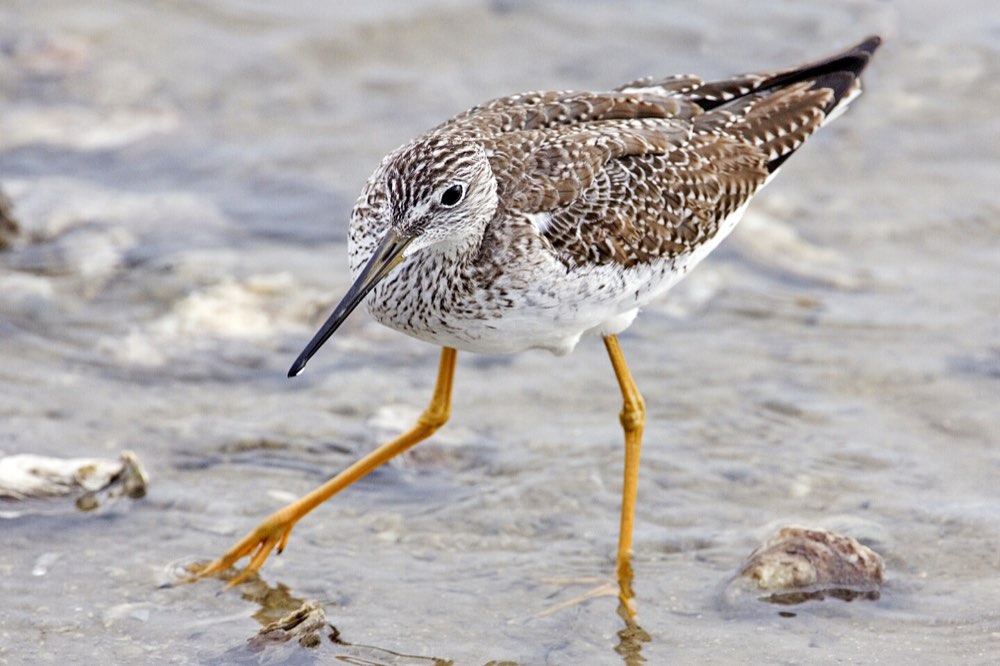
Identical to the male in the field.
Male photo: Chuck Homler, Focus On Wildlife / Wikimedia, CC BY-SA 4.0 · Second photo: Alan D. Wilson, www.naturespicsonline.com edited by Muhammad / Wikimedia, CC BY-SA 2.5
Field marks
- Long, vivid yellow legs
- Bill longer than the head and slightly upcurved
- White rump and barred tail in flight
- Alert, upright, long-necked posture
Similar species
What it sounds like
A loud, ringing, insistent three- or four-note "tew-tew-tew" that carries across a marsh.
Behaviour that gives it away
Chases small fish through shallow water with its bill open and head sideways, rather than probing mud.
Habitat & range
Mudflats, marshes, flooded fields and pond edges on migration; coastal wetlands in winter.
When you'll see it
Depending on where in North America you are, it is a winter visitor and a passage migrant, seen mainly in spring and autumn.
What it eats
Small fish, aquatic insects and crustaceans.
Did you know?
It is so vocal and so quick to call at any disturbance that hunters once nicknamed it the tattler.
Spot one yourself?
Point your camera at any bird and Aviarist identifies it in seconds — then logs it to your life list.
Get Aviarist on Google Play
More backyard birds
_foraging_at_Huntley_Meadows,_Alexandria,_Virginia,_USA.png)

Other apps we make