How to Identify aNorthern Cardinal
Cardinalis cardinalis · 8.3–9.1 in (21–23 cm)
Male vs. female
Male
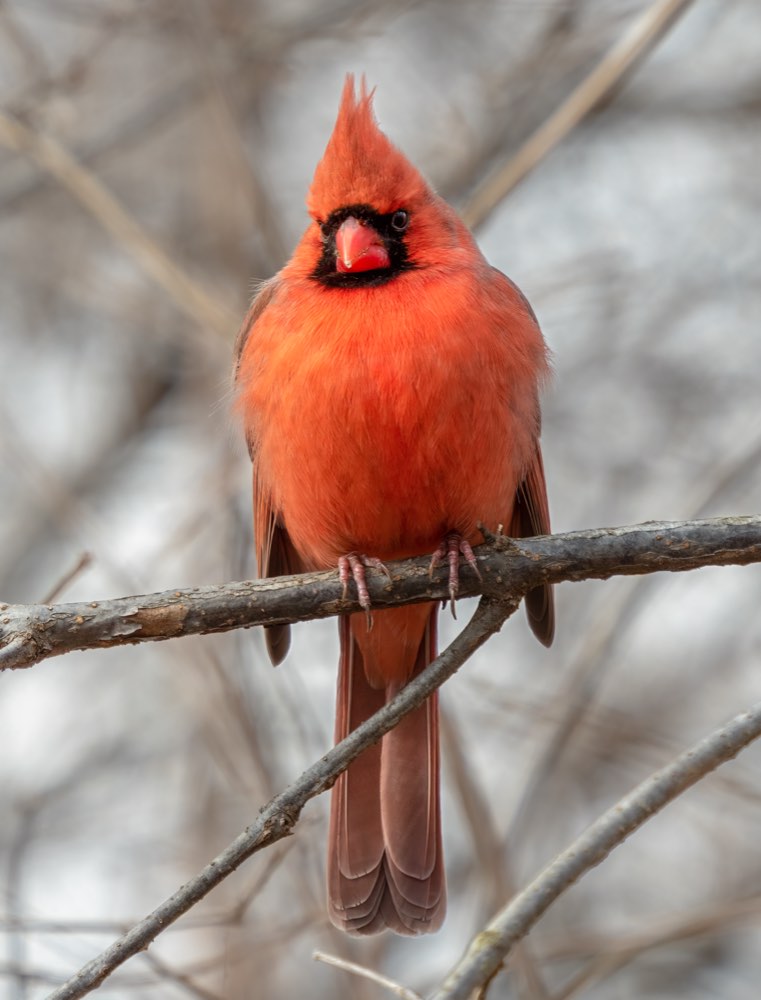
Vivid all-over red with a pointed crest, black mask around a thick cone-shaped orange bill.
Female
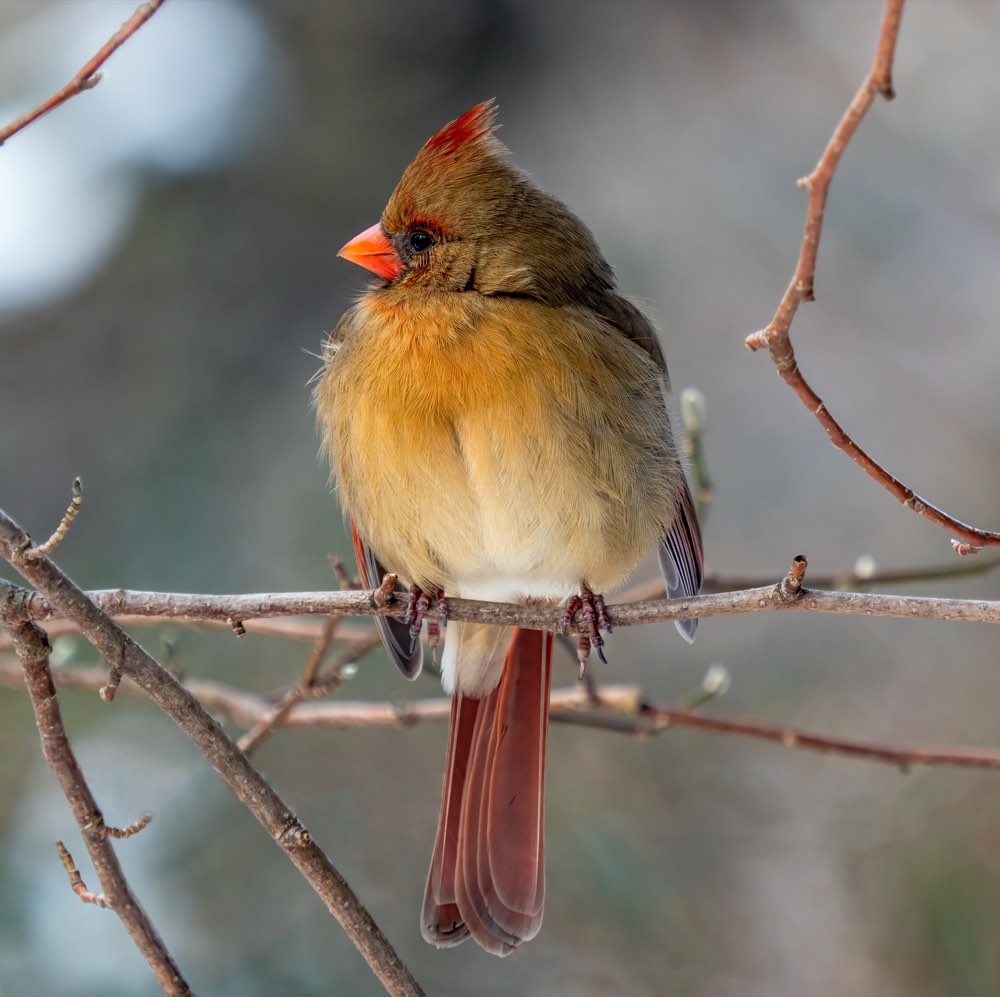
Warm grayish-tan with reddish tinges on the crest, wings, and tail; same black face and orange bill.
Male photo: Rhododendrites / Wikimedia, CC BY-SA 4.0 · Female photo: Rhododendrites / Wikimedia, CC BY-SA 4.0
Field marks
- Prominent pointed crest raised when alert
- Thick, cone-shaped reddish-orange bill
- Black face mask surrounding the bill (fainter on females)
- Long tail, often flicked
Similar species
What it sounds like
A loud, clear, slurred whistle — "birdy-birdy-birdy" or "cheer-cheer-cheer" — plus a sharp metallic "chip".
Behaviour that gives it away
Unusually among songbirds both sexes sing, and a courting male passes seed directly to the female beak to beak.
Habitat & range
Woodland edges, backyards, thickets, and shrubby gardens across the eastern and central U.S. and the desert Southwest.
When you'll see it
Present all year in eastern, central and southwestern North America.
What it eats
Seeds (especially sunflower and safflower), grains, fruits, and insects; a fixture at tube and platform feeders.
Did you know?
Unlike most songbirds, both sexes sing — female cardinals give the same clear, whistled songs as males.
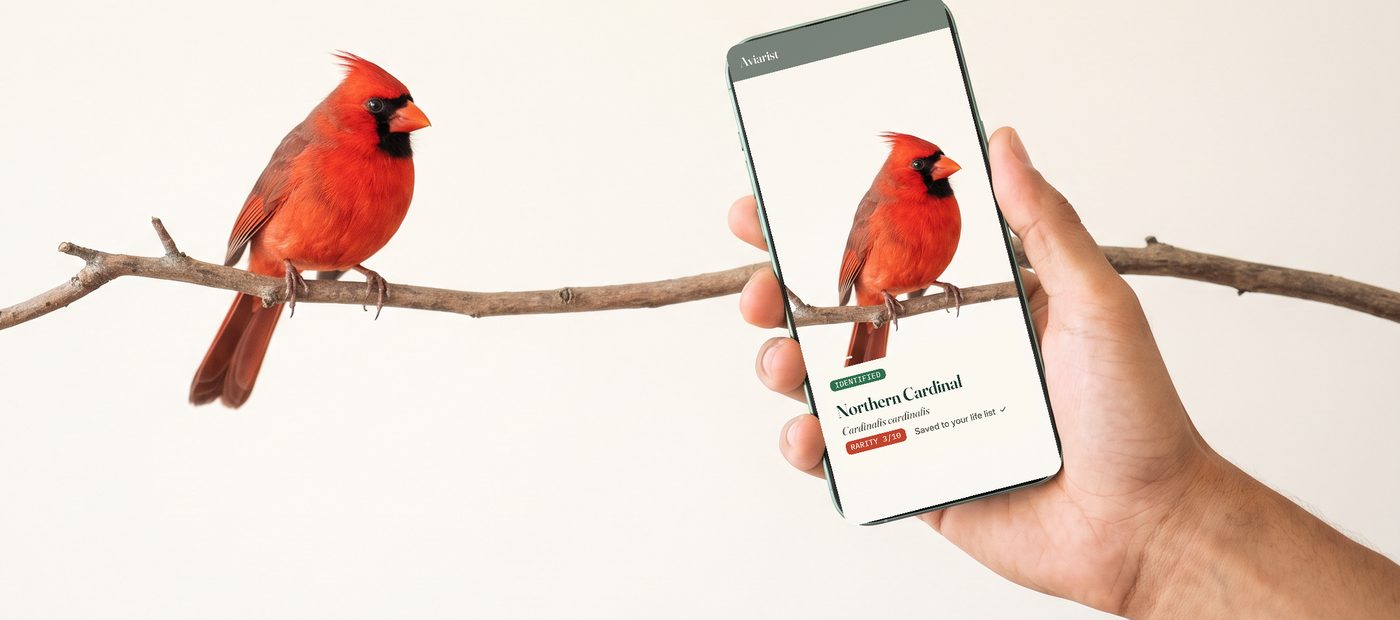
Spot one yourself?
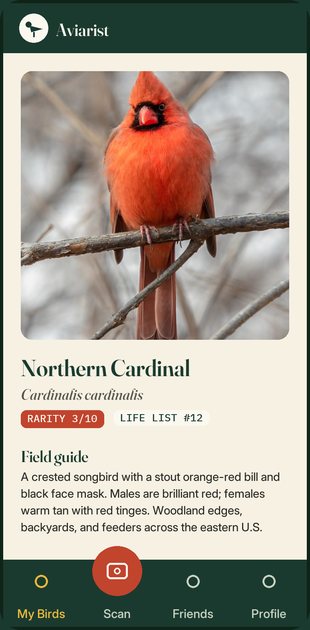
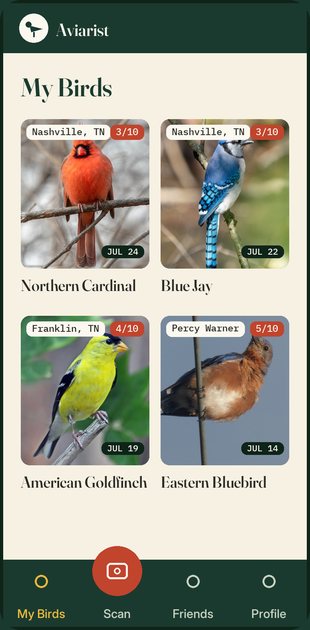
Point your camera at any bird and Aviarist identifies it in seconds — then logs it to your life list.
Get Aviarist on Google Play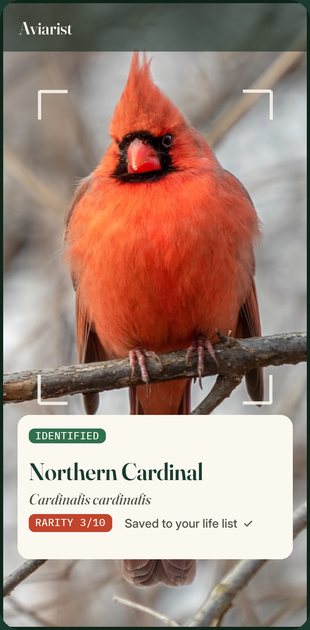
More backyard birds
.jpg)
.jpg)
Other apps we make