How to Identify aNorthern Parula
Setophaga americana · 4.3–4.7 in (11–12 cm)
Male vs. female
Male
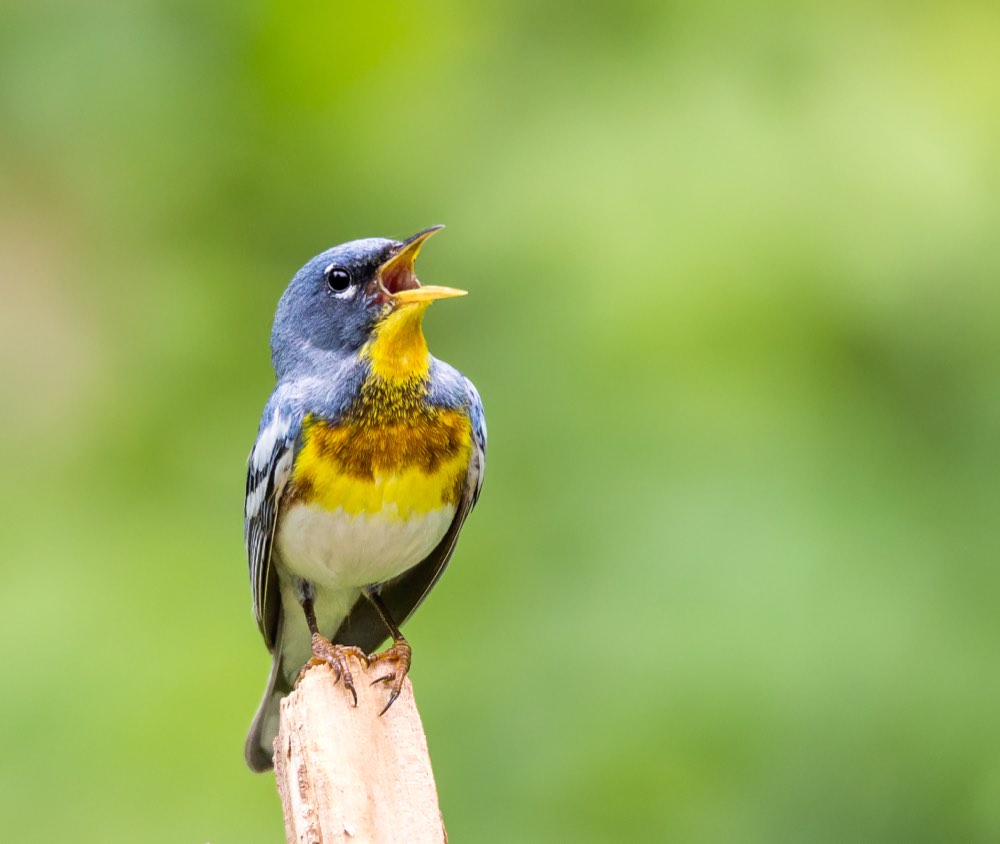
Blue-gray above with a yellow-green saddle, bright yellow throat and chest crossed by a rusty and black band, and white eye-arcs.
Female
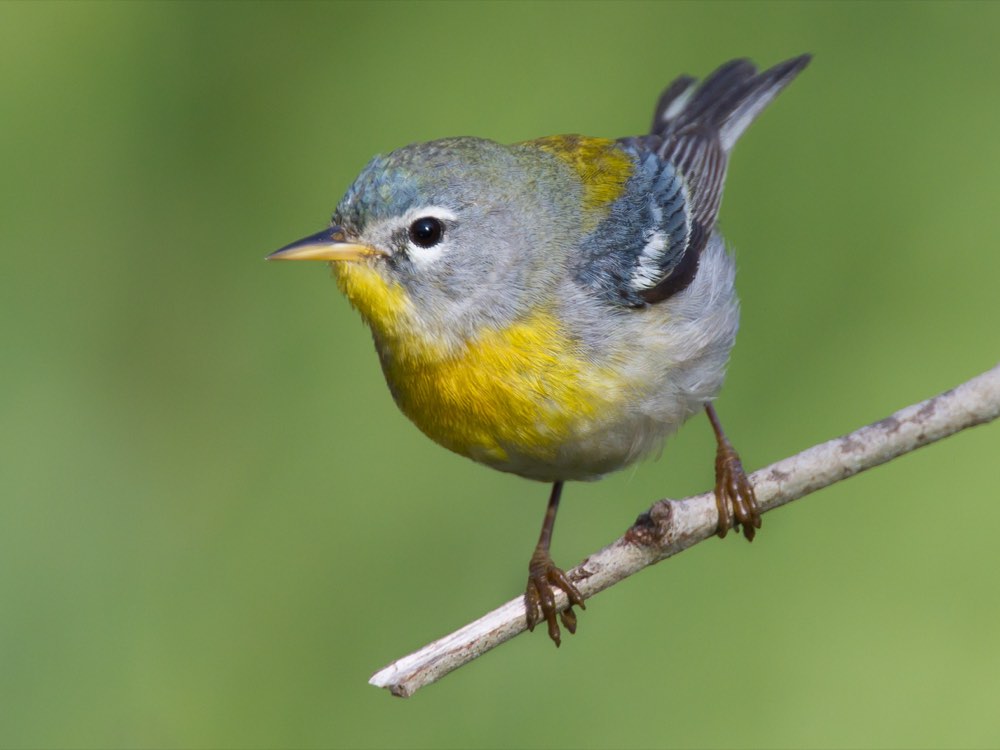
Similar but paler, with little or no chest band.
Male photo: ShenandoahNPS / Wikimedia, Public domain · Second photo: Dan Pancamo / Wikimedia, CC BY-SA 2.0
Field marks
- Yellow-green triangular patch on a blue-gray back
- Broken white arcs above and below the eye
- Two crisp white wingbars
- Yellow throat and chest with a white belly
Similar species
What it sounds like
A rising buzzy trill that snaps off abruptly at the top — "zeeeeee-up".
Behaviour that gives it away
Builds its nest inside hanging clumps of Spanish moss or beard lichen, hollowing out a pocket rather than weaving a cup.
Habitat & range
Moist woodland with hanging lichen or Spanish moss, especially near water, across the East.
When you'll see it
Depending on where in eastern, southeastern and central North America you are, it is a summer visitor that arrives to breed and a passage migrant, seen mainly in spring and autumn.
What it eats
Caterpillars, spiders and other small insects gleaned high in the canopy.
Did you know?
Its nest is almost always tucked inside a hanging clump of Spanish moss in the South or beard lichen in the North.
Spot one yourself?
Point your camera at any bird and Aviarist identifies it in seconds — then logs it to your life list.
Get Aviarist on Google Play
More backyard birds


Other apps we make