How to Identify aBlue Jay
Cyanocitta cristata · 9.8–11.8 in (25–30 cm)
Male vs. female
Male
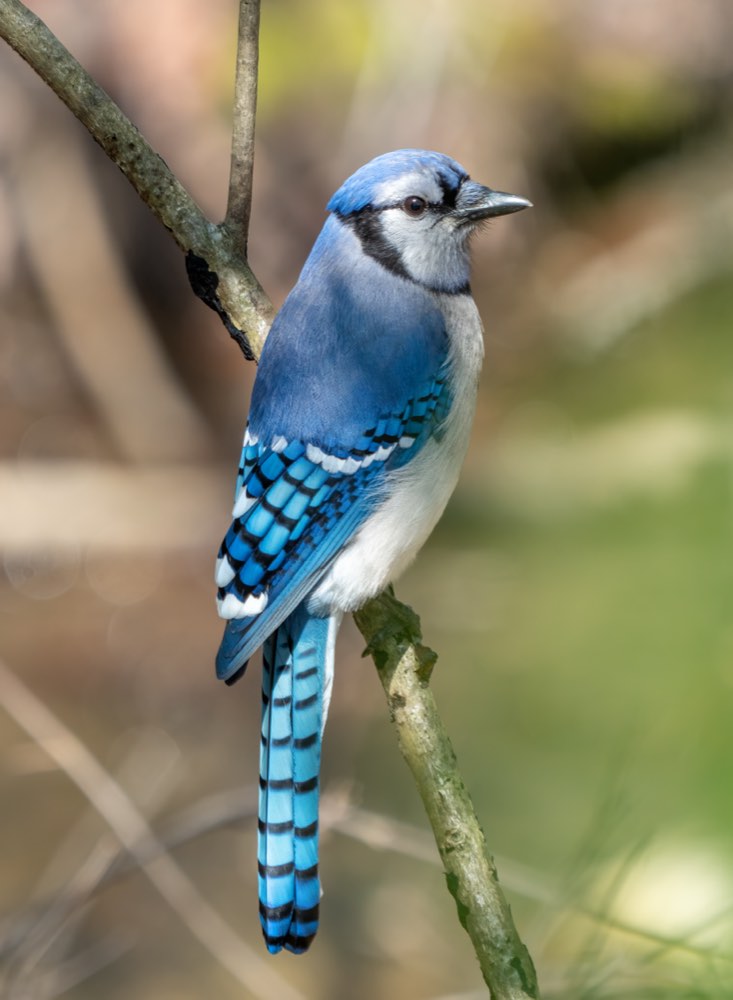
Blue above, pale gray-white below, with a crest, black necklace, and bright white wing bars and tail corners.
Female
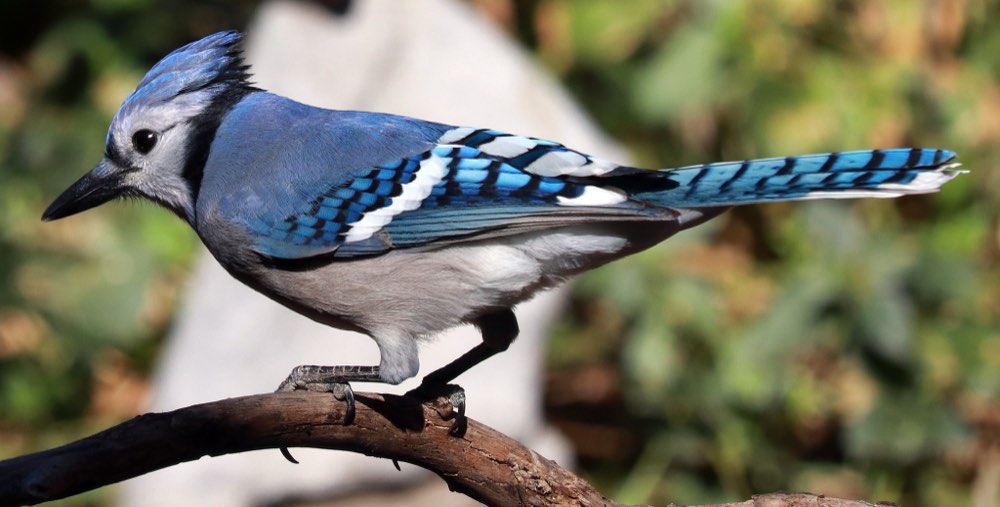
Essentially identical to the male; sexes are not reliably told apart by plumage.
Male photo: Rhododendrites / Wikimedia, CC BY-SA 4.0 · Second photo: catherine_g / Wikimedia, CC BY 4.0
Field marks
- Blue crest raised in excitement or aggression
- Black "necklace" across the throat
- Bright white spots on wings and tail edges
- Black barring on blue wings and tail
Similar species
What it sounds like
A harsh screaming "jay! jay!", a musical "queedle-queedle", and a very accurate imitation of a Red-shouldered Hawk.
Behaviour that gives it away
Caches acorns in the ground and fails to recover many of them, planting oaks in the process.
Habitat & range
Deciduous and mixed forests, parks, and suburban yards throughout the eastern and central U.S. and Canada.
When you'll see it
Present all year in eastern and central North America.
What it eats
Acorns, nuts, seeds, and insects; caches acorns and helps spread oak forests.
Did you know?
Blue jays are skilled mimics and will imitate the calls of hawks — possibly to scare other birds from a feeder.
Spot one yourself?
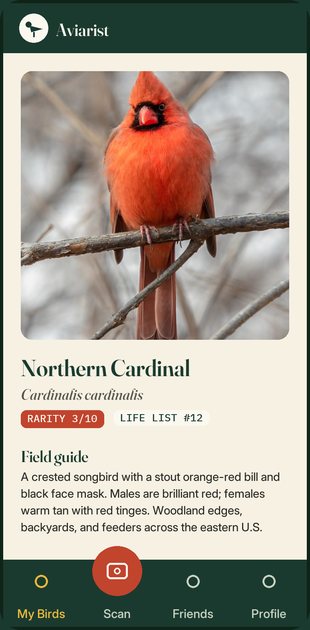
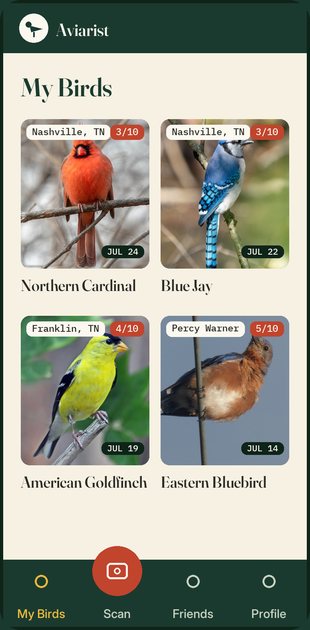
Point your camera at any bird and Aviarist identifies it in seconds — then logs it to your life list.
Get Aviarist on Google Play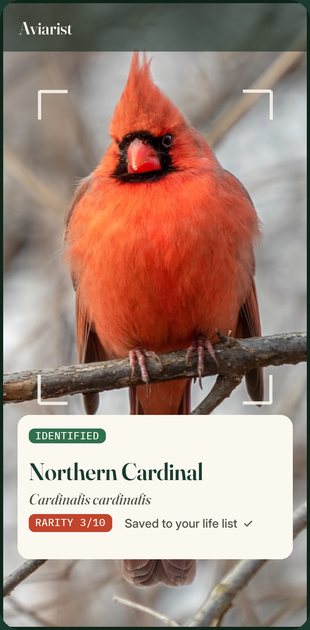
More backyard birds
.jpg)

Other apps we make