How to Identify aNorthern Shoveler
Spatula clypeata · 17.3–20.1 in (44–51 cm)
Male vs. female
Male
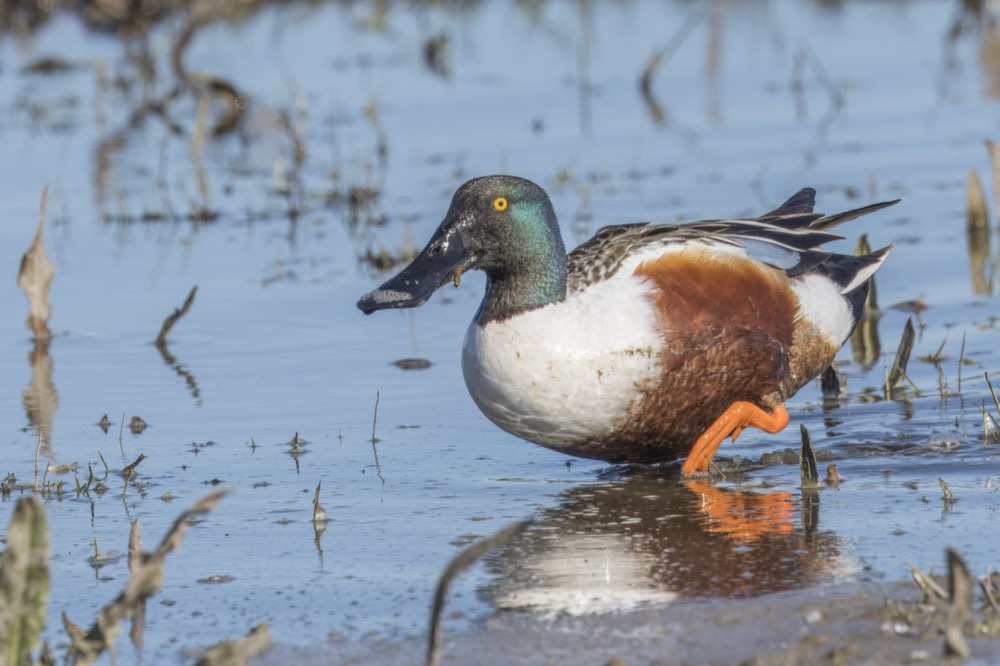
Dark green head, white chest, rich chestnut sides and a huge black bill.
Female
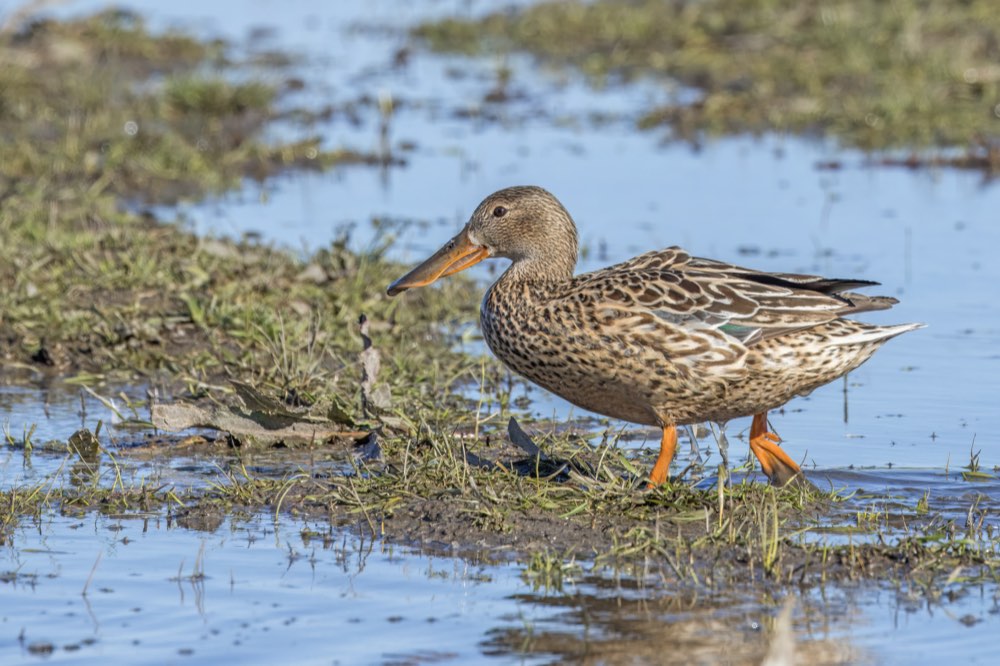
Mottled brown with the same enormous bill, orange along the edges.
Male photo: Charles J. Sharp / Wikimedia, CC BY-SA 4.0 · Female photo: Charles J. Sharp / Wikimedia, CC BY-SA 4.0
Field marks
- Bill longer than the head and widest at the tip
- Front-heavy look, bill angled downward in flight
- Male’s bold green-white-chestnut blocks of colour
- Pale blue forewing patch in flight
Similar species
What it sounds like
A nasal clunking "took-took" from the male; a low quack from the female.
Behaviour that gives it away
Feeds by swinging its bill side to side at the surface, straining tiny food through comb-like edges rather than tipping up.
Habitat & range
Shallow marshes, flooded fields, sewage ponds and lake edges across North America.
When you'll see it
Depending on where in North America you are, it is a winter visitor and a passage migrant, seen mainly in spring and autumn.
What it eats
Tiny crustaceans, seeds and invertebrates strained from the water surface.
Did you know?
Its bill carries over a hundred fine comb-like projections along the edges, working like a sieve for plankton-sized food.
Spot one yourself?
Point your camera at any bird and Aviarist identifies it in seconds — then logs it to your life list.
Get Aviarist on Google Play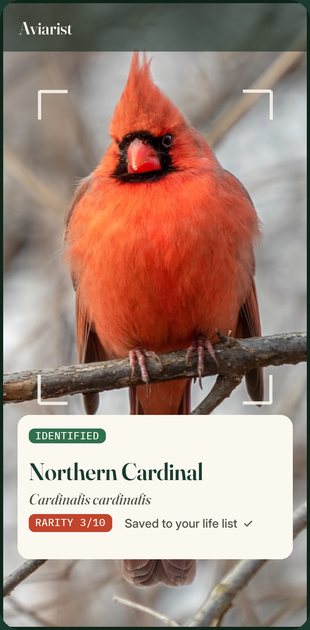
More backyard birds
_male_Marken.jpg)
_female_Marken.jpg)
Other apps we make