How to Identify aRock Pigeon
Columba livia · 11.8–14.2 in (30–36 cm)
Male vs. female
Male
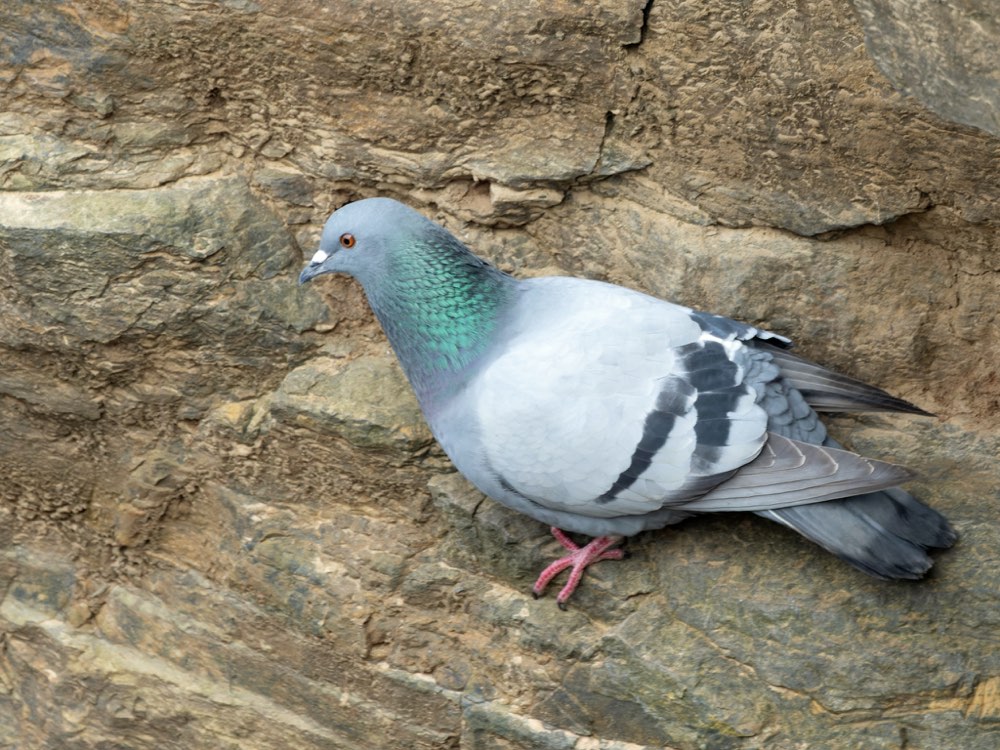
Typically blue-gray with two black wing bars, a white rump, and a green-purple sheen on the neck; colors vary widely.
Female
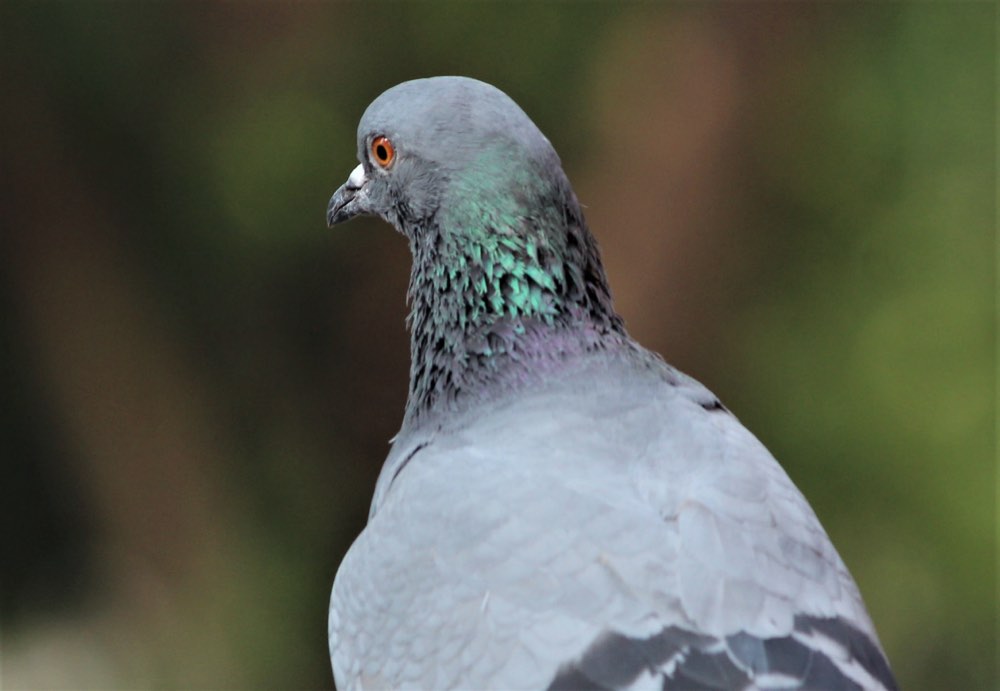
Similar to the male, often with a slightly duller neck sheen.
Male photo: william_stephens / Wikimedia, CC BY 4.0 · Second photo: Sarbjit Bahga / Wikimedia, CC BY-SA 4.0
Field marks
- Plump body with a small head
- Two dark bars across gray wings (classic form)
- Iridescent green-purple neck
- Highly variable colors from white to rusty to black
Similar species
What it sounds like
A soft, rolling, throaty "coo-roo-coo", given from ledges and rooftops.
Behaviour that gives it away
Finds its way home over hundreds of miles, using a combination of the sun, landmarks and the earth’s magnetic field.
Habitat & range
Cities, farms, bridges, and cliffs worldwide — an introduced species in North America.
When you'll see it
Present all year in North America.
What it eats
Seeds, grain, and human food scraps in urban areas.
Did you know?
Domesticated for thousands of years, homing pigeons can find their way home from hundreds of miles away.
Spot one yourself?
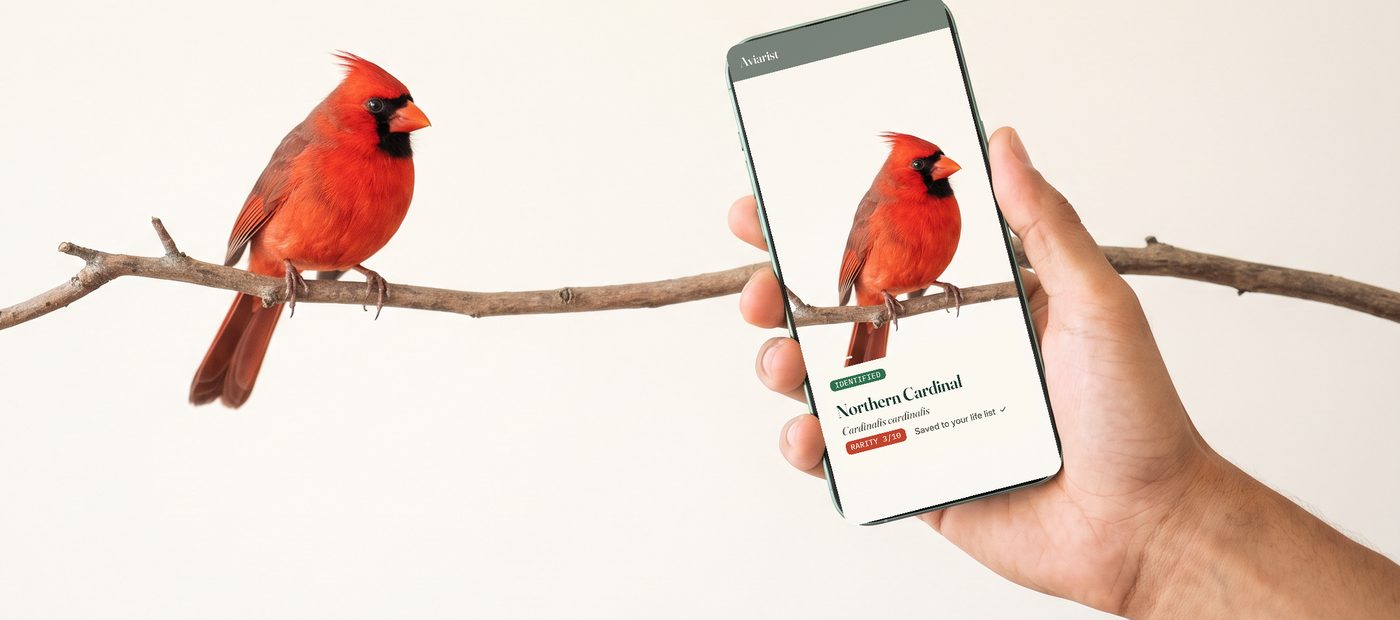
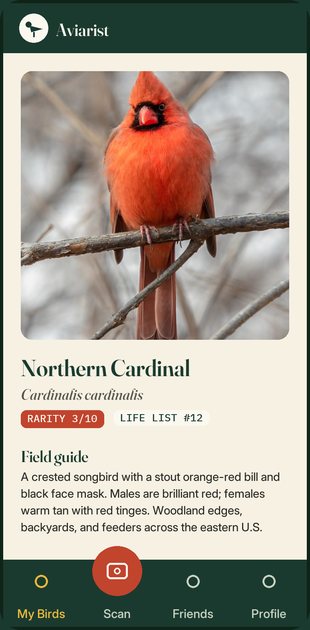
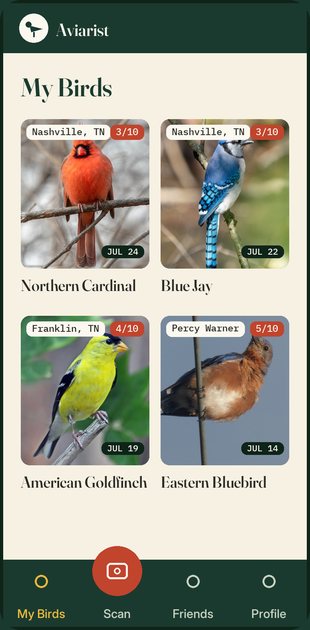
Point your camera at any bird and Aviarist identifies it in seconds — then logs it to your life list.
Get Aviarist on Google Play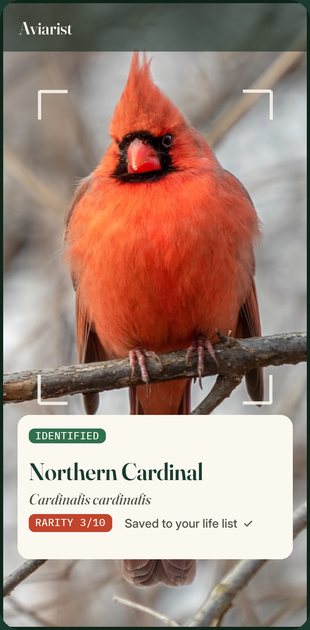
More backyard birds
,_Duncansby_Head,_Caithness,_Scotland_1.jpg)

Other apps we make