How to Identify aCarolina Wren
Thryothorus ludovicianus · 4.7–5.5 in (12–14 cm)
Male vs. female
Male
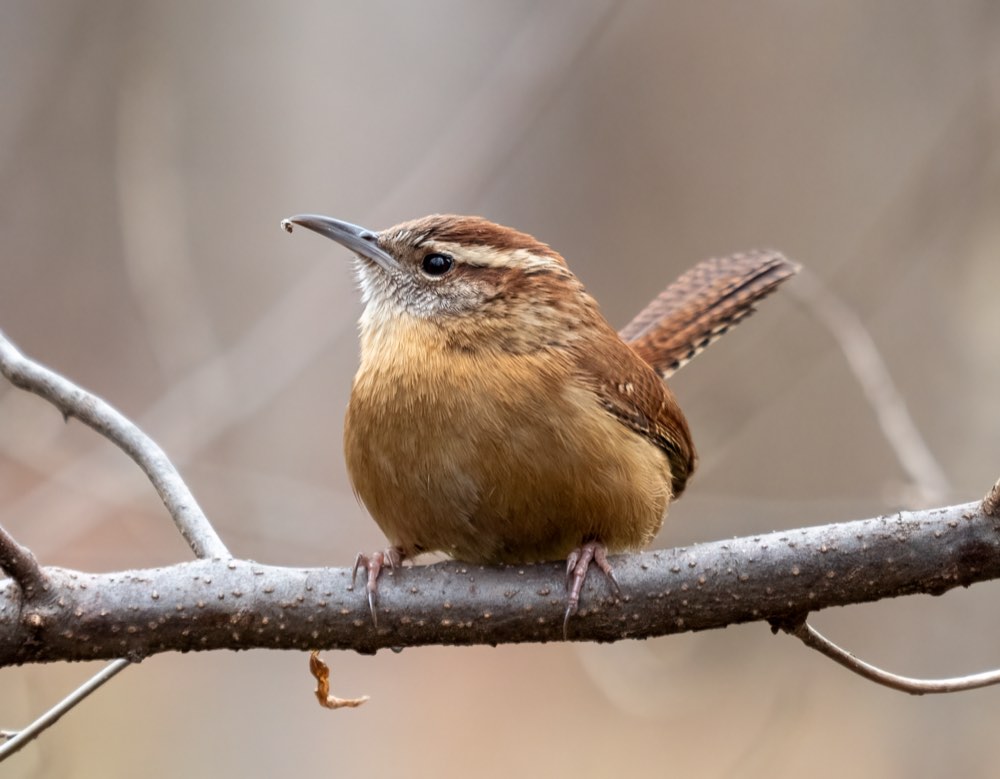
Rich reddish-brown above, warm buff below, with a long white eyebrow stripe and an upturned tail.
Female
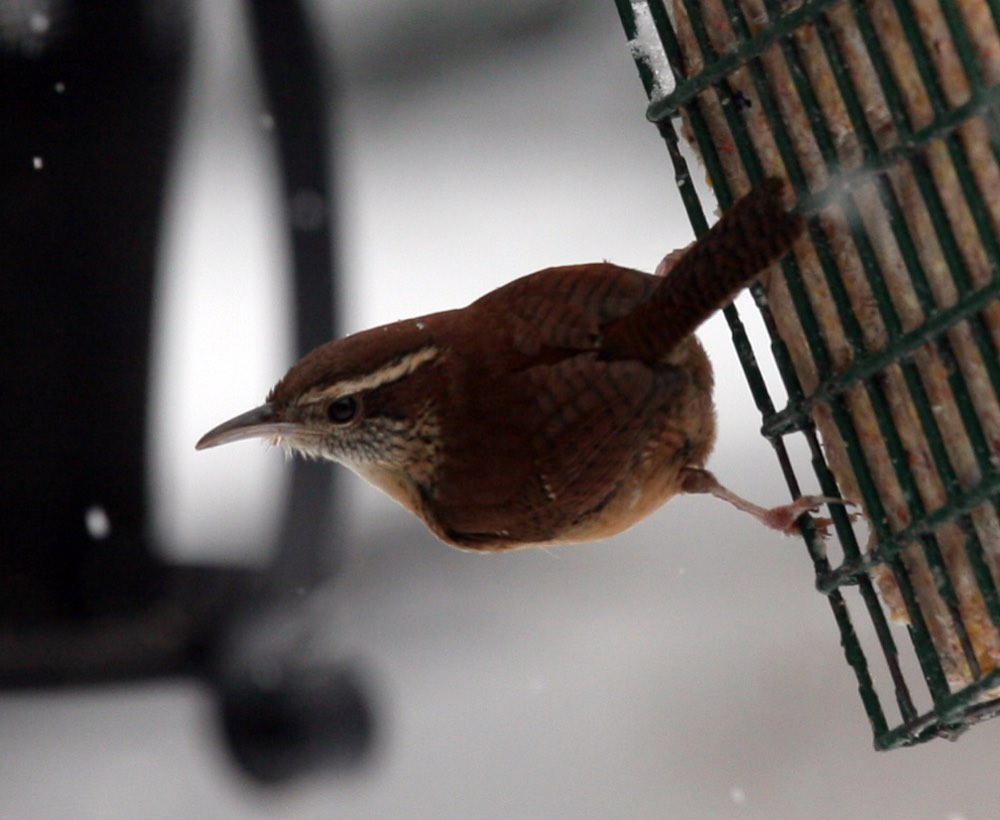
Identical to the male in the field.
Male photo: Rhododendrites / Wikimedia, CC BY-SA 4.0 · Second photo: Dawn Huczek from USA / Wikimedia, CC BY 2.0
Field marks
- Bold white eyebrow stripe
- Warm cinnamon-brown upperparts
- Long slightly downcurved bill
- Tail frequently cocked upward
Similar species
What it sounds like
A ringing, repeated "teakettle-teakettle-teakettle", astonishingly loud for the bird’s size.
Behaviour that gives it away
Pairs stay together all year and nest in almost any sheltered cavity — mailboxes, boots and flowerpots included.
Habitat & range
Brushy woods, thickets, gardens, and brush piles across the southeastern U.S. and north as winters warm.
When you'll see it
Present all year in eastern and southeastern North America.
What it eats
Insects and spiders, plus some seeds and suet at feeders in winter.
Did you know?
Only the male sings the ringing "tea-kettle-tea-kettle," and he can repeat it thousands of times a day.
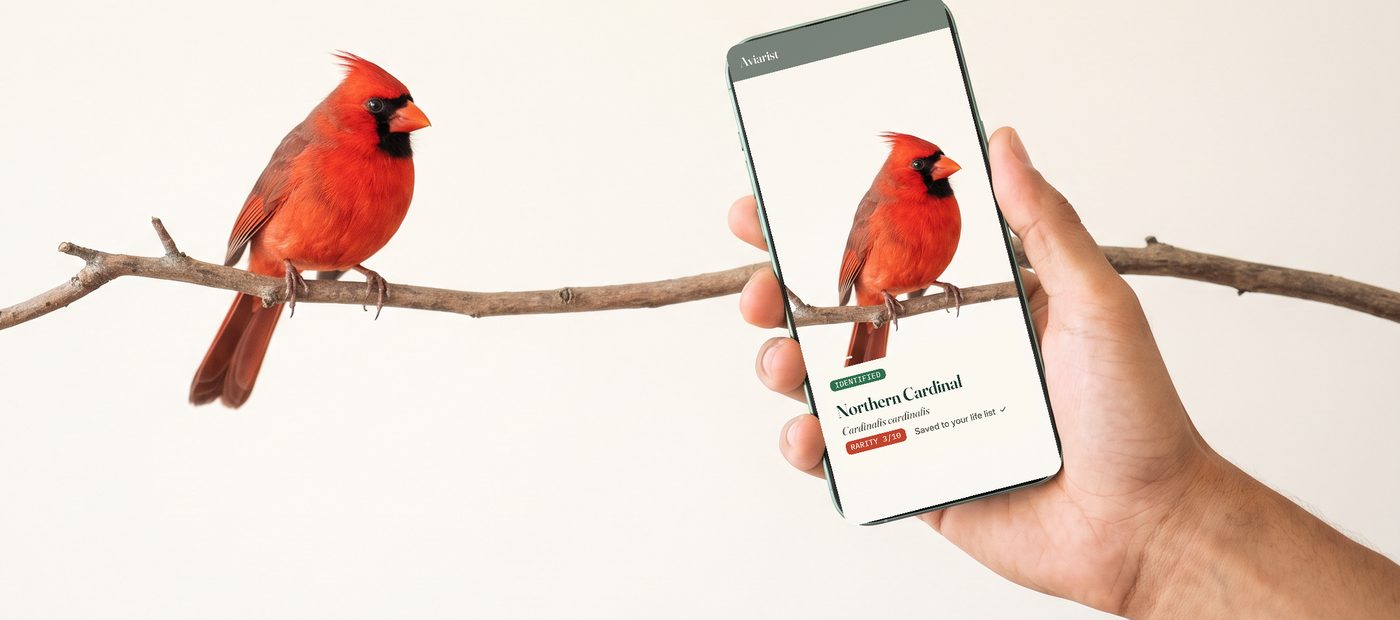
Spot one yourself?
Point your camera at any bird and Aviarist identifies it in seconds — then logs it to your life list.
Get Aviarist on Google Play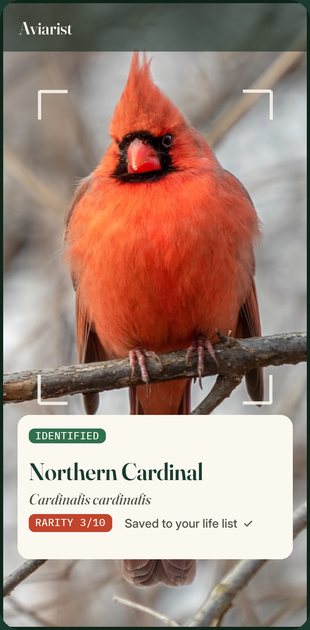
More backyard birds
.jpg)
.jpg)
Other apps we make