How to Identify aCommon Yellowthroat
Geothlypis trichas · 4.3–5.1 in (11–13 cm)
Male vs. female
Male
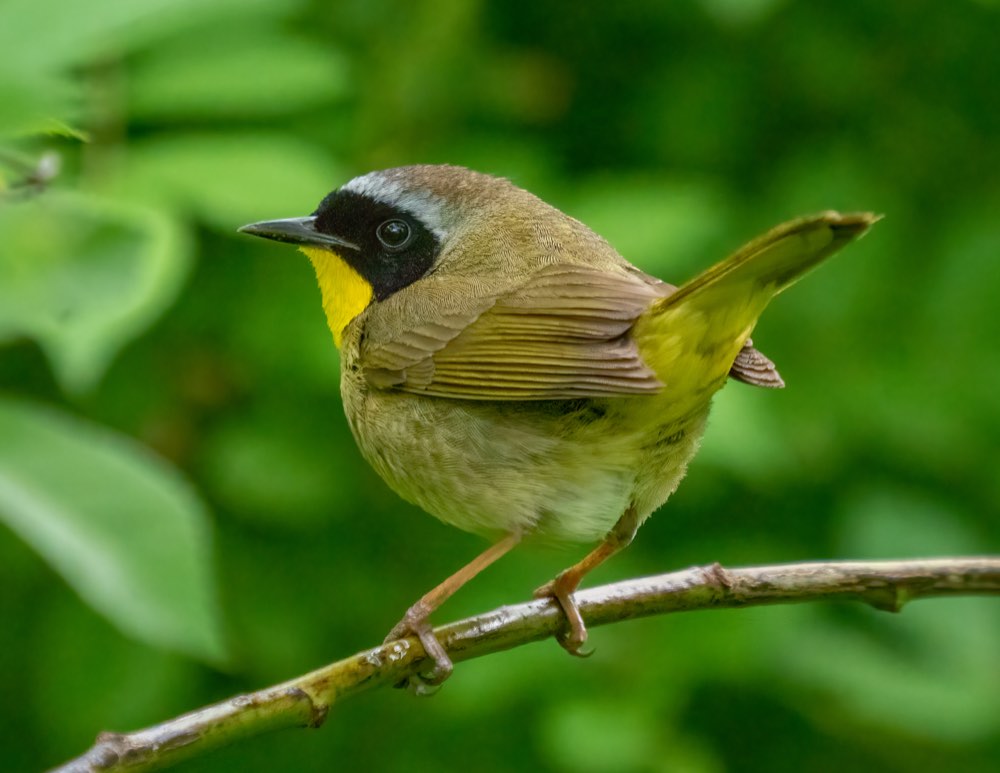
Olive above, bright yellow throat and breast, and a broad black face mask bordered with white above.
Female
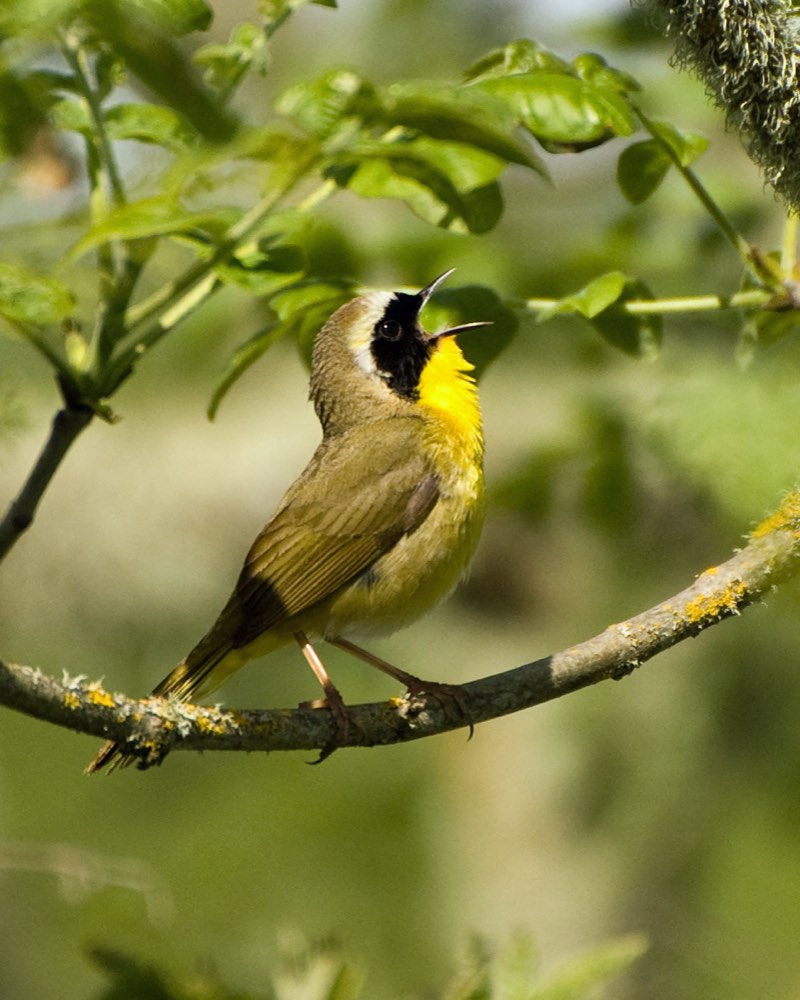
Olive-brown with a yellow throat and undertail but no black mask.
Male photo: Rhododendrites / Wikimedia, CC BY-SA 4.0 · Second photo: U.S. Fish and Wildlife Service Headquarters / Wikimedia, Public domain
Field marks
- Male's black mask over a yellow throat
- Yellow throat and undertail; olive back
- Skulks low in dense marsh and brush
- Rounded tail often cocked
Similar species
What it sounds like
A rolling, emphatic "witchety-witchety-witchety" from deep in marsh vegetation.
Behaviour that gives it away
Skulks low in dense cover and pops up briefly onto a stem, rarely staying in the open for long.
Habitat & range
Marshes, wet fields, and brushy edges across most of North America in summer.
When you'll see it
A summer visitor that arrives to breed in North America.
What it eats
Insects and spiders gleaned low in dense vegetation.
Did you know?
Its rolling "witchity-witchity-witchity" song carries from cattail marshes all summer long.
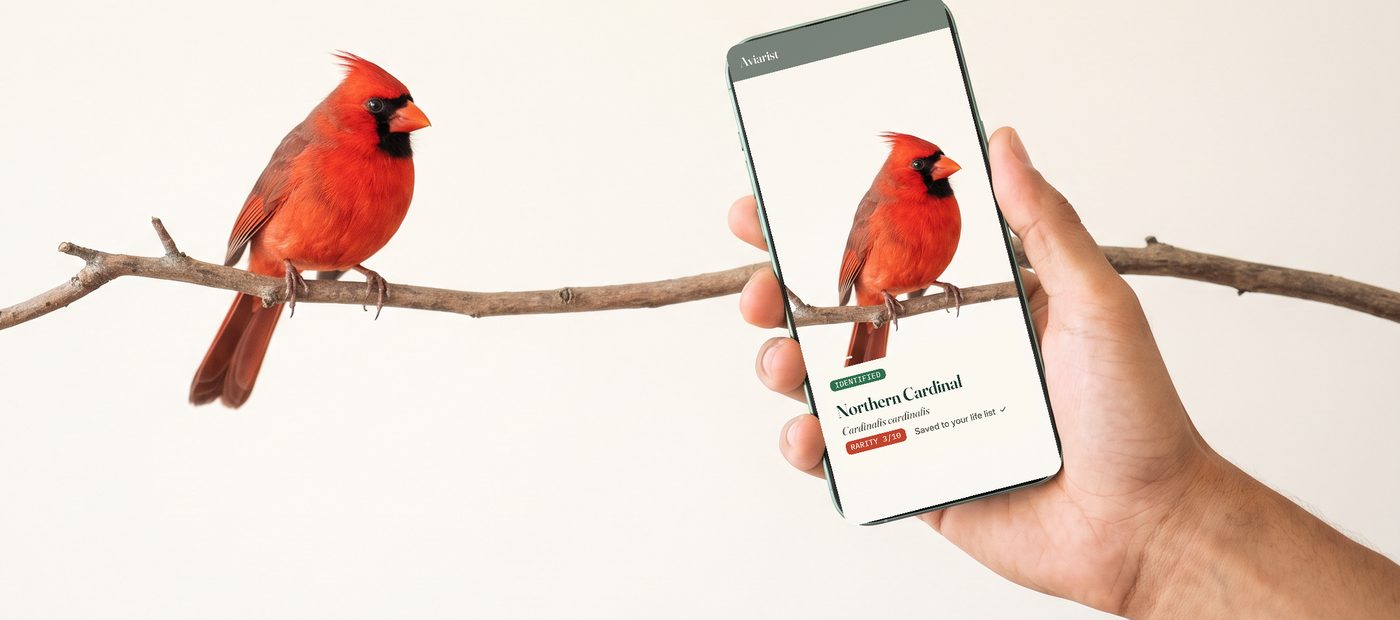
Spot one yourself?
Point your camera at any bird and Aviarist identifies it in seconds — then logs it to your life list.
Get Aviarist on Google Play
More backyard birds
.jpg)
.jpg)
Other apps we make