How to Identify aHerring Gull
Larus smithsonianus · 22.1–26 in (56–66 cm)
Male vs. female
Male
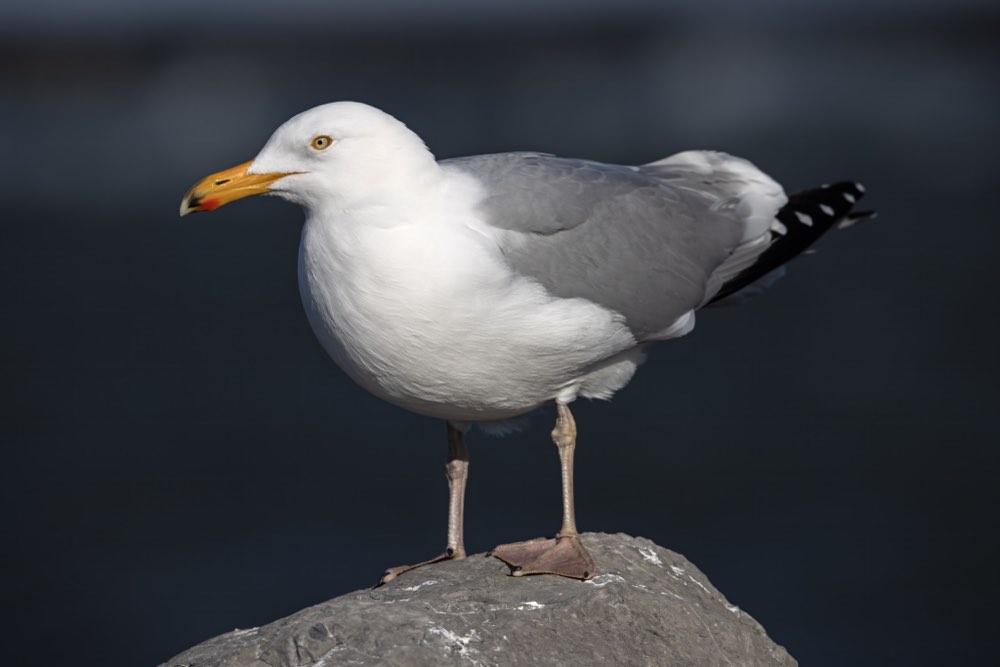
White head and body, pale gray back, black wingtips with white spots, pink legs and a red-spotted yellow bill. Sexes look alike.
Female
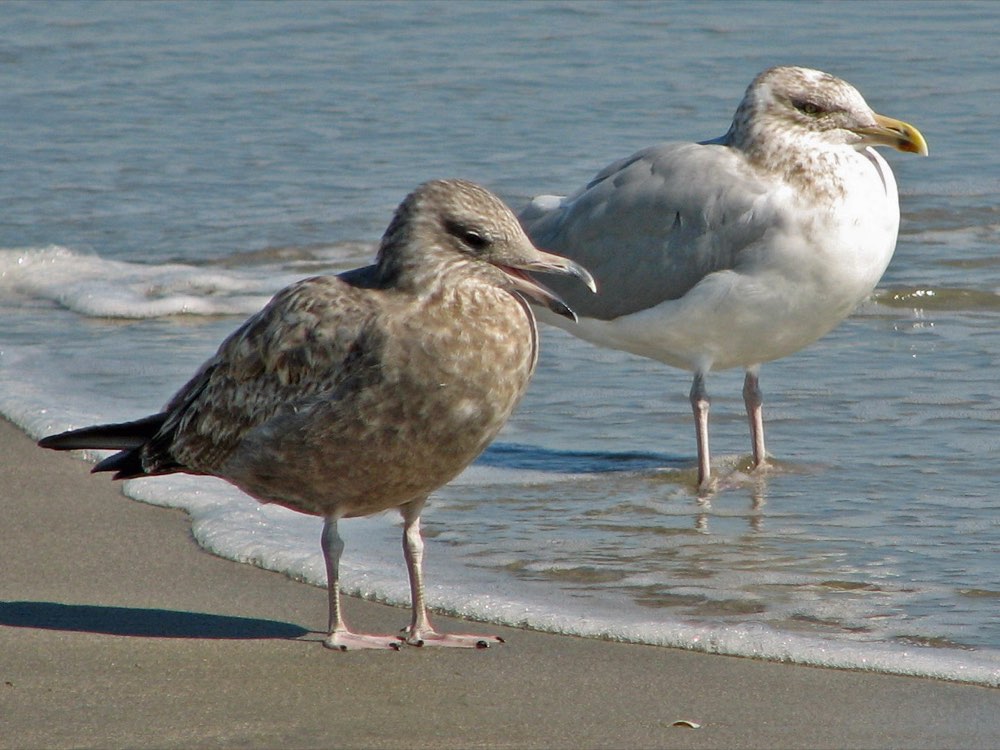
Identical to the male but smaller.
Male photo: Chuck Homler d/b/a Focus On Wildlife / Wikimedia, CC BY-SA 4.0 · Second photo: Dick Daniels (http://carolinabirds.org/) / Wikimedia, CC BY-SA 3.0
Field marks
- Pink legs, not yellow
- Red spot near the tip of the lower bill
- Pale gray back with black wingtips
- Pale eye with a yellow orbital ring
Similar species
What it sounds like
The classic loud, laughing, wailing gull cry, plus a rhythmic long call given head-down then thrown back.
Behaviour that gives it away
Drops clams and mussels onto rocks or pavement from height to crack them open.
Habitat & range
Coasts, harbours, large lakes, landfills and parking lots across the northeast and Great Lakes.
When you'll see it
Depending on where in eastern, northern and central North America you are, it is present all year and a winter visitor.
What it eats
Fish, invertebrates, eggs, carrion and refuse.
Did you know?
It takes four years to reach adult plumage, passing through a confusing series of mottled brown stages.
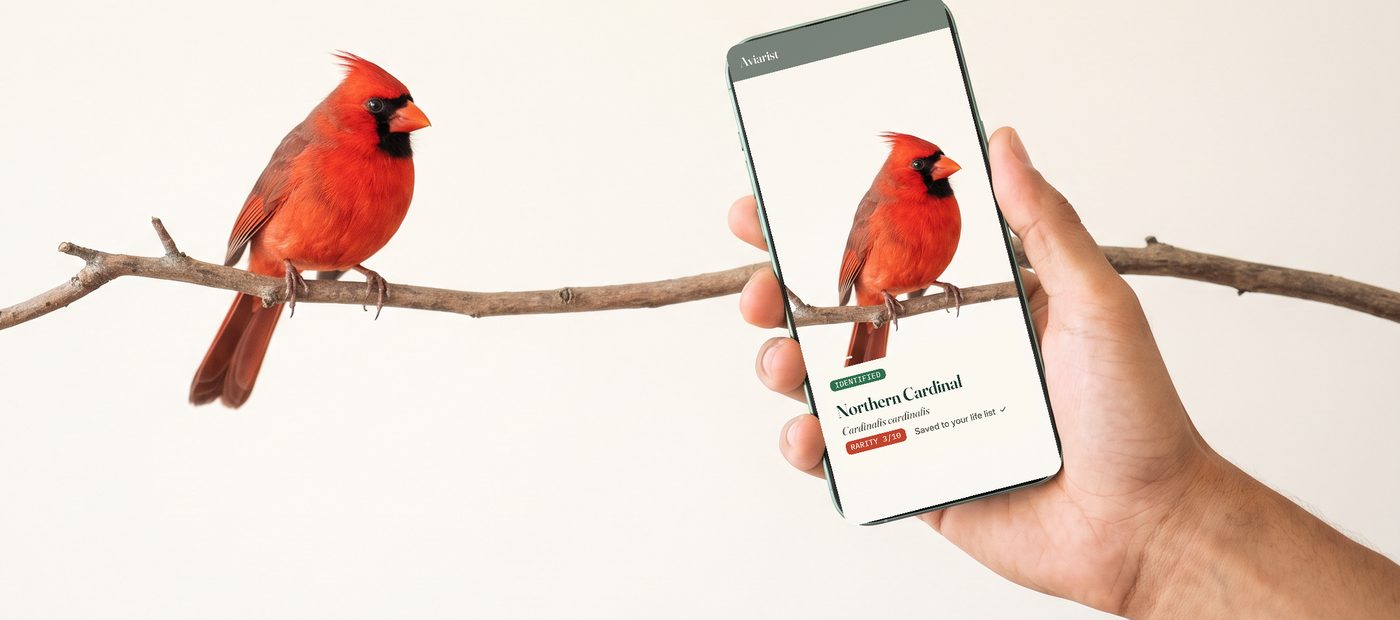
Spot one yourself?
Point your camera at any bird and Aviarist identifies it in seconds — then logs it to your life list.
Get Aviarist on Google Play
More backyard birds

_RWD3.jpg)
Other apps we make