How to Identify aBrown Pelican
Pelecanus occidentalis · 39.4–53.9 in (100–137 cm)
Male vs. female
Male
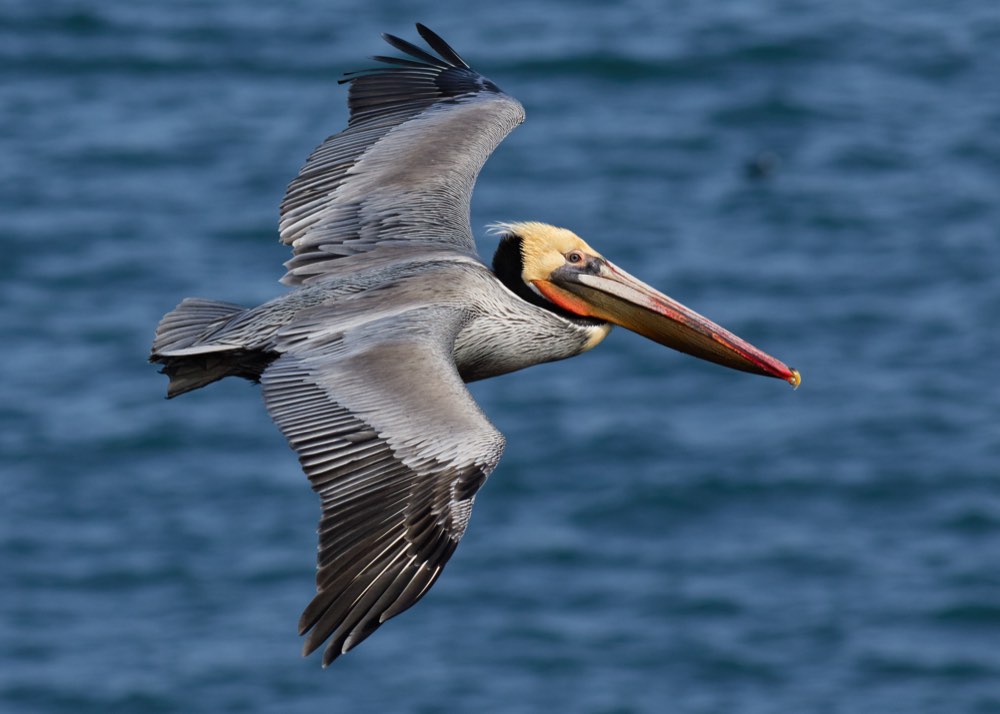
Gray-brown body with a white head washed yellow, a long pouched bill and a dark chestnut hindneck when breeding. Sexes look alike.
Female
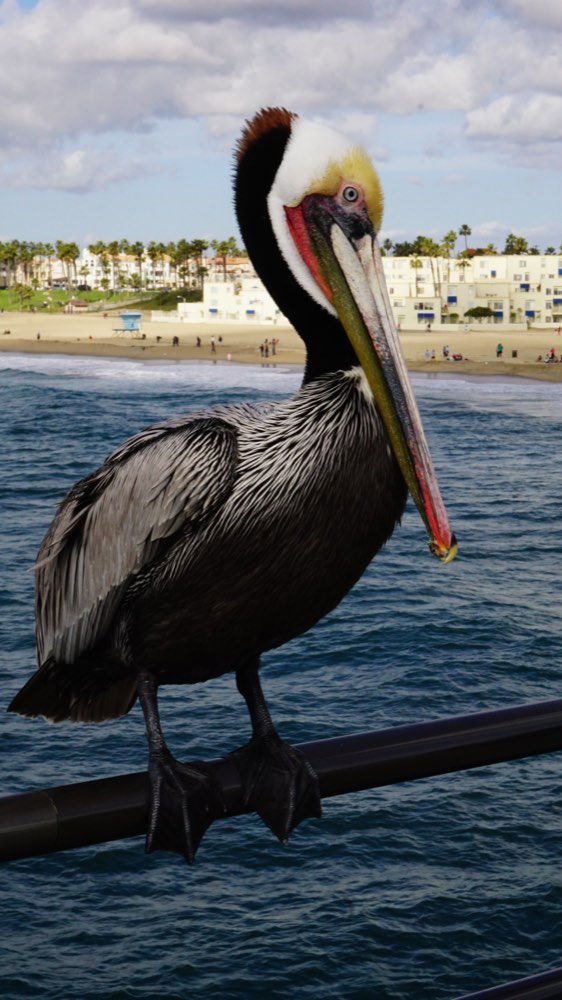
Identical to the male but smaller.
Male photo: Frank Schulenburg / Wikimedia, CC BY-SA 4.0 · Second photo: Pcmalkemus / Wikimedia, CC BY-SA 4.0
Field marks
- Enormous bill with an expandable throat pouch
- Flies in single-file lines just above the water
- Head drawn back onto the shoulders in flight
- Chestnut hindneck in breeding plumage
Similar species
What it sounds like
Adults are nearly silent; nestlings squawk noisily at the colony.
Behaviour that gives it away
The only pelican that dives from the air, plunging from up to sixty feet and stunning fish on impact.
Habitat & range
Coastal waters, bays, piers and estuaries along the Atlantic, Gulf and Pacific coasts.
When you'll see it
Present all year in southeastern, western and eastern North America.
What it eats
Fish caught by plunge-diving, especially menhaden and anchovies.
Did you know?
DDT thinned its eggshells so badly that it vanished from Louisiana entirely; after the pesticide was banned it recovered and was delisted in 2009.
Spot one yourself?
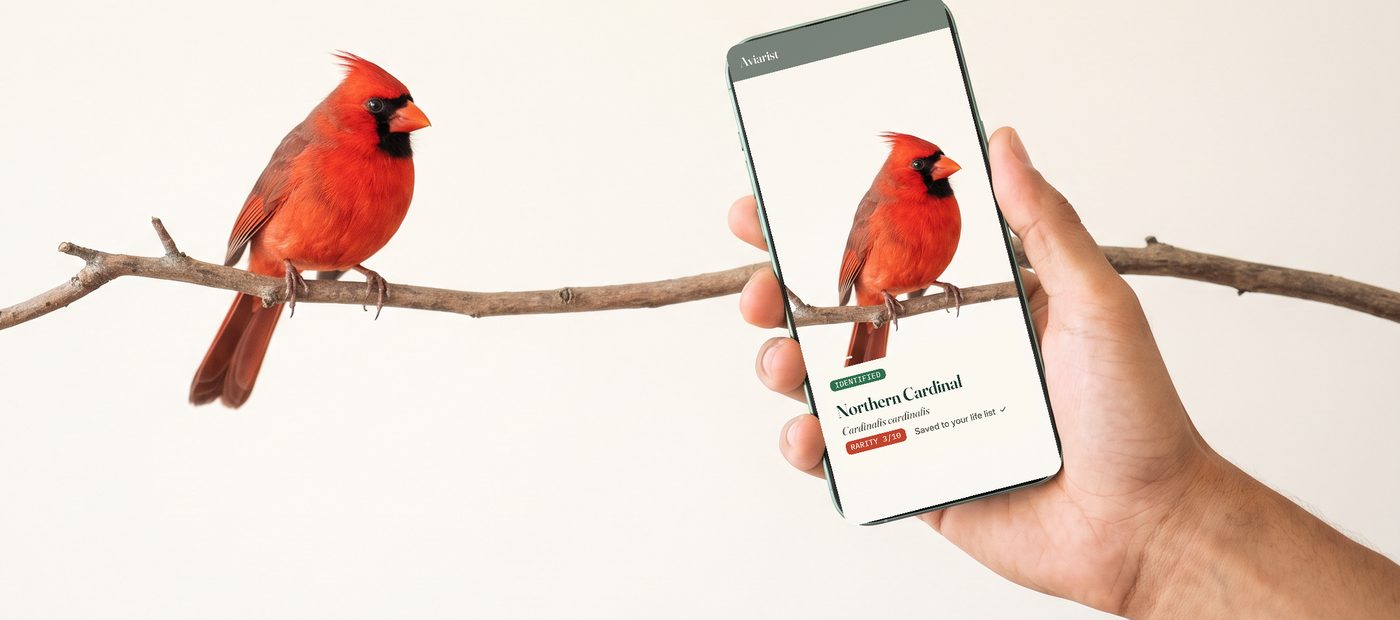
Point your camera at any bird and Aviarist identifies it in seconds — then logs it to your life list.
Get Aviarist on Google Play
More backyard birds
.jpg)

Other apps we make