How to Identify aLaughing Gull
Leucophaeus atricilla · 15.3–18.1 in (39–46 cm)
Male vs. female
Male
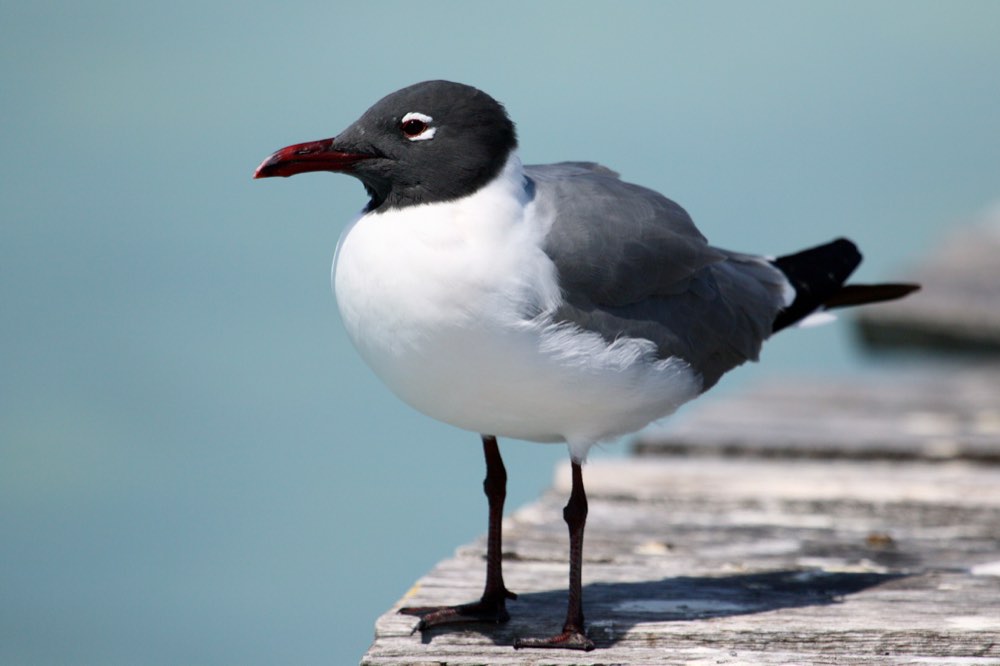
Black hood with broken white eye-arcs, dark gray back, white underparts and a drooping dark red bill. Sexes look alike.
Female
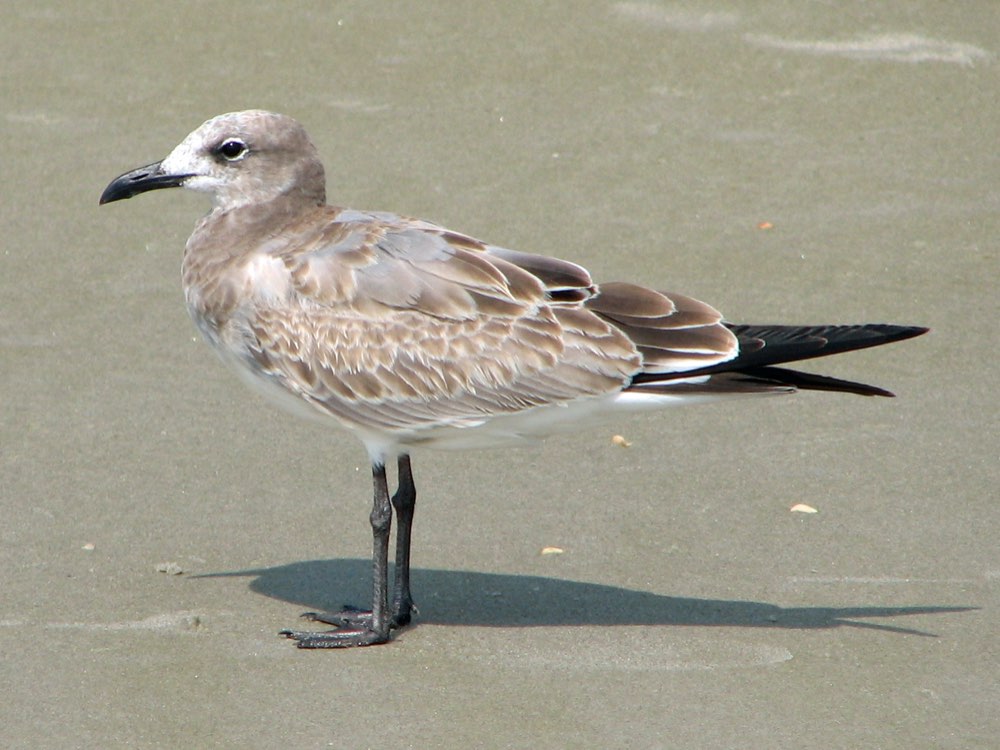
Identical to the male in the field.
Male photo: Cephas / Wikimedia, CC BY-SA 4.0 · Second photo: Dick Daniels (http://carolinabirds.org/) / Wikimedia, CC BY-SA 3.0
Field marks
- Full black hood in breeding season
- Dark slate-gray back, darker than most gulls
- Black wingtips blending into the back with little white
- Smudgy gray head marks in winter
Similar species
What it sounds like
A loud, strident, descending laugh — "ha-ha-ha-haah-haah" — that gives it its name.
Behaviour that gives it away
Boldly follows boats, piers and beachgoers, and will snatch food from other birds and from unattended hands.
Habitat & range
Beaches, salt marshes, piers, parking lots and coastal towns along the Atlantic and Gulf.
When you'll see it
Depending on where in southeastern and eastern North America you are, it is present all year and a summer visitor that arrives to breed.
What it eats
Fish, crabs, insects, eggs, refuse and handouts.
Did you know?
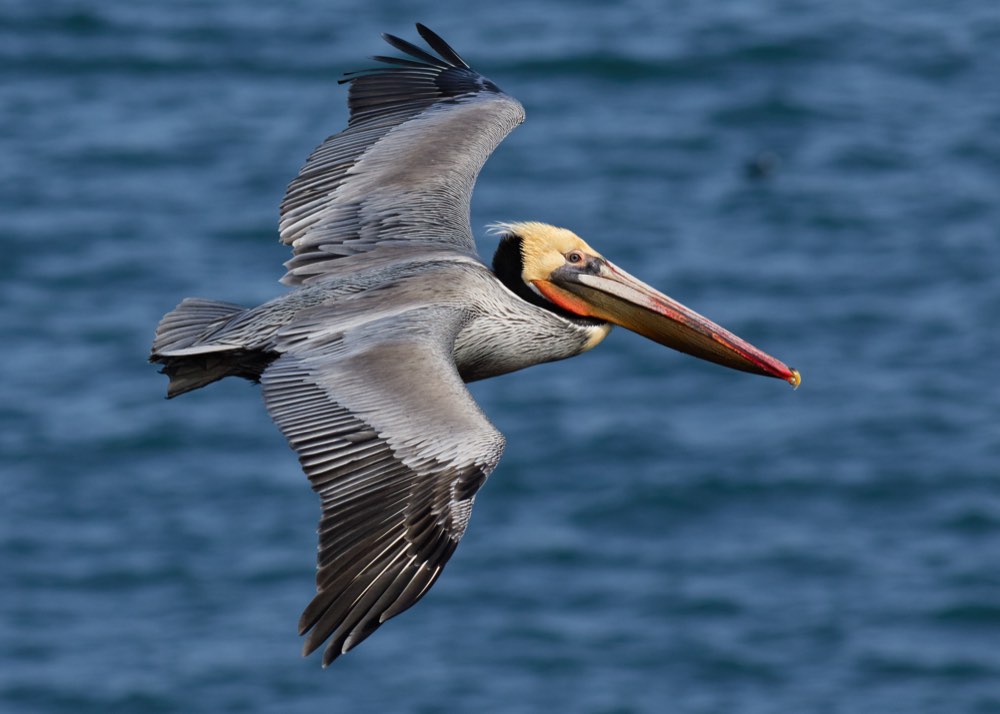
It regularly harasses Brown Pelicans, sometimes standing on a pelican’s head to steal fish from its pouch.
Spot one yourself?
Point your camera at any bird and Aviarist identifies it in seconds — then logs it to your life list.
Get Aviarist on Google Play
More backyard birds

_RWD4.jpg)
Other apps we make