How to Identify aGreat Crested Flycatcher
Myiarchus crinitus · 6.7–8.3 in (17–21 cm)
Male vs. female
Male
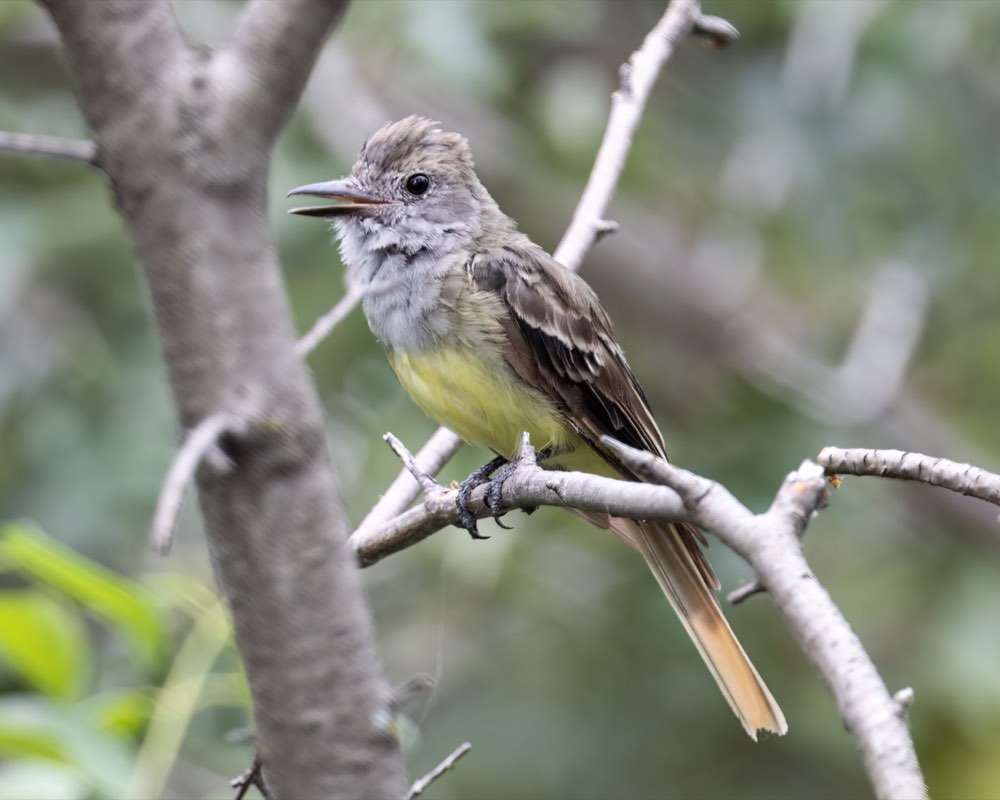
Olive-brown above with a gray face and throat, bright yellow belly, and rufous edging in the wings and tail. Sexes look alike.
Female
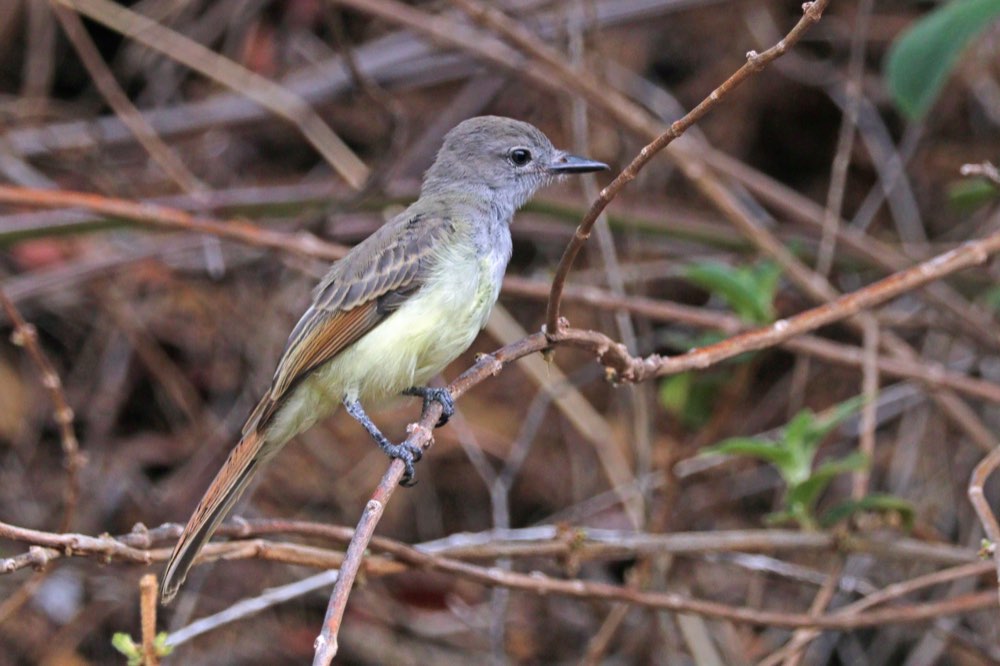
Identical to the male in the field.
Male photo: Polinova / Wikimedia, CC BY-SA 4.0 · Second photo: Charles J. Sharp / Wikimedia, CC BY-SA 4.0
Field marks
- Sharp division between a gray throat and a bright yellow belly
- Rufous panels in the wing and tail
- Shaggy, bushy-headed look rather than a pointed crest
- Heavy, broad-based bill
Similar species
What it sounds like
A loud, rising "wheep!" whistle, plus a rolling burry chatter, carrying easily through summer woodland.
Behaviour that gives it away
Nests in tree cavities and frequently weaves a shed snakeskin — or a strip of plastic in its place — into the nest lining.
Habitat & range
Open deciduous and mixed woodland, edges and wooded yards across the eastern United States in summer.
When you'll see it
A summer visitor that arrives to breed in eastern and central North America.
What it eats
Insects caught in flight in the canopy, plus small fruits.
Did you know?
It routinely adds a cast-off snakeskin to its nest, and where snakeskin is scarce will substitute crinkly plastic or cellophane.
Spot one yourself?
Point your camera at any bird and Aviarist identifies it in seconds — then logs it to your life list.
Get Aviarist on Google Play
More backyard birds

.jpg)
Other apps we make