How to Identify aEastern Kingbird
Tyrannus tyrannus · 7.5–9.1 in (19–23 cm)
Male vs. female
Male
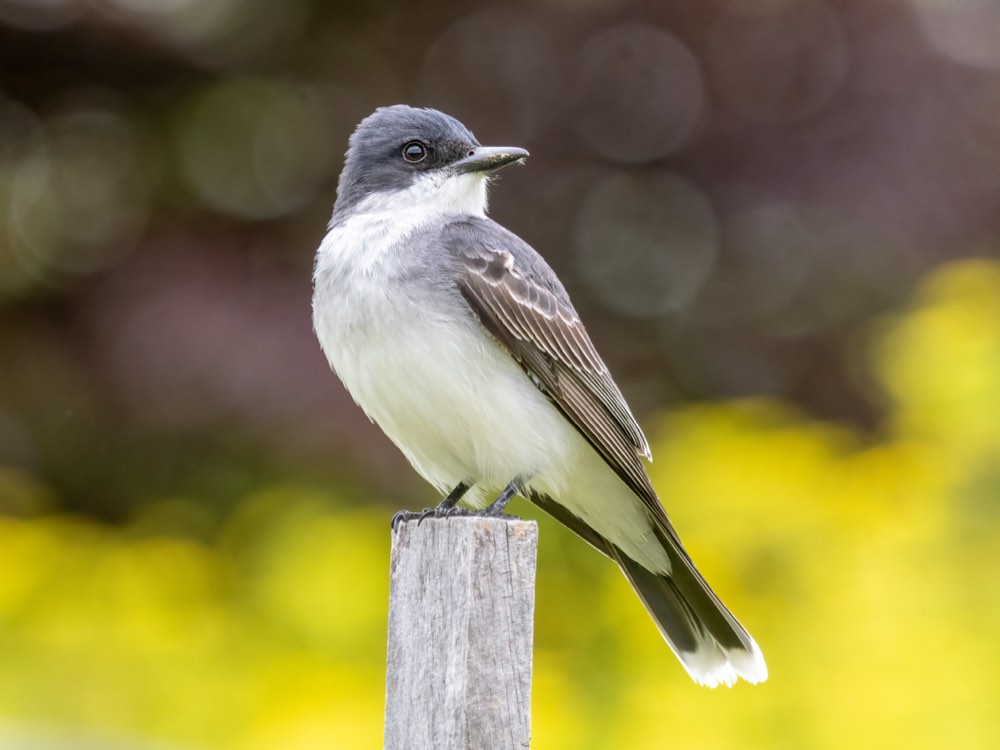
Blackish above and clean white below, with a squared black tail tipped in a broad white band. Sexes look alike.
Female
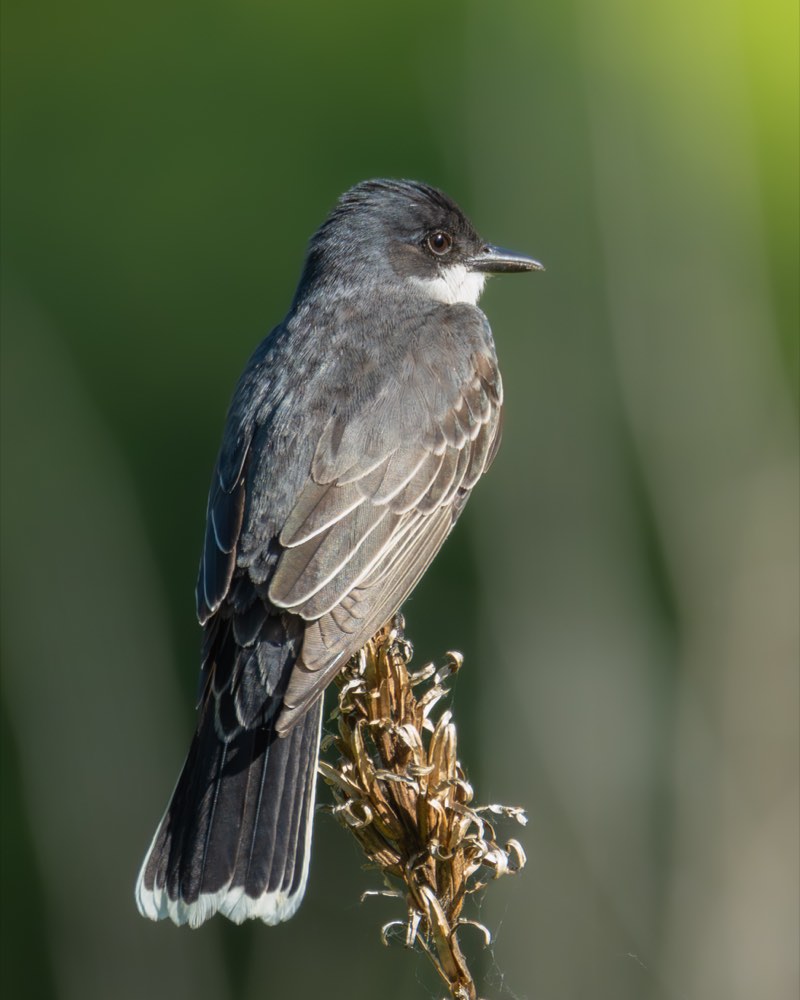
Identical to the male in the field.
Male photo: Rhododendrites / Wikimedia, CC BY-SA 4.0 · Second photo: P0cketriki / Wikimedia, CC BY-SA 4.0
Field marks
- Broad white band across the tip of a black tail
- Clean white underparts with no yellow
- Very upright posture on exposed perches
- Dark head appearing almost hooded
Similar species
What it sounds like
A high, electric, sputtering series of buzzy "kit-kit-kitter" notes, more like static than a song.
Behaviour that gives it away
Aggressively drives crows, hawks and even herons out of its territory, often landing on their backs in flight.
Habitat & range
Fields, orchards, marsh edges and roadsides with scattered perches, across most of North America in summer.
When you'll see it
A summer visitor that arrives to breed in North America.
What it eats
Flying insects taken on sallies from a perch, plus fruit on the wintering grounds.
Did you know?
Its scientific name Tyrannus tyrannus means "tyrant of tyrants", earned by its habit of attacking birds many times its size.
Spot one yourself?
Point your camera at any bird and Aviarist identifies it in seconds — then logs it to your life list.
Get Aviarist on Google Play
More backyard birds
.jpg)

Other apps we make