How to Identify aEastern Phoebe
Sayornis phoebe · 5.5–6.7 in (14–17 cm)
Male vs. female
Male
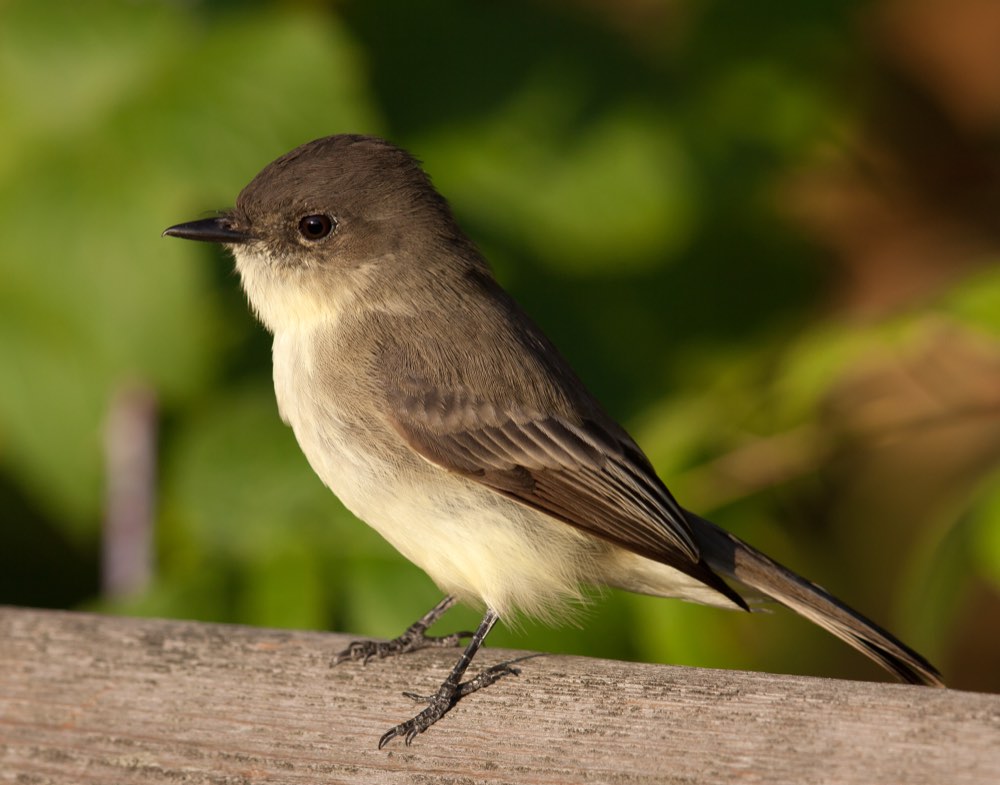
Grayish-brown above, dirty white below, with a darker head and an all-dark bill; no wing bars or eye-ring.
Female
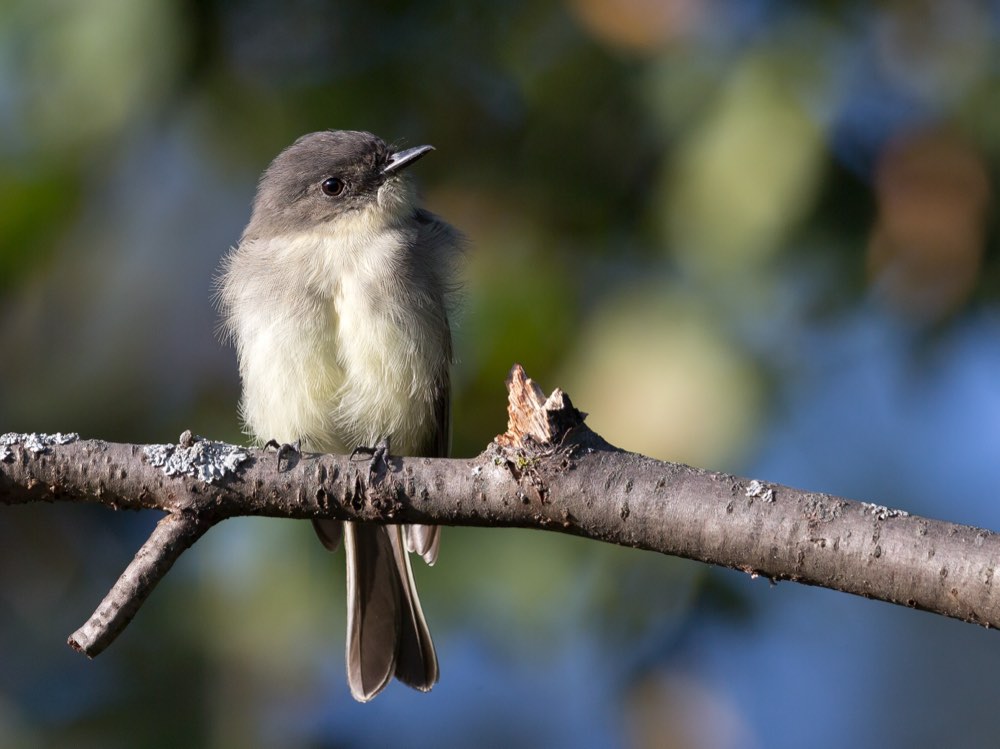
Identical to the male in the field.
Male photo: John Benson / Wikimedia, CC BY 2.0 · Second photo: John Benson / Wikimedia, CC BY 2.0
Field marks
- Persistent downward tail-wagging
- Dark head contrasting with paler underparts
- All-black bill
- Faint or absent wing bars
Similar species
What it sounds like
A raspy, buzzy "fee-BEE" with the second note scratchy — the bird says its own name.
Behaviour that gives it away
Pumps its tail downward almost constantly while perched, which identifies it before any plumage detail.
Habitat & range
Woodland edges, farmyards, and bridges near water across the eastern U.S.; nests on ledges and eaves.
When you'll see it
Depending on where in eastern and central North America you are, it is present all year and a summer visitor that arrives to breed.
What it eats
Flying insects taken in short sallies from a low perch.
Did you know?
In the early 1800s Audubon tied silver thread to phoebe nestlings and saw them return — often called North America's first bird-banding experiment.
Spot one yourself?
Point your camera at any bird and Aviarist identifies it in seconds — then logs it to your life list.
Get Aviarist on Google Play
More backyard birds


Other apps we make