How to Identify aFish Crow
Corvus ossifragus · 14.2–15.8 in (36–40 cm)
Male vs. female
Male
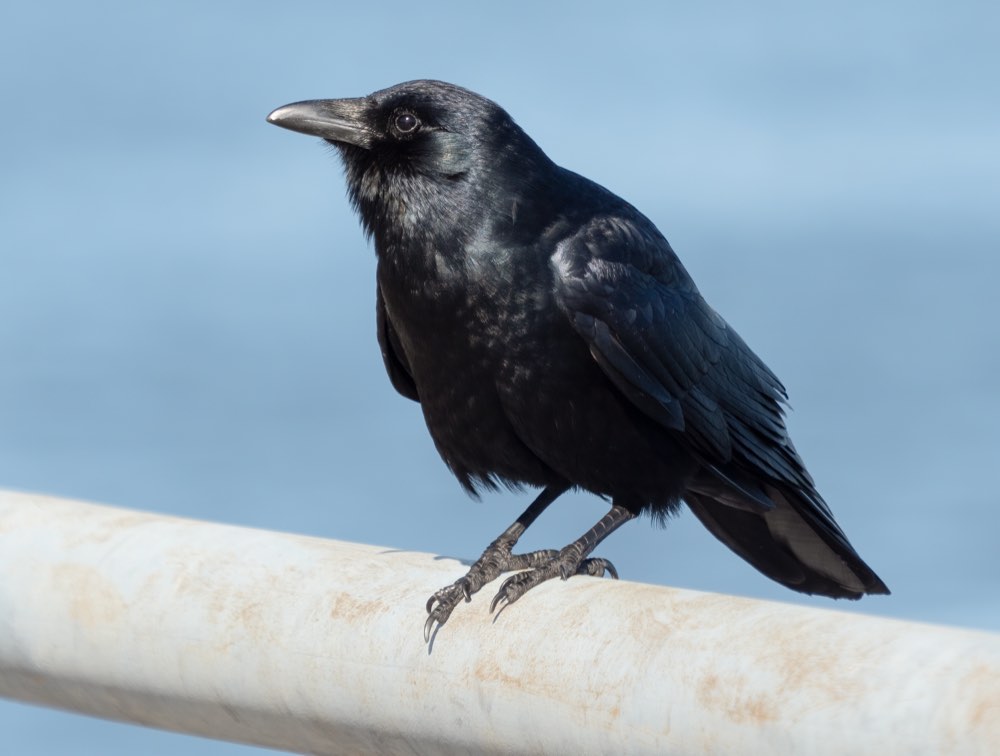
Entirely glossy black, slightly smaller and glossier than an American Crow, with a slimmer bill. Sexes look alike.
Female
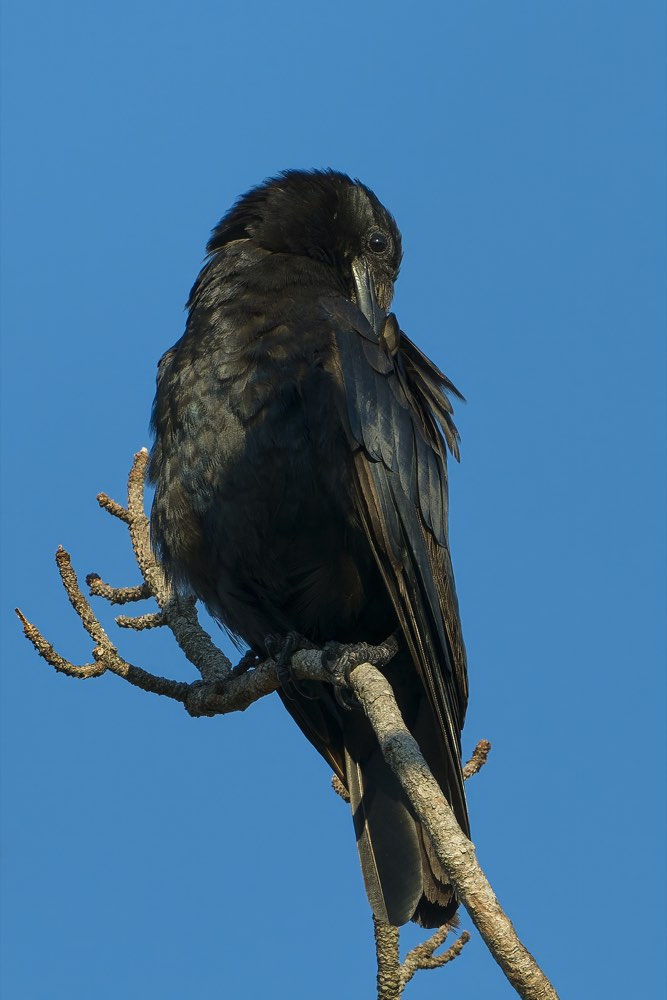
Identical to the male in the field.
Male photo: Rhododendrites / Wikimedia, CC BY-SA 4.0 · Second photo: Paul Danese / Wikimedia, CC BY-SA 4.0
Field marks
- Nasal, short calls rather than a clear caw
- Slightly smaller and glossier than an American Crow
- Often puffs its throat feathers when calling
- Almost always near water
Similar species
What it sounds like
A short, nasal, uh-uh "ca-hah", sounding like a crow with a head cold — the only reliable field mark.
Behaviour that gives it away
Sight identification is unreliable; even experts leave silent birds unidentified where the two crow species overlap.
Habitat & range
Coastal marshes, rivers, lakes, towns and farmland across the Southeast and mid-Atlantic.
When you'll see it
Present all year in southeastern and eastern North America.
What it eats
Crabs, fish, eggs, carrion, refuse, grain and fruit.
Did you know?
It is one of the few North American birds that essentially cannot be identified by sight — birders rely entirely on its nasal call.
Spot one yourself?
Point your camera at any bird and Aviarist identifies it in seconds — then logs it to your life list.
Get Aviarist on Google Play
More backyard birds
.jpg)

Other apps we make