How to Identify aCommon Raven
Corvus corax · 22–27 in (56–69 cm)
Male vs. female
Male
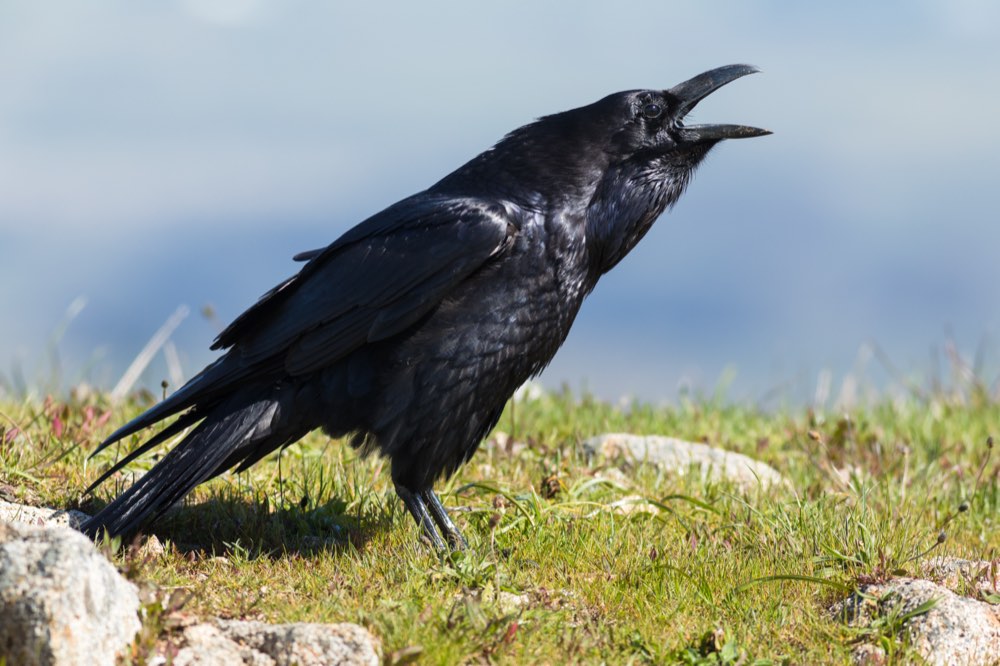
Entirely glossy black with a thick bill, shaggy throat hackles and a diamond-shaped tail. Sexes look alike.
Female
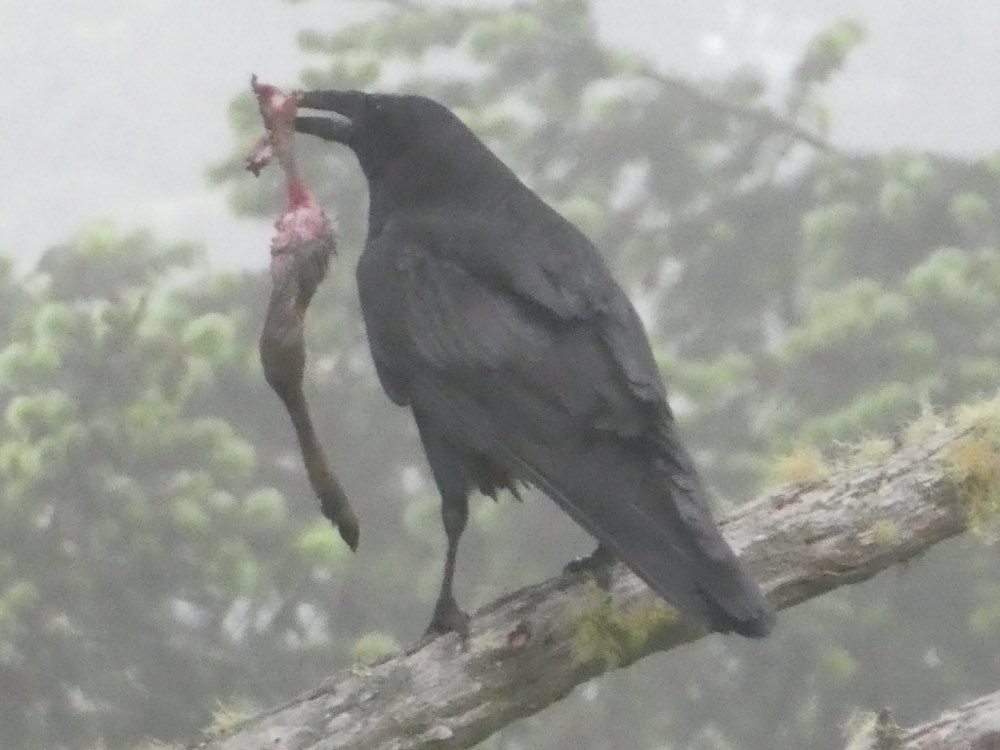
Identical to the male in the field.
Male photo: Frank Schulenburg / Wikimedia, CC BY-SA 4.0 · Second photo: (c) datadan, some rights reserved (CC BY) / Wikimedia, CC BY 4.0
Field marks
- Wedge or diamond-shaped tail, not squared off
- Shaggy pointed throat feathers
- Very heavy, deeply curved bill
- Soars and glides frequently, often tumbling or rolling
Similar species
What it sounds like
A deep, hollow, croaking "gronk-gronk", far lower and rougher than a crow’s caw.
Behaviour that gives it away
Solves multi-step puzzles in captivity and plays in flight, rolling upside-down and dropping objects to catch them again.
Habitat & range
Forest, mountains, desert, tundra, coastline and increasingly towns, across the West, the North and the Appalachians.
When you'll see it
Present all year in western, northern and eastern North America.
What it eats
Almost anything — carrion, small animals, eggs, insects, grain and refuse.
Did you know?
It is among the most intelligent of all birds, capable of solving multi-step problems and apparently playing purely for its own sake.
Spot one yourself?
Point your camera at any bird and Aviarist identifies it in seconds — then logs it to your life list.
Get Aviarist on Google Play
More backyard birds


Other apps we make