How to Identify aClark's Nutcracker
Nucifraga columbiana · 10.6–11.8 in (27–30 cm)
Male vs. female
Male
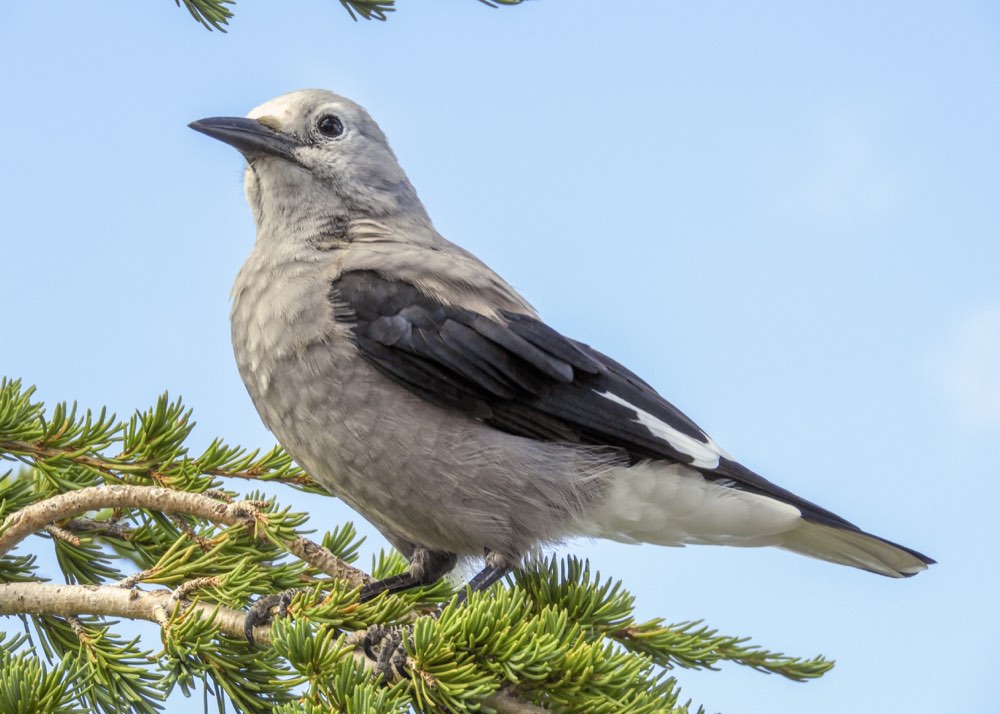
Soft ash-gray body with black wings showing white trailing edges, a black-and-white tail and a long dagger bill. Sexes look alike.
Female
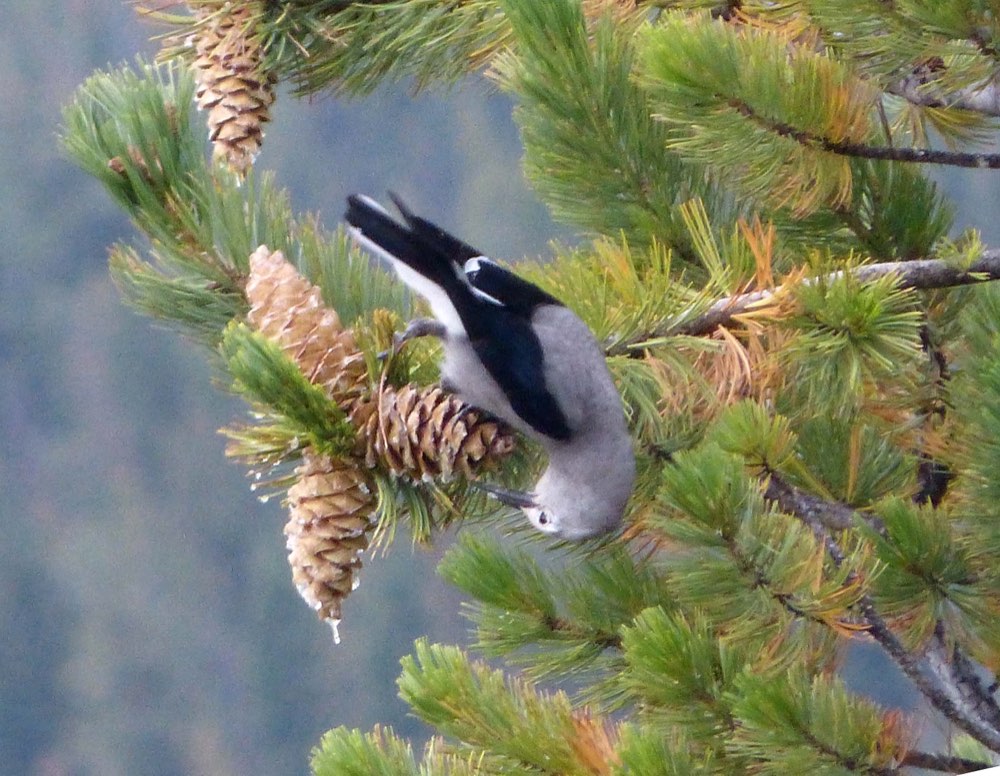
Identical to the male in the field.
Male photo: Polinova / Wikimedia, CC BY-SA 4.0 · Second photo: gailhampshire from Cradley, Malvern, U.K / Wikimedia, CC BY 2.0
Field marks
- Pale gray body with crisp black wings
- White patches in the trailing wing and outer tail
- Long, straight, sharply pointed black bill
- High-elevation conifer forest
Similar species
What it sounds like
A harsh, drawn-out, grating "kraaa", carrying across mountain basins.
Behaviour that gives it away
Buries tens of thousands of pine seeds each autumn in thousands of separate caches and relocates most of them months later under snow.
Habitat & range
High conifer forest and treeline in the western mountains, from the Rockies to the Sierra.
When you'll see it
Present all year in western North America.
What it eats
Pine seeds, especially whitebark pine, plus insects, eggs and carrion.
Did you know?
It carries up to 150 seeds at a time in a pouch under its tongue, and its memory for cache sites is among the best measured in any animal.
Spot one yourself?
Point your camera at any bird and Aviarist identifies it in seconds — then logs it to your life list.
Get Aviarist on Google Play
More backyard birds


Other apps we make