How to Identify aNorthern Mockingbird
Mimus polyglottos · 8.3–10.2 in (21–26 cm)
Male vs. female
Male
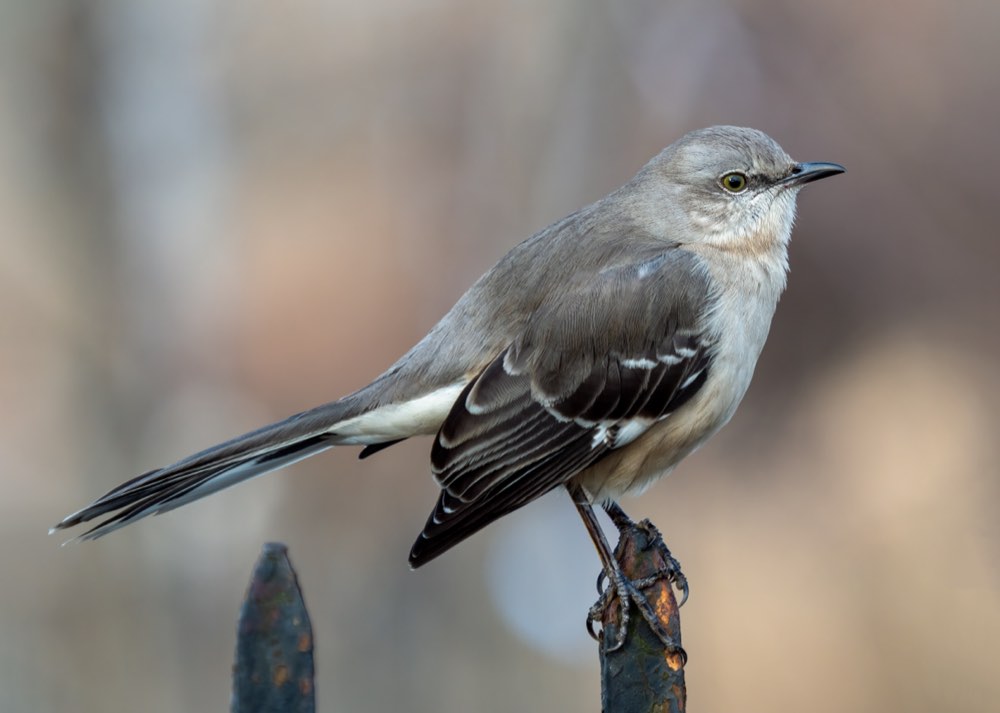
Gray above, pale below, with two white wing bars and large white wing patches; long tail with white outer feathers.
Female
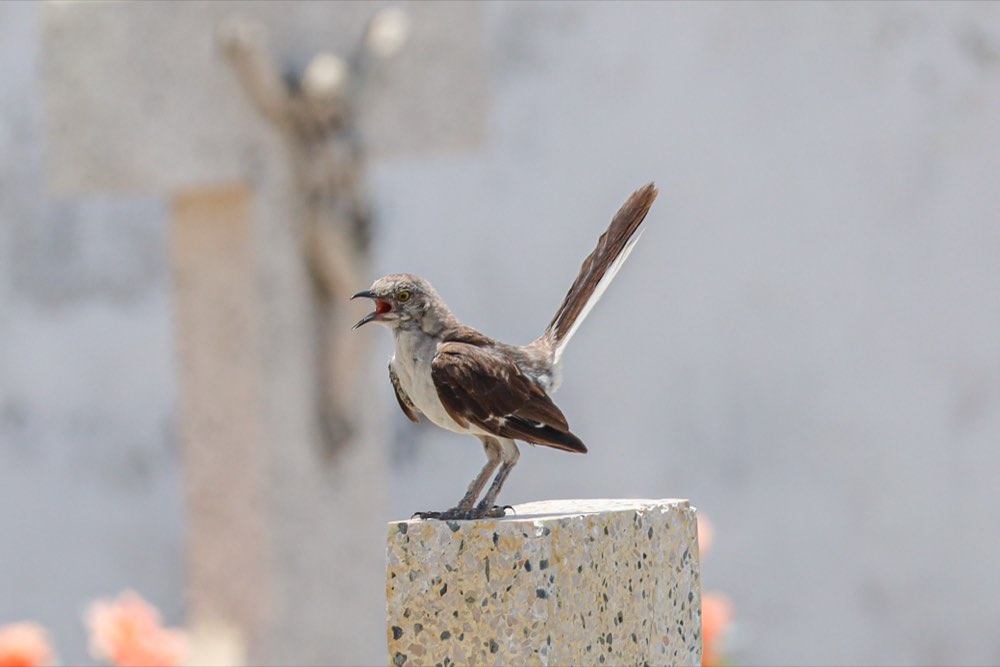
Identical to the male in the field.
Male photo: Rhododendrites / Wikimedia, CC BY-SA 4.0 · Second photo: Ligocsicnarf89 / Wikimedia, CC BY 4.0
Field marks
- Big white wing patches flashing in flight
- Long tail edged in white
- Thin bill and long legs
- Slim, upright, alert posture
Similar species
What it sounds like
An endless stream of borrowed phrases, each repeated three or more times before moving on.
Behaviour that gives it away
Flashes its white wing patches in sharp jerky steps while walking, which appears to startle insects into moving.
Habitat & range
Towns, hedgerows, parking lots, and shrubby edges across the southern and central U.S., spreading north.
When you'll see it
Present all year in North America.
What it eats
Insects in summer and berries in winter; fiercely defends fruiting shrubs.
Did you know?
A single male may learn 200 songs in a lifetime, mimicking other birds, frogs, and even car alarms.
Spot one yourself?
Point your camera at any bird and Aviarist identifies it in seconds — then logs it to your life list.
Get Aviarist on Google Play
More backyard birds
.jpg)

Other apps we make