How to Identify aCedar Waxwing
Bombycilla cedrorum · 5.5–6.7 in (14–17 cm)
Male vs. female
Male
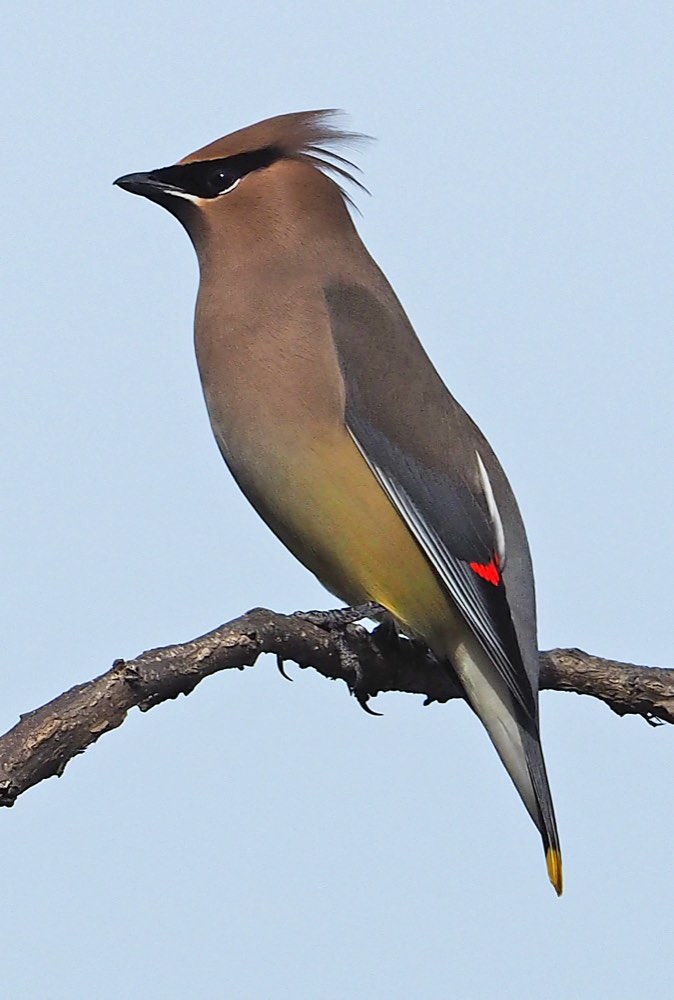
Silky tan-brown fading to gray, with a crest, black mask, pale-yellow belly, and a bright yellow tail tip.
Female
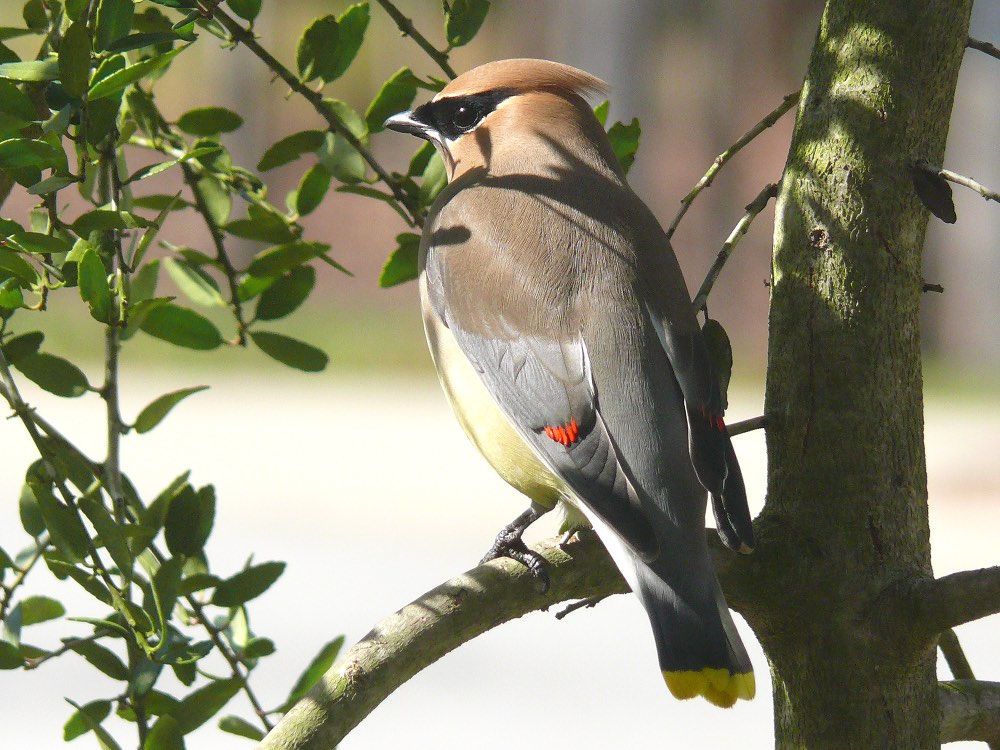
Essentially identical to the male in the field.
Male photo: Judy Gallagher / Wikimedia, CC BY 2.0 · Second photo: Ken Thomas / Wikimedia, Public domain
Field marks
- Smooth crest and black bandit mask
- Yellow band across the tail tip
- Waxy red droplets on the wingtips (not always visible)
- Travels in tight, chattering flocks
Similar species
What it sounds like
A very high, thin, hissing "seee", so high-pitched that some people cannot hear it.
Behaviour that gives it away
A line of perched birds will pass a single berry from bill to bill down the row and back again.
Habitat & range
Woodland edges, orchards, and suburbs with berry-bearing trees across most of North America.
When you'll see it
Present all year in North America.
What it eats
Mostly fruit and berries year-round, plus insects in summer.
Did you know?
Waxwings can get tipsy — even fatally — on overripe, fermented berries in late winter.
Spot one yourself?
Point your camera at any bird and Aviarist identifies it in seconds — then logs it to your life list.
Get Aviarist on Google Play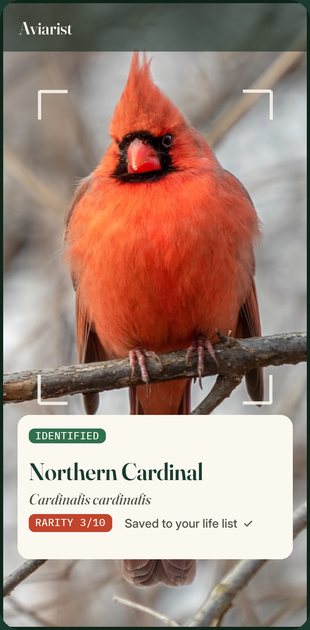
More backyard birds
.jpg)

Other apps we make