How to Identify aNorthern Flicker
Colaptes auratus · 11.0–12.2 in (28–31 cm)
Male vs. female
Male
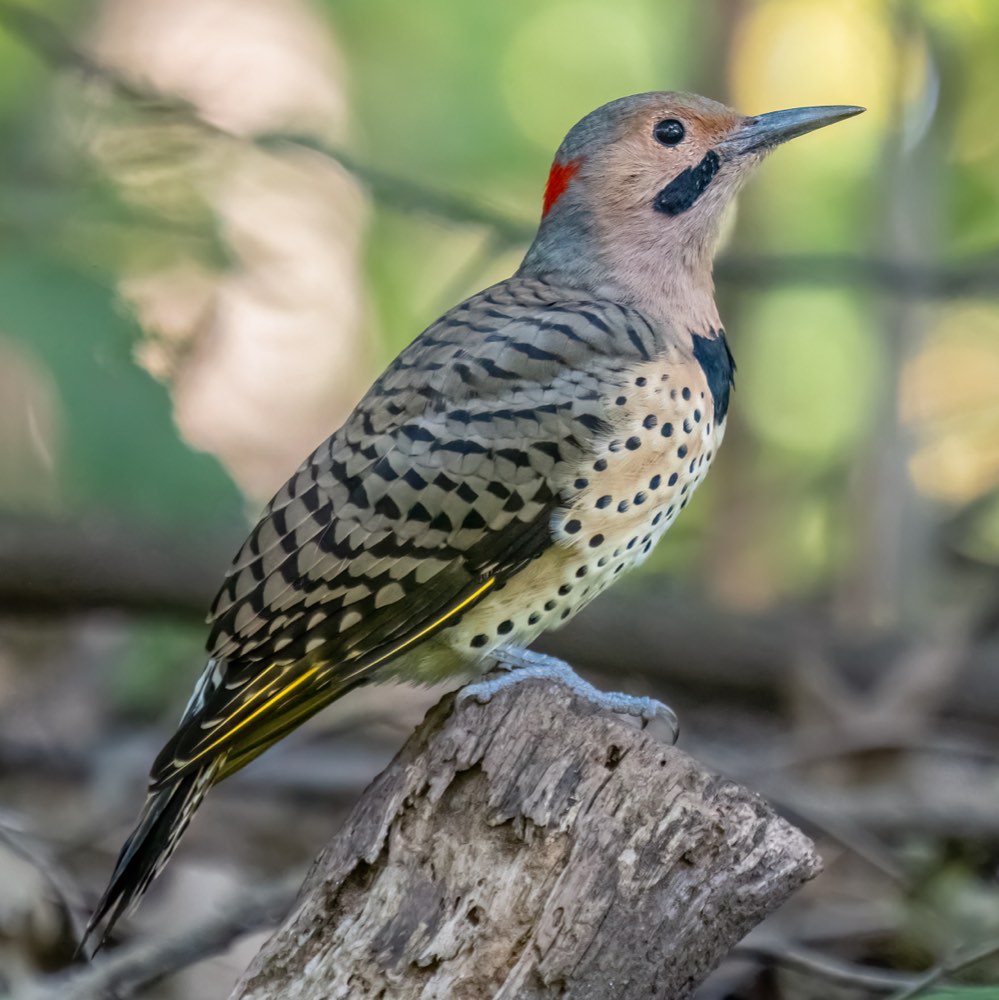
Brown-and-black barred back, spotted belly, gray or brown face, black bib; "yellow-shafted" males show a black mustache.
Female
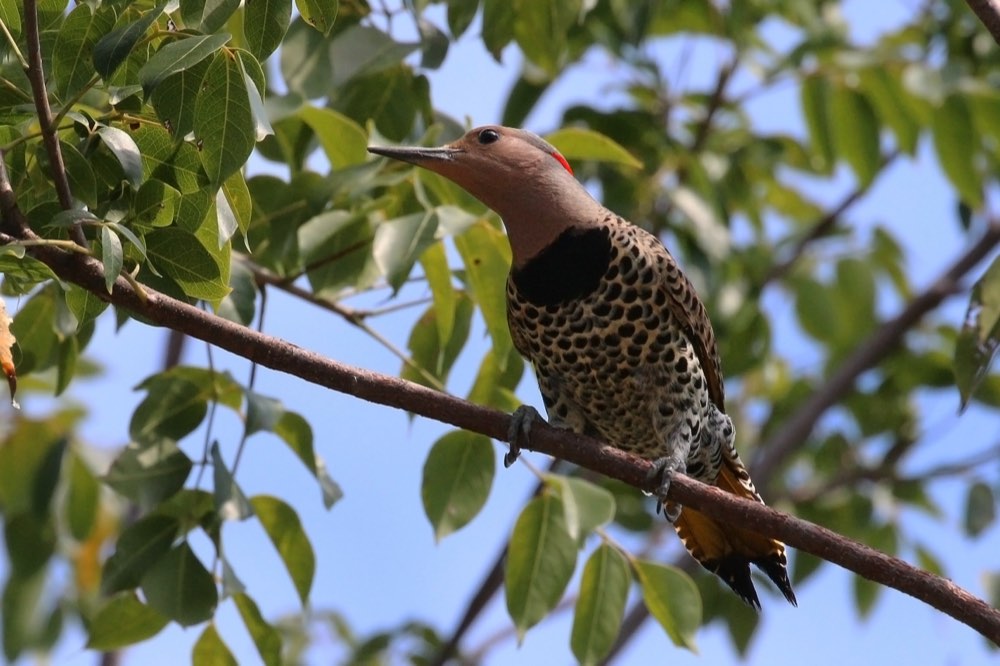
Like the male but lacks the mustache stripe.
Male photo: Rhododendrites / Wikimedia, CC BY-SA 4.0 · Female photo: Charles J. Sharp / Wikimedia, CC BY-SA 4.0
Field marks
- Black crescent bib on the chest
- Spotted underparts and barred back
- White rump patch obvious in flight
- Yellow (east) or red (west) wing-and-tail shafts
Similar species
What it sounds like
A long, loud, ringing "kleer", and a rhythmic "wicka-wicka-wicka" during displays.
Behaviour that gives it away
Feeds mainly on the ground, and eats more ants than any other North American bird.
Habitat & range
Open woods, forest edges, parks, and lawns across nearly all of North America.
When you'll see it
Present all year in North America.
What it eats
Ants and beetles from the ground — the most terrestrial North American woodpecker — plus fruit.
Did you know?
Flickers eat more ants than almost any other North American bird, lapping them up with a long, sticky tongue.
Spot one yourself?
Point your camera at any bird and Aviarist identifies it in seconds — then logs it to your life list.
Get Aviarist on Google Play
More backyard birds
_(cropped).jpg)
_female.JPG)
Other apps we make