How to Identify aRing-necked Duck
Aythya collaris · 15.3–18.1 in (39–46 cm)
Male vs. female
Male
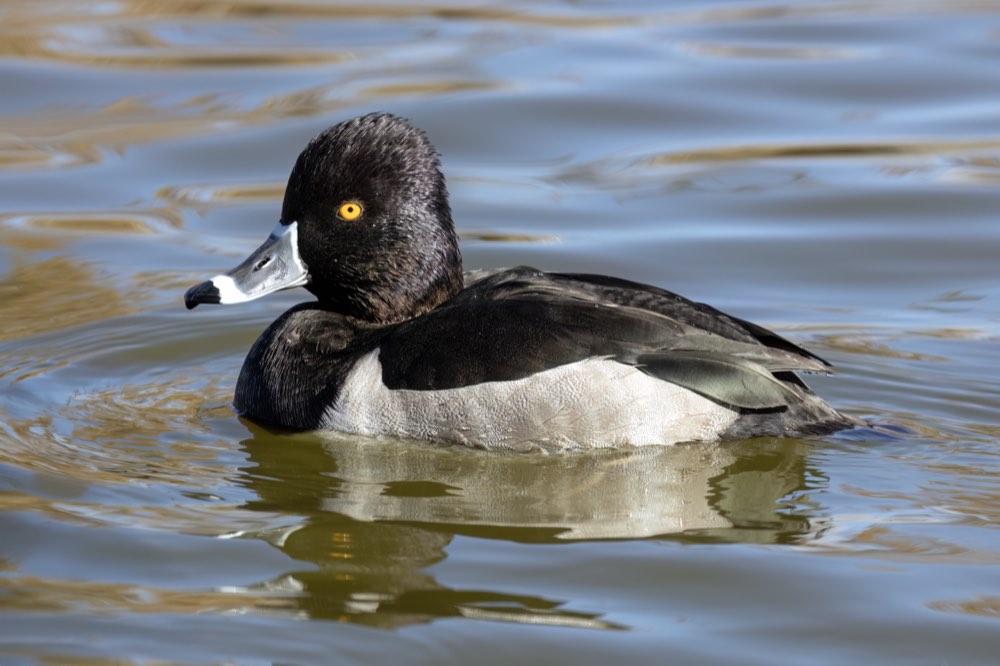
Black head, chest and back with gray sides, a white spur climbing the shoulder, and a white-ringed bill.
Female
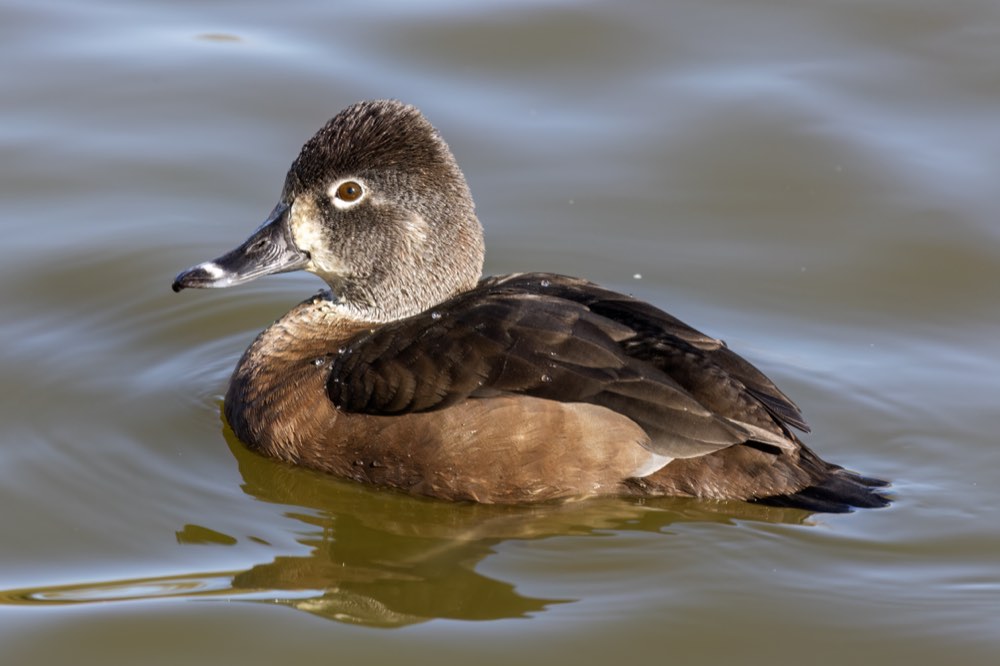
Brown with a pale eye-ring, a thin white line behind the eye and a faintly ringed bill.
Male photo: Polinova / Wikimedia, CC BY-SA 4.0 · Female photo: Polinova / Wikimedia, CC BY-SA 4.0
Field marks
- Tall peaked crown, highest at the rear
- White ring near the bill tip
- Vertical white wedge in front of the folded wing
- The neck ring it is named for is almost never visible
Similar species
What it sounds like
Largely silent; low grunts and a soft whistling from displaying males.
Behaviour that gives it away
Prefers small wooded ponds and marshes over big open water, so it often turns up on ponds too small for other diving ducks.
Habitat & range
Wooded ponds, marshes and small lakes; winters on lakes and reservoirs across the southern half of the continent.
When you'll see it
Depending on where in North America you are, it is a winter visitor and a passage migrant, seen mainly in spring and autumn.
What it eats
Aquatic plants, seeds and invertebrates taken on shallow dives.
Did you know?
Its faint chestnut neck ring is nearly impossible to see in the field — the white bill ring is what people actually use.
Spot one yourself?
Point your camera at any bird and Aviarist identifies it in seconds — then logs it to your life list.
Get Aviarist on Google Play
More backyard birds


Other apps we make