How to Identify aBlack Phoebe
Sayornis nigricans · 6.3 in (16 cm)
Male vs. female
Male
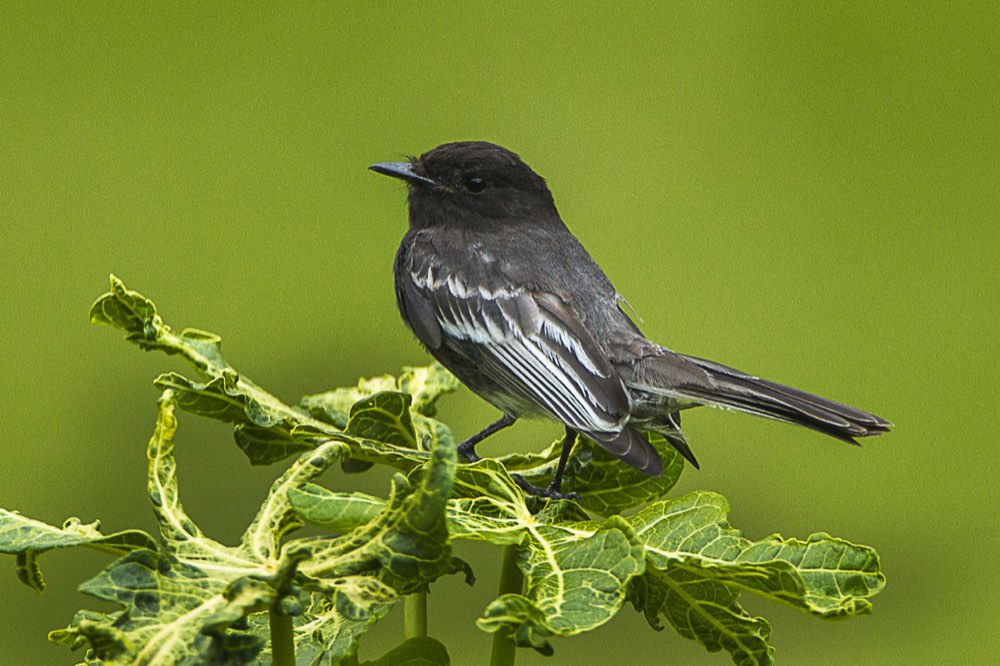
Sooty black head, chest and upperparts with a sharply demarcated white belly and undertail. Sexes look alike.
Female
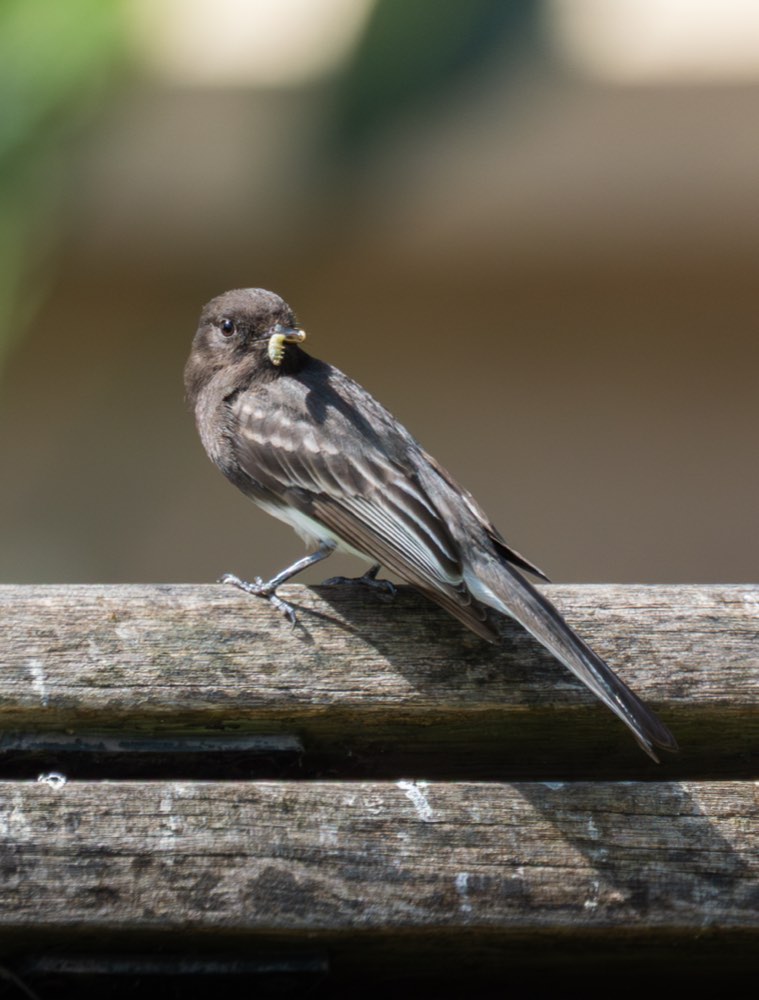
Identical to the male in the field.
Male photo: Francesco Veronesi from Italy / Wikimedia, CC BY-SA 2.0 · Second photo: P0cketriki / Wikimedia, CC BY-SA 4.0
Field marks
- Sharp black-to-white division across the lower chest
- Constantly pumps and spreads its tail while perched
- Small dark bill and upright posture
- Almost always within sight of water
Similar species
What it sounds like
A thin, rising then falling "fee-bee, fee-bew", drier and buzzier than an Eastern Phoebe’s.
Behaviour that gives it away
Pumps its tail downward almost continuously while perched, and builds a mud-and-grass cup on walls, culverts and bridge ledges.
Habitat & range
Streams, ponds, irrigation ditches, park fountains and shaded yards across the Southwest and California.
When you'll see it
Present all year in western and southwestern North America.
What it eats
Flying insects taken on short sallies from a low perch, occasionally small fish.
Did you know?
It is so closely tied to water that a pair will settle at something as small as a garden fountain or a livestock trough.
Spot one yourself?
Point your camera at any bird and Aviarist identifies it in seconds — then logs it to your life list.
Get Aviarist on Google Play
More backyard birds



Other apps we make