How to Identify aRuby-crowned Kinglet
Corthylio calendula · 3.5–4.3 in (9–11 cm)
Male vs. female
Male
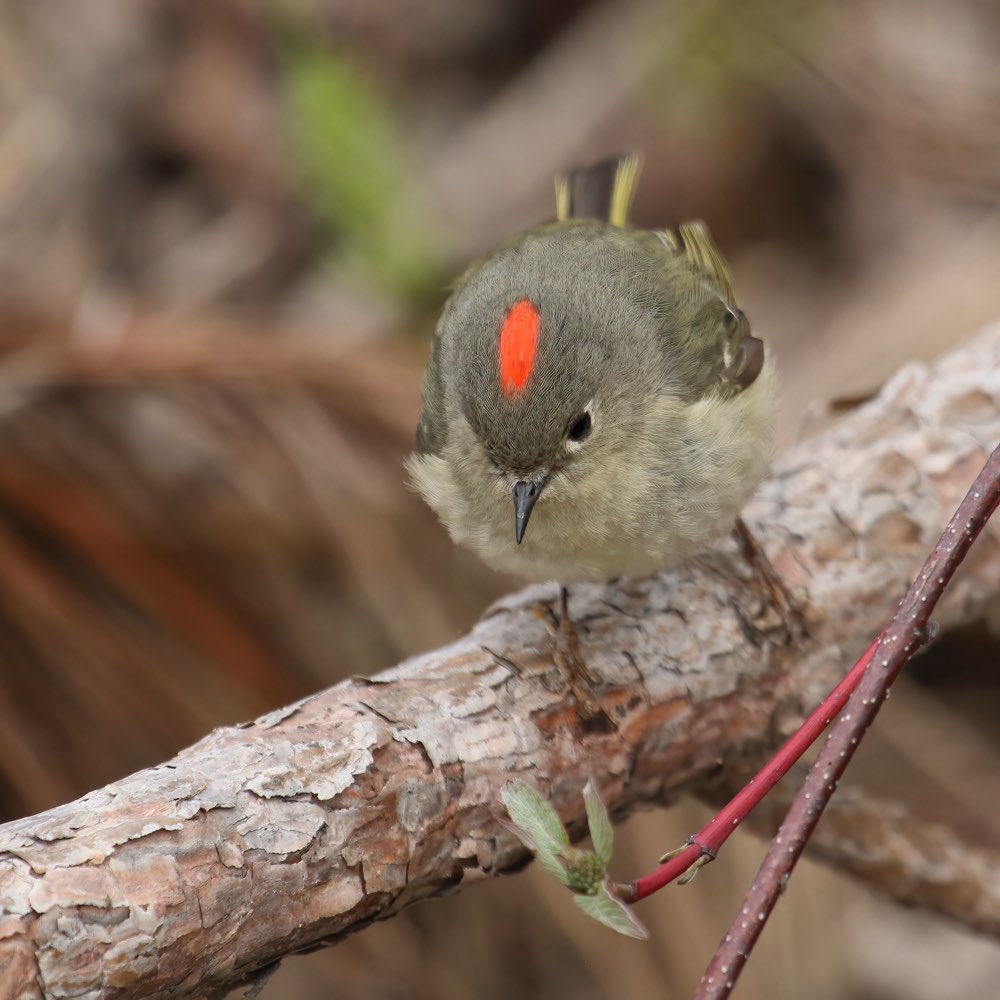
Olive-green above, pale below, with a white eye-ring, two white wingbars and a scarlet crown patch usually kept hidden.
Female
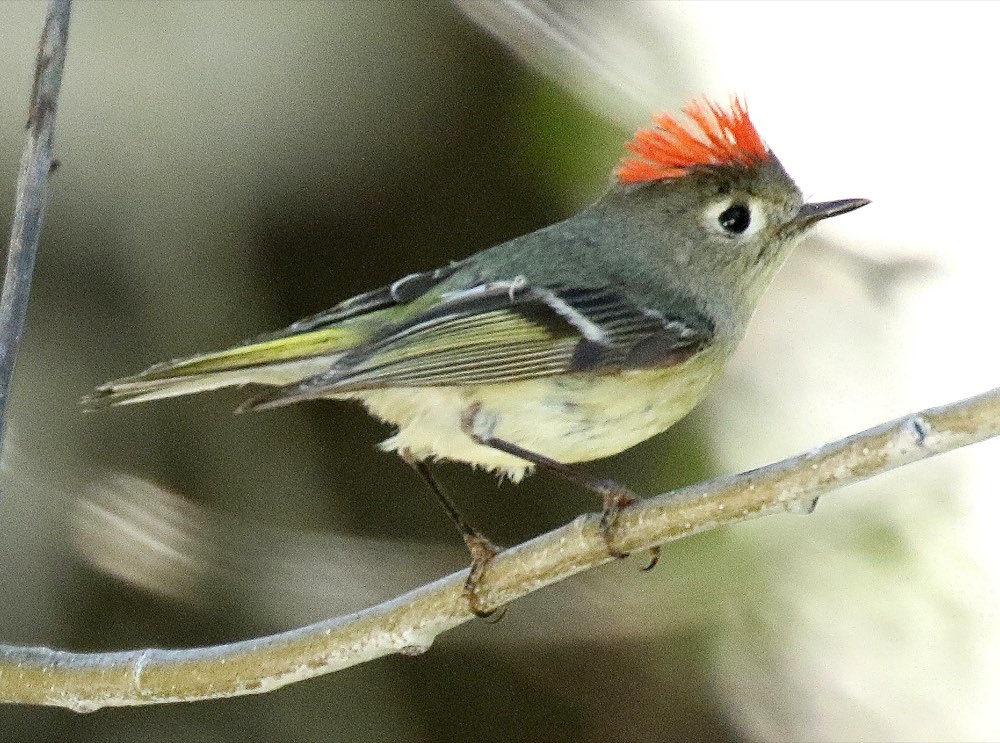
Identical but with no red crown patch at all.
Male photo: Cephas / Wikimedia, CC BY-SA 4.0 · Second photo: TonyCastro / Wikimedia, CC BY-SA 4.0
Field marks
- Broken white eye-ring giving a startled expression
- Two white wingbars with a black bar just below the lower one
- Constant nervous wing-flicking
- Very small and round with a thin, short bill
Similar species
What it sounds like
A dry "je-dit" call, and a surprisingly loud tumbling song that starts with thin high notes and bursts into a rich warble.
Behaviour that gives it away
Flicks its wings almost continuously while foraging, a habit so persistent it identifies the bird before any plumage detail is visible.
Habitat & range
Breeds in northern and mountain conifer forest; winters commonly in woods, thickets and yards across the southern half of the continent.
When you'll see it
Depending on where in North America you are, it is a winter visitor and a passage migrant, seen mainly in spring and autumn.
What it eats
Tiny insects and spiders, some berries and sap in winter.
Did you know?
The male’s red crown is normally invisible, raised into a blazing stripe only when he is agitated or displaying.
Spot one yourself?
Point your camera at any bird and Aviarist identifies it in seconds — then logs it to your life list.
Get Aviarist on Google Play
More backyard birds


Other apps we make