How to Identify aNorthern Saw-whet Owl
Aegolius acadicus · 7.1–8.3 in (18–21 cm)
Male vs. female
Male
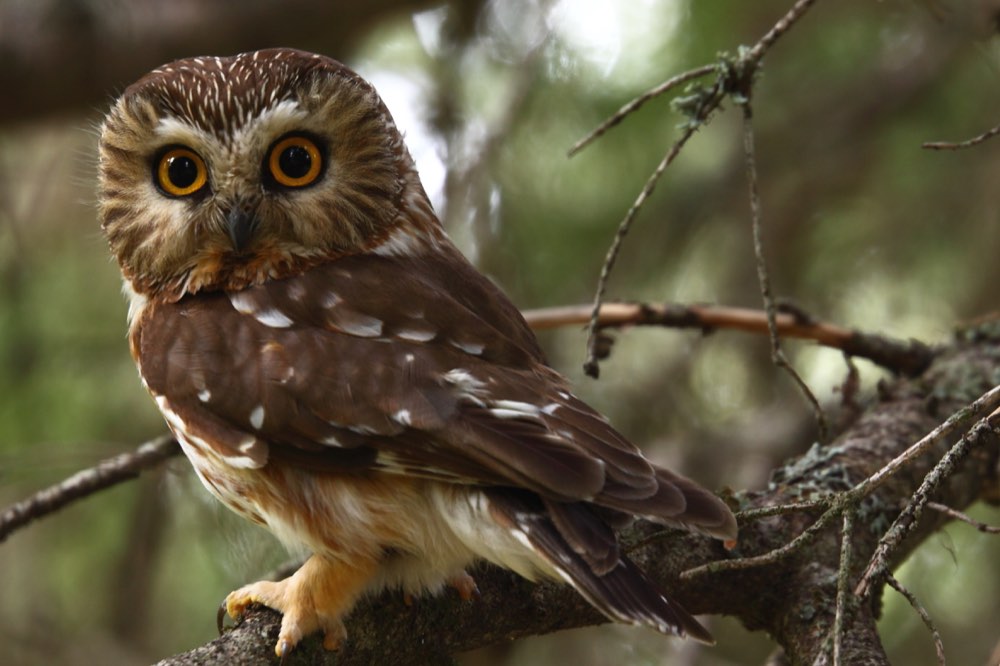
Rich brown above with white spotting, white below with broad rusty streaks, and a pale V between huge yellow eyes. Sexes look alike.
Female
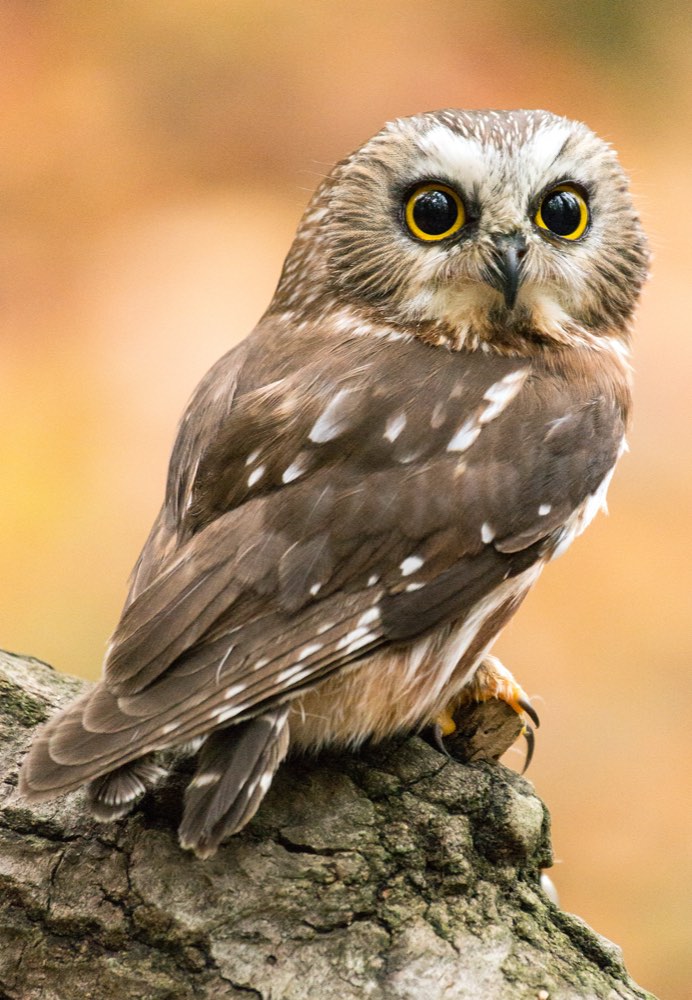
Identical in plumage but larger.
Male photo: Kameron Perensovich / Wikimedia, CC BY-SA 2.0 · Second photo: Peter K Burian / Wikimedia, CC BY-SA 4.0
Field marks
- Very small — barely bigger than a robin
- Large round head with no ear tufts
- Broad rusty streaks on a white breast
- White V between the eyes on a rounded facial disc
Similar species
What it sounds like
A monotonous series of evenly spaced whistled "too-too-too" notes, repeated for minutes on end.
Behaviour that gives it away
Roosts by day pressed against a trunk in dense conifers and is famously reluctant to fly, letting people approach closely.
Habitat & range
Dense conifer and mixed forest, especially thickets used for daytime roosting.
When you'll see it
Depending on where in North America you are, it is present all year and a winter visitor.
What it eats
Deer mice and other small rodents, plus the occasional small bird.
Did you know?
Its repetitive tooting was thought to sound like a saw being sharpened on a whetstone, which is where the name comes from.
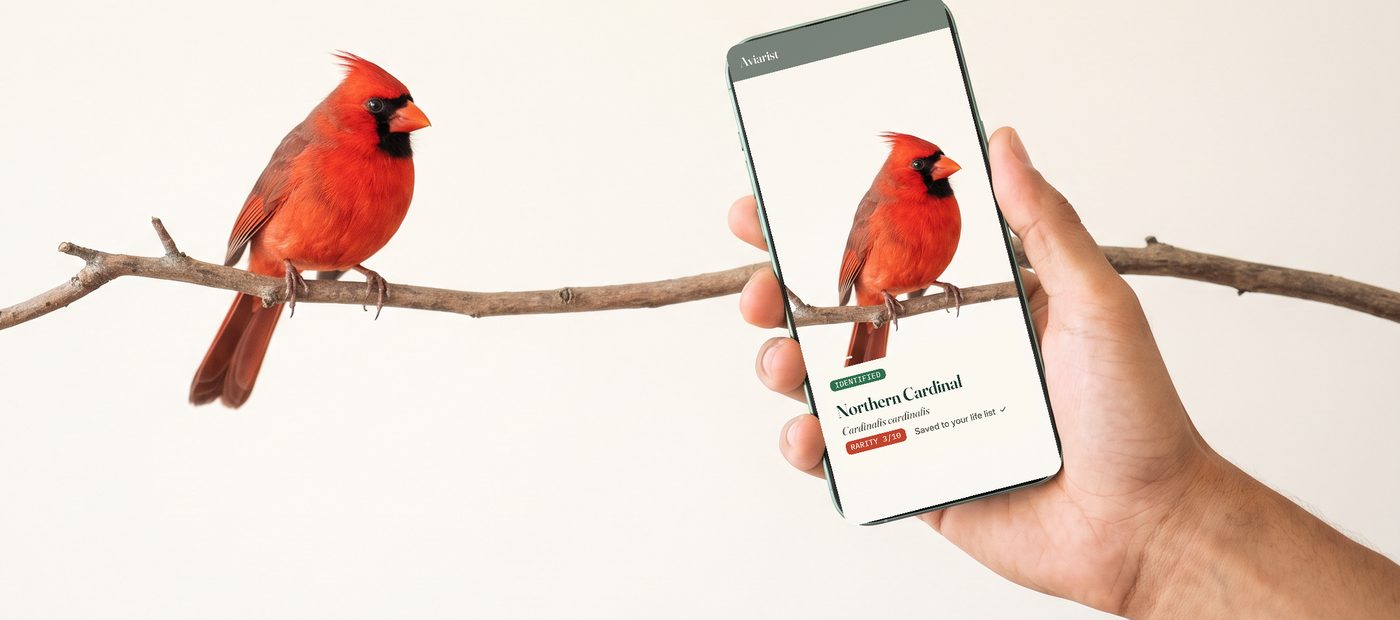
Spot one yourself?
Point your camera at any bird and Aviarist identifies it in seconds — then logs it to your life list.
Get Aviarist on Google Play
More backyard birds
.jpg)

Other apps we make