How to Identify aAcorn Woodpecker
Melanerpes formicivorus · 7.5–9.1 in (19–23 cm)
Male vs. female
Male
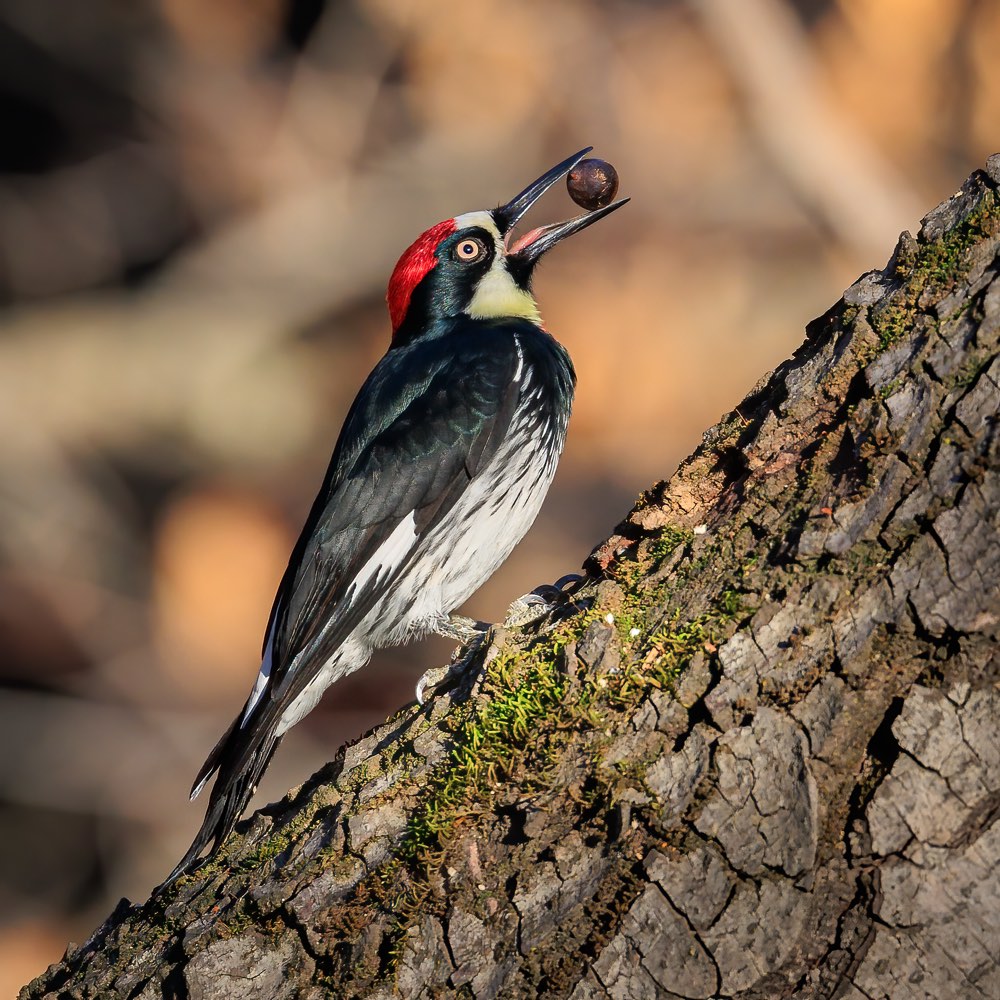
Glossy black above with a red crown reaching the white forehead, white eyes, black face and white wing and rump patches.
Female
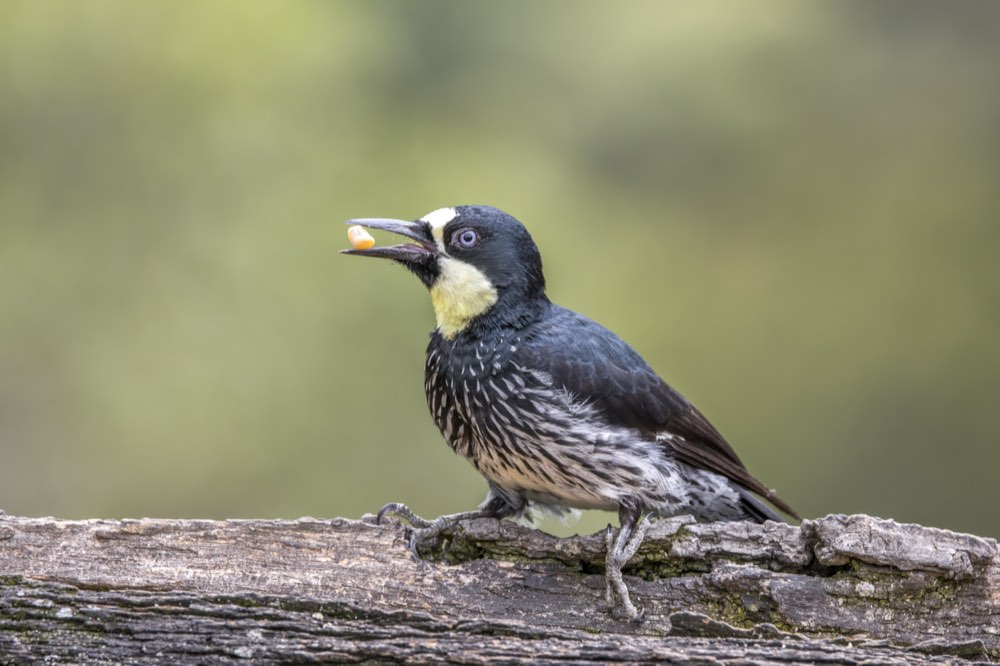
Like the male but with a band of black separating the red crown from the white forehead.
Male photo: Frank Schulenburg / Wikimedia, CC BY-SA 4.0 · Female photo: Charles J. Sharp / Wikimedia, CC BY-SA 4.0
Field marks
- Staring white eyes in a black face
- Red cap over a white forehead and throat
- White wing patches flashing in flight
- Almost always in noisy groups
Similar species
What it sounds like
A loud, laughing, repeated "waka-waka-waka", constantly exchanged within the group.
Behaviour that gives it away
Drills thousands of small holes into a single granary tree and wedges one acorn into each, then the whole family defends the store all winter.
Habitat & range
Oak and pine-oak woodland, parks and suburbs of California, the Southwest and Oregon.
When you'll see it
Present all year in western and southwestern North America.
What it eats
Acorns stored in granaries, plus insects caught in flight and sap.
Did you know?
A single granary tree can hold up to fifty thousand acorns, each hammered into its own individually drilled hole.
Spot one yourself?
Point your camera at any bird and Aviarist identifies it in seconds — then logs it to your life list.
Get Aviarist on Google Play
More backyard birds

_female_Las_Tangaras.jpg)
Other apps we make