How to Identify aYellow-bellied Sapsucker
Sphyrapicus varius · 7.1–8.7 in (18–22 cm)
Male vs. female
Male
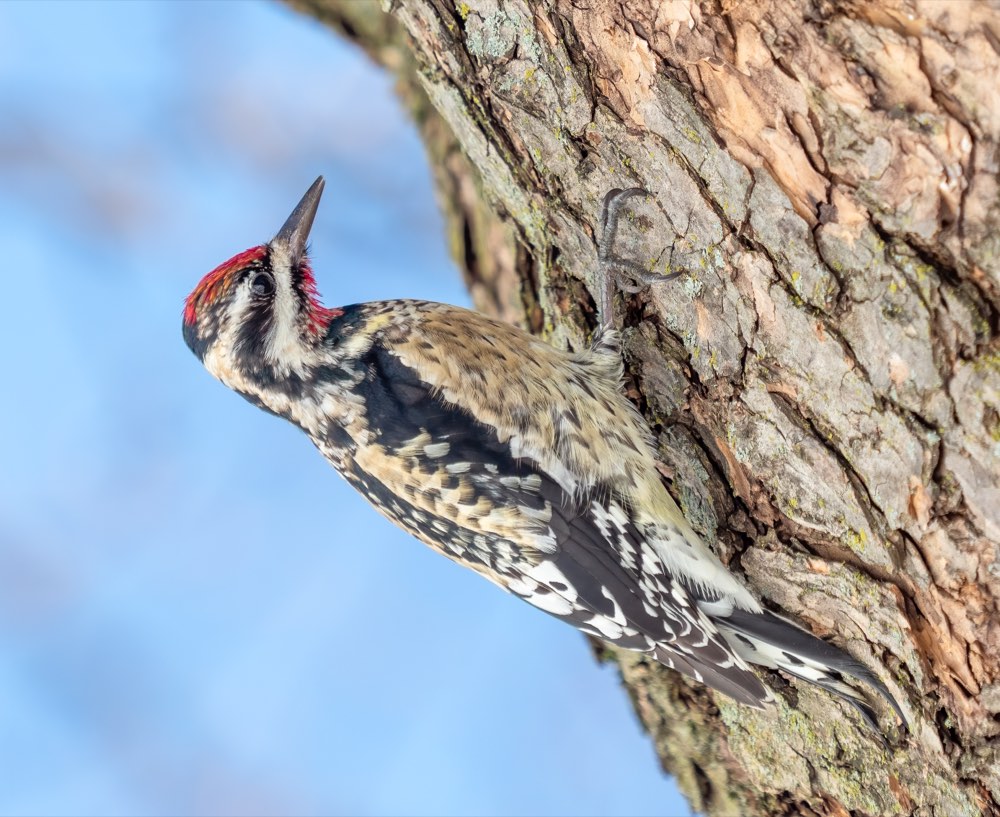
Black and white barred above with a red forehead and red throat, a black chest crescent and a pale yellow belly.
Female
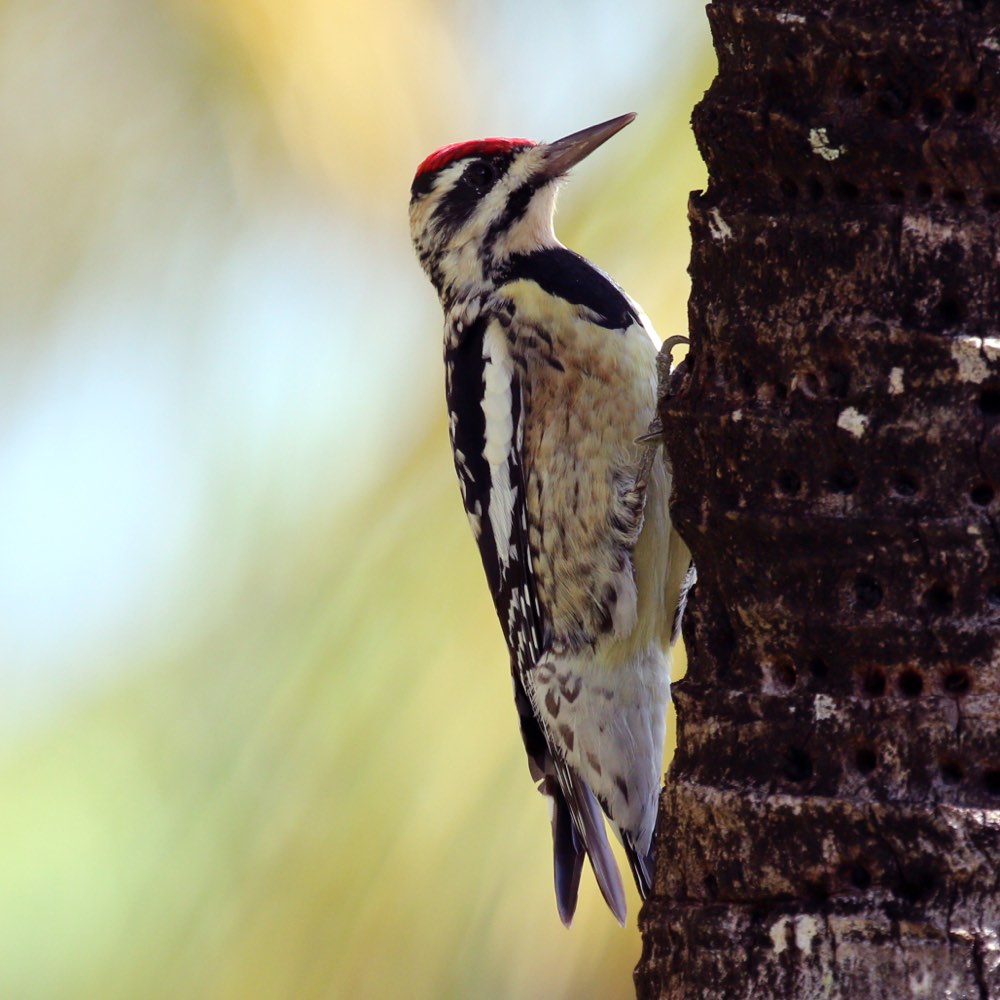
Same pattern but with a white throat instead of red.
Male photo: Rhododendrites / Wikimedia, CC BY-SA 4.0 · Female photo: Charles J. Sharp / Wikimedia, CC BY-SA 4.0
Field marks
- Long vertical white stripe along the folded wing
- Red forecrown on both sexes
- Black crescent across the chest
- Neat horizontal rows of small holes drilled in bark
Similar species
What it sounds like
A nasal, cat-like, descending "mew", plus an irregular stuttering drum unlike any other woodpecker’s.
Behaviour that gives it away
Drills orderly rows of shallow wells in bark and returns to drink the sap and eat the insects it traps — hummingbirds and other birds follow to use them.
Habitat & range
Deciduous and mixed forest; winters in woods, parks and yards in the Southeast.
When you'll see it
Depending on where in eastern, central and northern North America you are, it is a winter visitor and a passage migrant, seen mainly in spring and autumn.
What it eats
Tree sap, plus insects caught in the sap and some fruit.
Did you know?
Its sap wells are used by hummingbirds, warblers, squirrels and insects, so a single sapsucker supports a small community.
Spot one yourself?
Point your camera at any bird and Aviarist identifies it in seconds — then logs it to your life list.
Get Aviarist on Google Play
More backyard birds
.jpg)
_female.JPG)
Other apps we make