How to Identify aMountain Chickadee
Poecile gambeli · 4.7–5.5 in (12–14 cm)
Male vs. female
Male
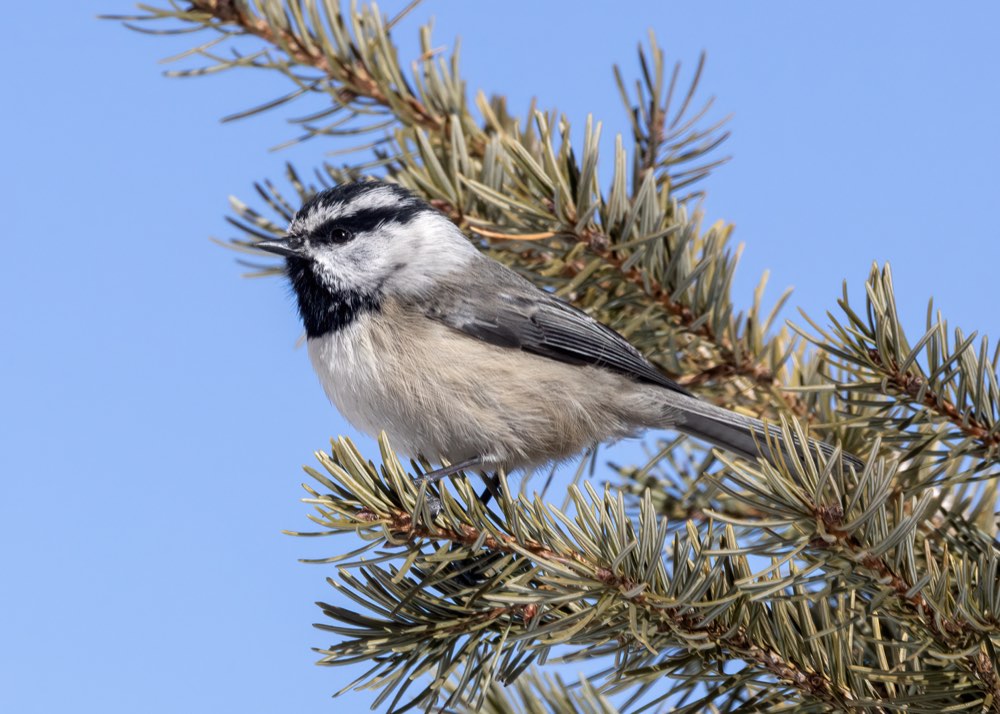
Gray above and pale below with a black cap divided by a bold white eyebrow stripe, and a black bib. Sexes look alike.
Female
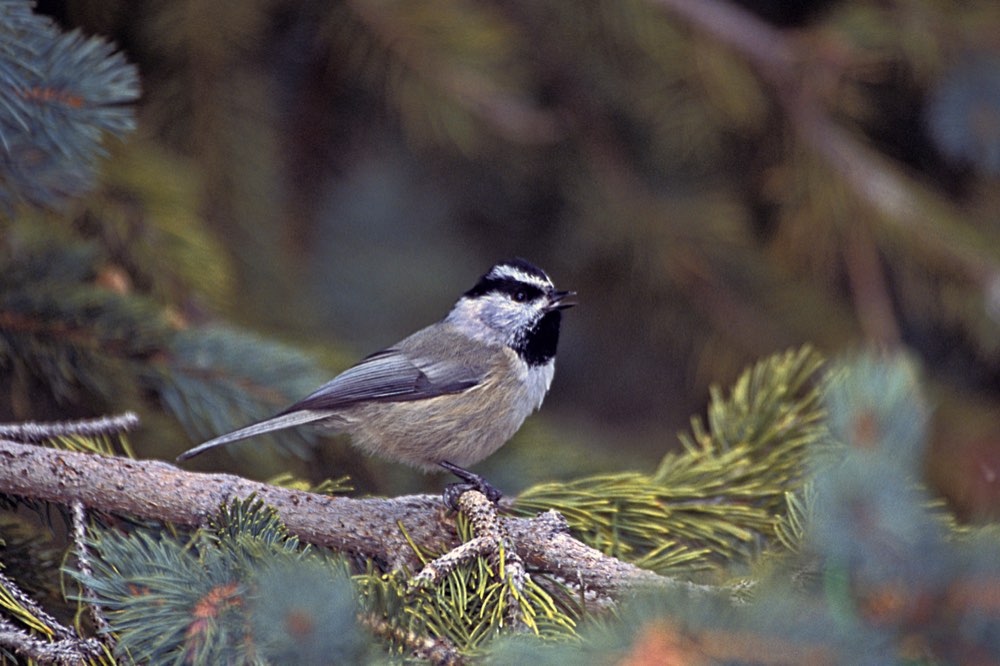
Identical to the male in the field.
Male photo: Polinova / Wikimedia, CC BY-SA 4.0 · Second photo: Peter Wallack / Wikimedia, CC BY-SA 3.0
Field marks
- White eyebrow stripe cutting through the black cap
- Plain gray back with little wing edging
- Black bib and white cheeks
- Small, round, long-tailed chickadee shape
Similar species
What it sounds like
A hoarse, husky "chick-adee-adee" and a whistled three-note descending "fee-bee-bay".
Behaviour that gives it away
Stores thousands of seeds each autumn in bark crevices, relying on spatial memory to recover them through deep mountain winters.
Habitat & range
Conifer forest in the mountains of the western United States, descending to lower elevations and feeders in winter.
When you'll see it
Present all year in western North America.
What it eats
Insects, spiders and conifer seeds; readily takes sunflower seed at mountain feeders.
Did you know?
It caches food in thousands of separate hiding places and remembers them well enough to survive winters at high elevation.
Spot one yourself?
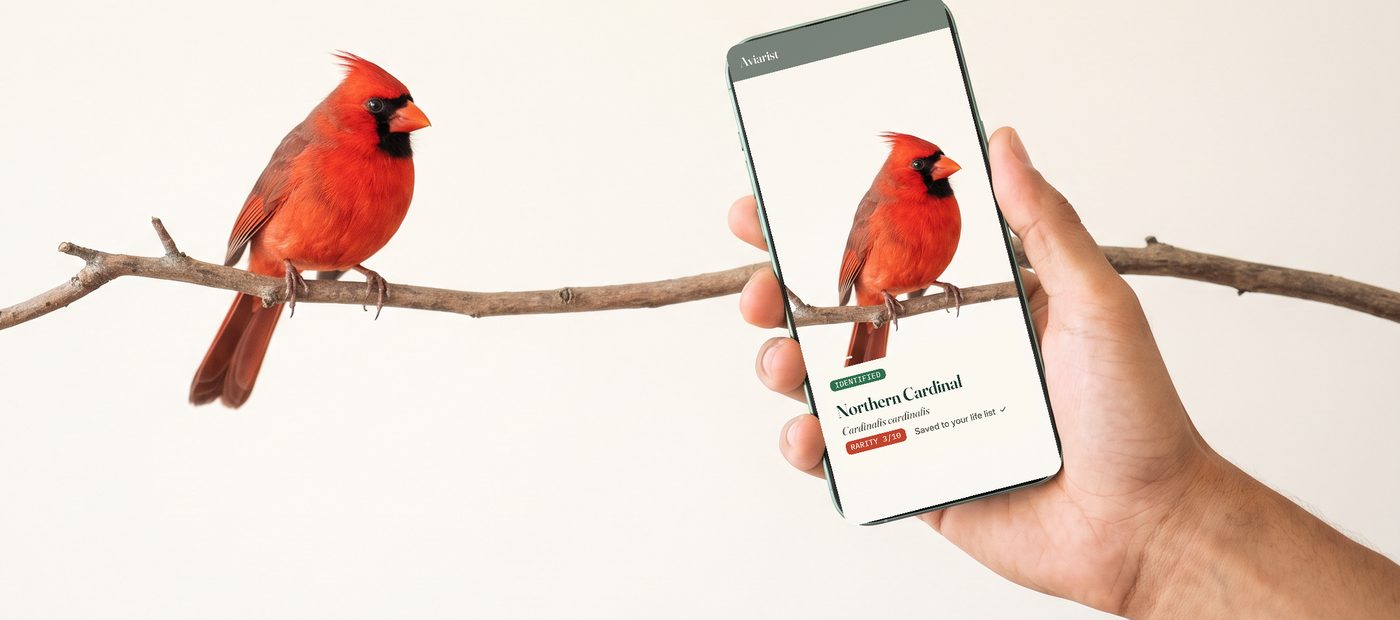
Point your camera at any bird and Aviarist identifies it in seconds — then logs it to your life list.
Get Aviarist on Google Play
More backyard birds


Other apps we make