How to Identify aBurrowing Owl
Athene cunicularia · 7.5–9.8 in (19–25 cm)
Male vs. female
Male
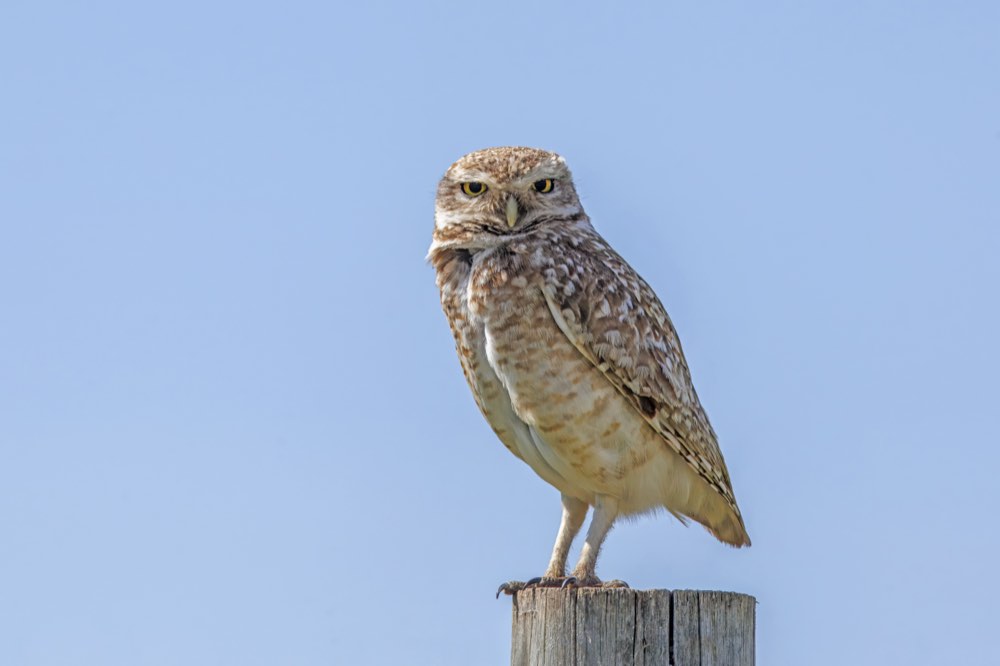
Sandy brown spotted white above, barred below, with long legs, a white eyebrow and bright yellow eyes. Sexes look alike.
Female
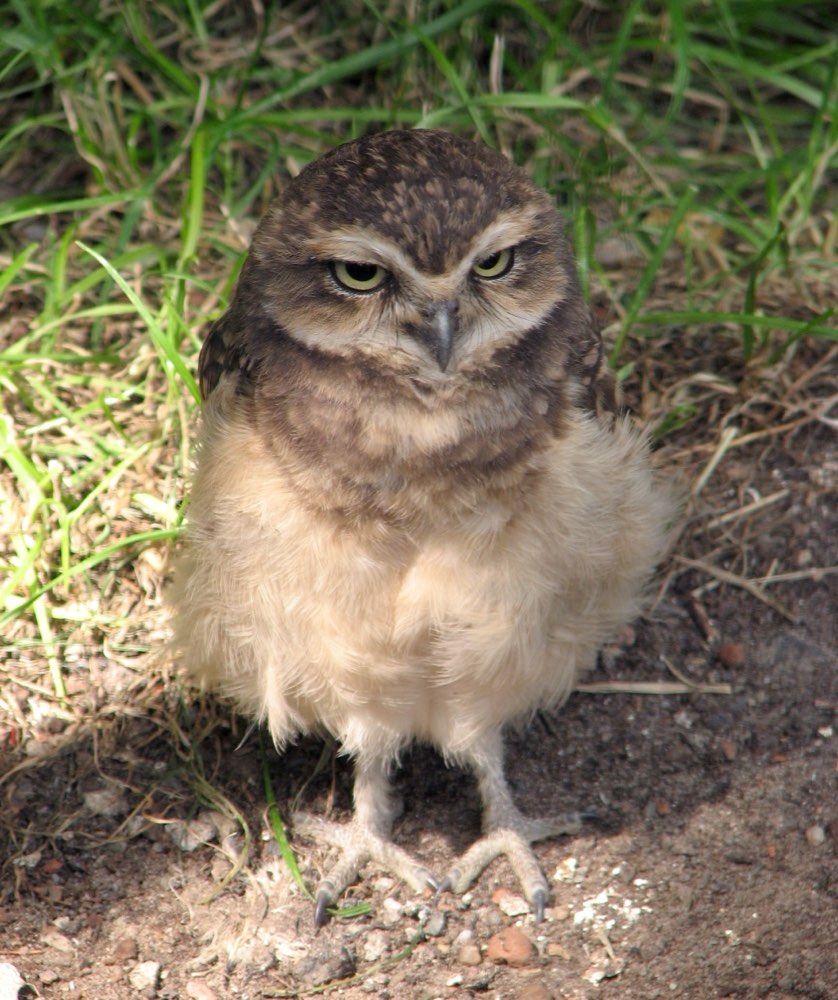
Like the male but often darker, since she spends more time underground.
Male photo: Charles J. Sharp / Wikimedia, CC BY-SA 4.0 · Second photo: Adamantios / Wikimedia, CC BY-SA 3.0
Field marks
- Very long legs for an owl
- Stands on the ground in the open, often on a mound
- Round head with no ear tufts
- Bold white eyebrows and throat stripe
Similar species
What it sounds like
A soft two-note "coo-coooo", and a rattling hiss from young in the burrow.
Behaviour that gives it away
Nests underground in burrows dug by prairie dogs and ground squirrels, and lines the entrance with dung to attract dung beetles it then eats.
Habitat & range
Prairie, desert, rangeland, airfields and vacant lots in the West and Florida.
When you'll see it
Depending on where in North America you are, it is present all year and a summer visitor that arrives to breed.
What it eats
Large insects and small mammals, plus reptiles and small birds.
Did you know?
It scatters animal dung around its burrow entrance, which draws in dung beetles that it then catches and eats.
Spot one yourself?
Point your camera at any bird and Aviarist identifies it in seconds — then logs it to your life list.
Get Aviarist on Google Play
More backyard birds
_Colonia.jpg)

Other apps we make