How to Identify aSwainson's Hawk
Buteo swainsoni · 18.9–22.1 in (48–56 cm)
Male vs. female
Male
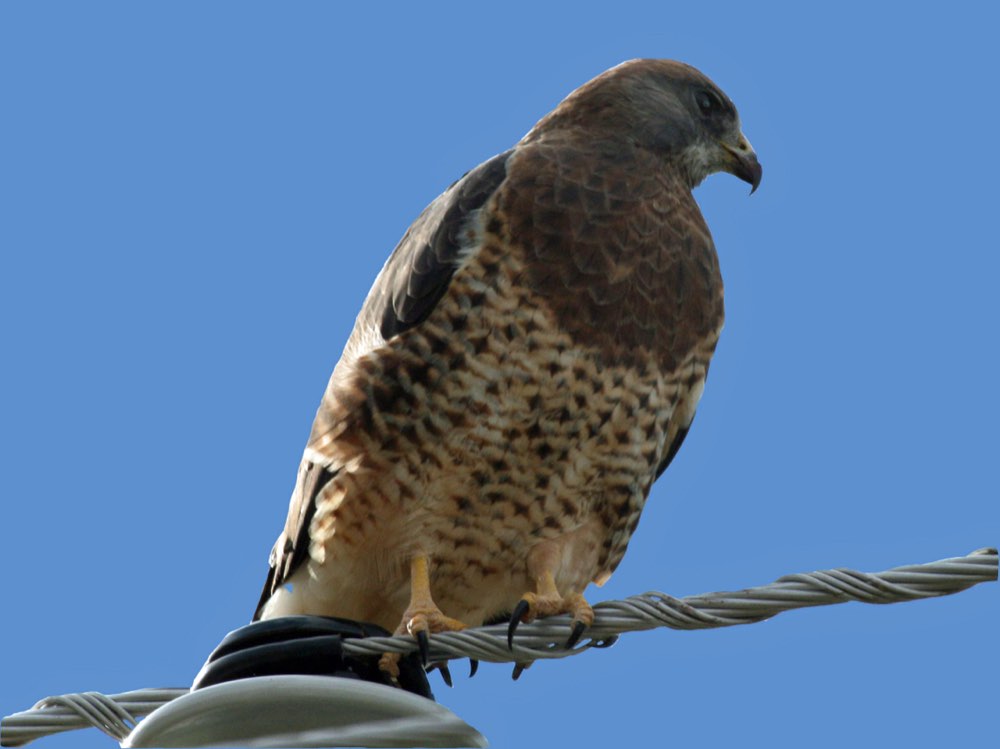
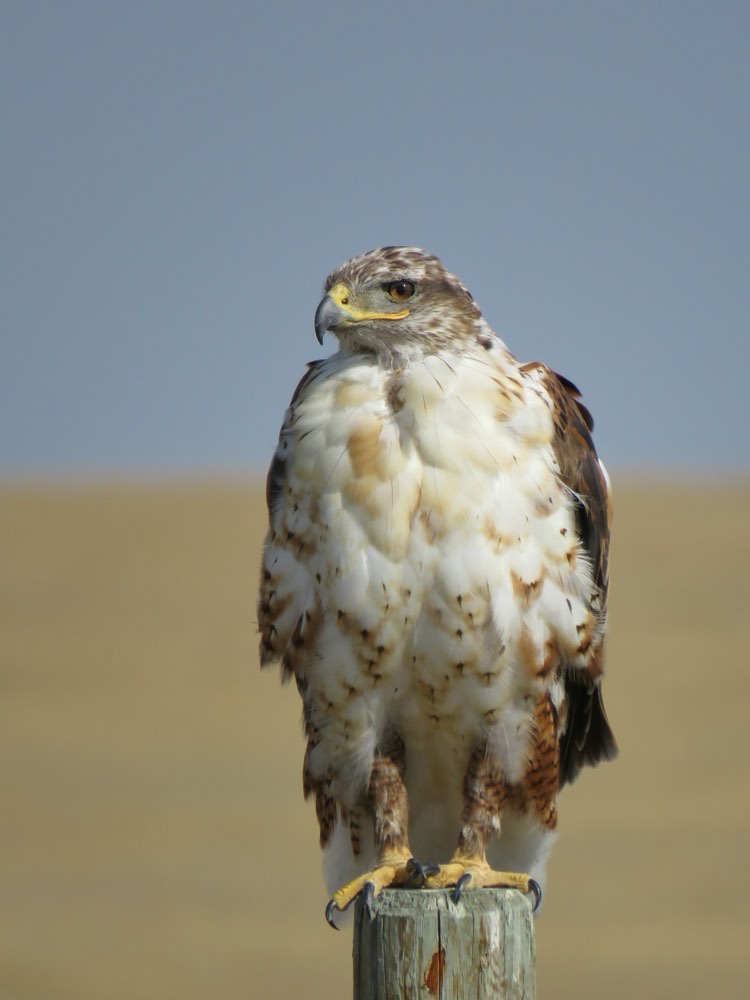
Brown above with a dark chestnut chest band against a white belly; underwings show white linings against dark flight feathers. Sexes look alike.
Female
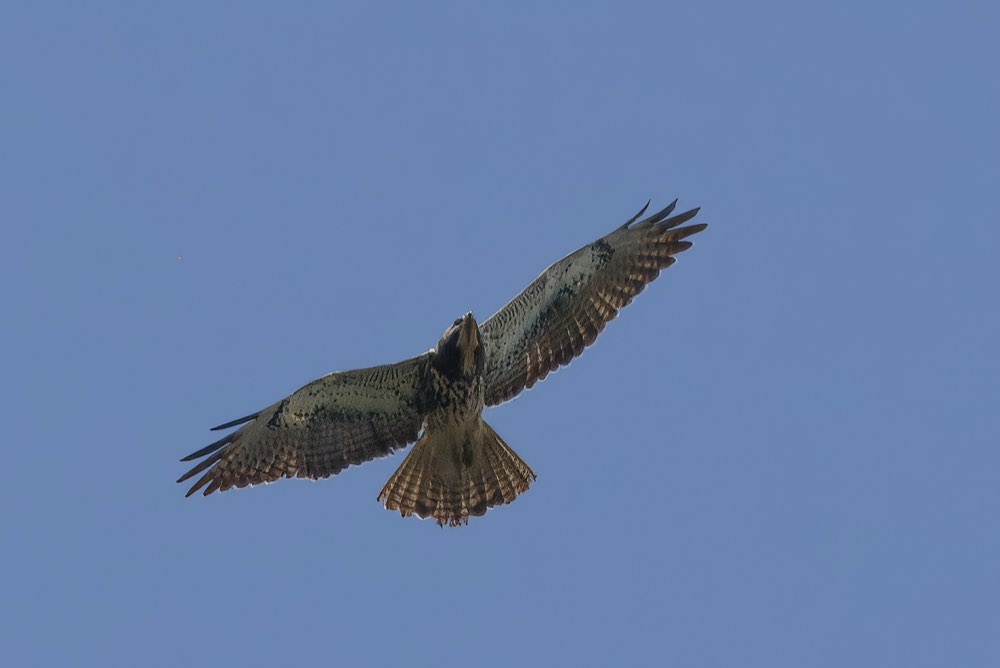
Identical in pattern but larger, often with a browner bib.
Male photo: Dick Daniels (https://theworldbirds.org/) / Wikimedia, CC BY-SA 3.0 · Second photo: Charles J. Sharp / Wikimedia, CC BY-SA 4.0
Field marks
- Dark chest bib above a pale belly — the reverse of a Red-tailed Hawk
- White wing linings contrasting with dark flight feathers
- Long, narrow, pointed wings held in a slight V
- Slimmer and longer-winged than other buteos
Similar species
What it sounds like
A drawn-out, plaintive, whistled "kreeeer", thinner than a Red-tailed Hawk’s scream.
Behaviour that gives it away
Switches to eating insects outside the breeding season, following tractors and grasshopper swarms on foot.
Habitat & range
Prairies, rangeland, farm fields and dry open country across the western interior in summer.
When you'll see it
Depending on where in western, central and southwestern North America you are, it is a summer visitor that arrives to breed and a passage migrant, seen mainly in spring and autumn.
What it eats
Rodents and reptiles when nesting; grasshoppers and other insects the rest of the year.
Did you know?
It migrates all the way to Argentina, one of the longest journeys of any North American raptor.
Spot one yourself?
Point your camera at any bird and Aviarist identifies it in seconds — then logs it to your life list.
Get Aviarist on Google Play
More backyard birds
_RWD.jpg)
_in_flight_Sumaco.jpg)
Other apps we make