How to Identify aGambel's Quail
Callipepla gambelii · 9.8–11.4 in (25–29 cm)
Male vs. female
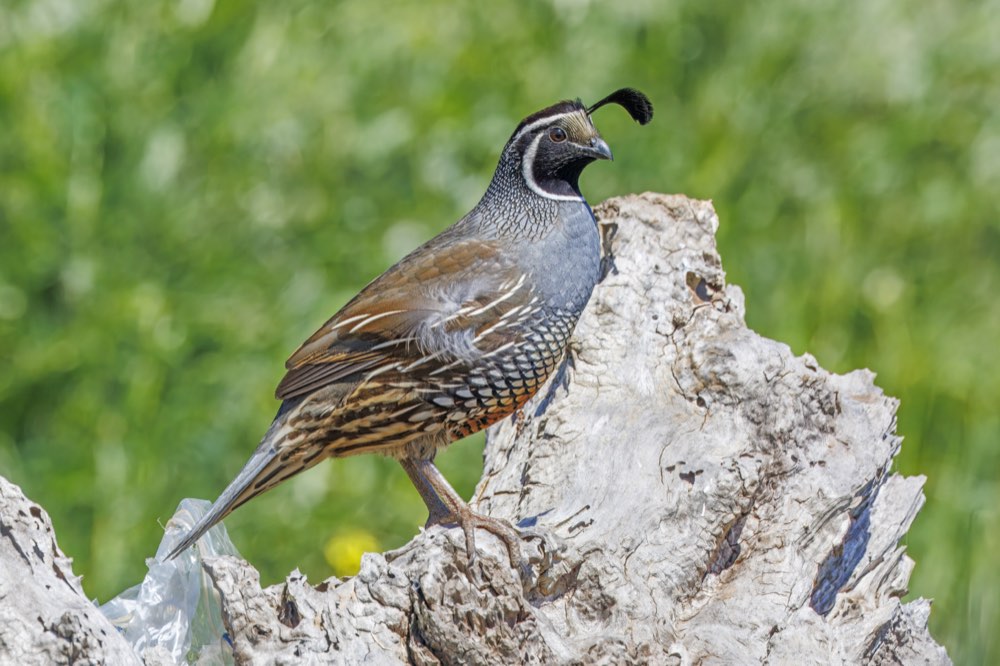
Male
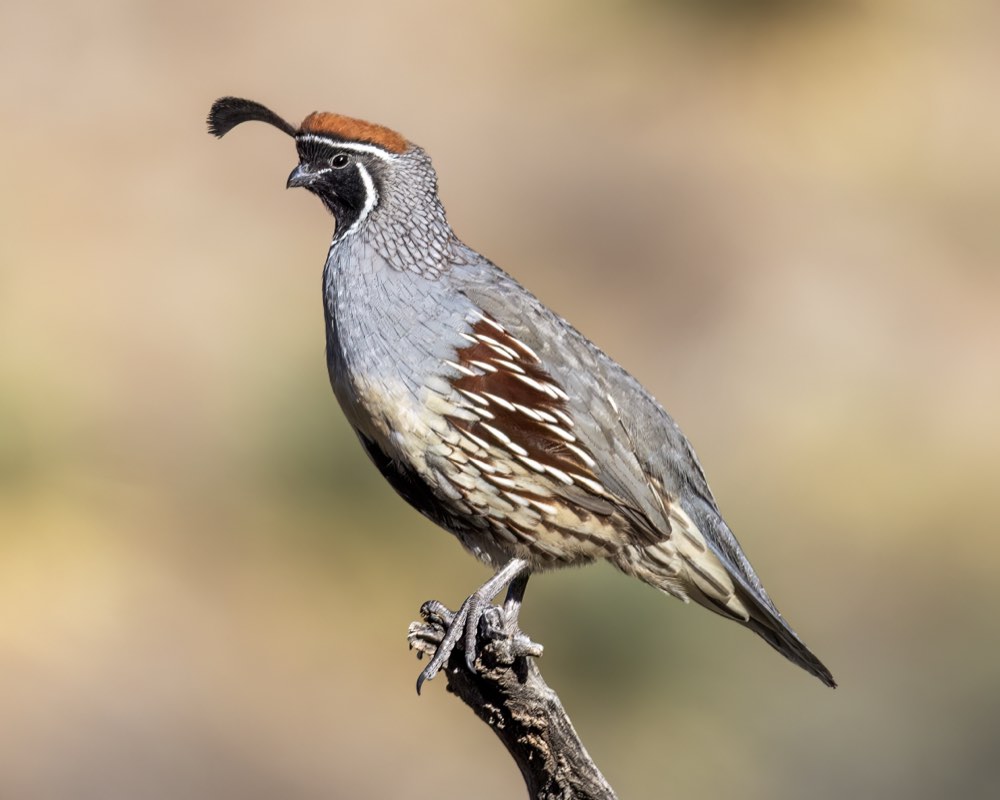
Gray body with a chestnut crown, black face outlined in white, a black belly patch, chestnut flanks striped white, and a curling black plume.
Female
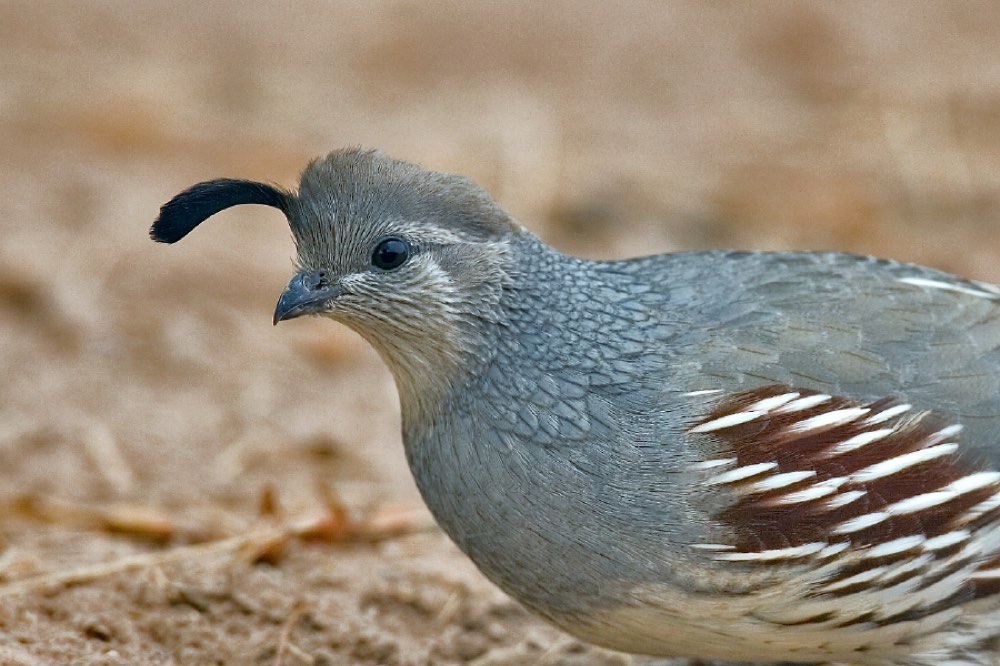
Plain gray-brown with a shorter plume and no black face or belly patch.
Male photo: Polinova / Wikimedia, CC BY-SA 4.0 · Female photo: Alan D. Wilson / Wikimedia, CC BY-SA 2.5
Field marks
- Teardrop-shaped plume curling forward from the forehead
- Black face bordered white on the male
- Chestnut flanks with bold white streaks
- Black belly patch on the male
Similar species
What it sounds like
A loud, plaintive, four-note "chi-CA-go-go" used to gather the covey.
Behaviour that gives it away
Runs rather than flies from danger, and coveys of a dozen or more scurry single-file between desert shrubs.
Habitat & range
Desert scrub, mesquite washes, thorn brush and desert-edge suburbs of the Southwest.
When you'll see it
Present all year in southwestern North America.
What it eats
Seeds, leaves, cactus fruit and insects.
Did you know?
In wet years it lays far larger clutches than in dry ones, apparently cued by chemicals in the desert plants it eats.
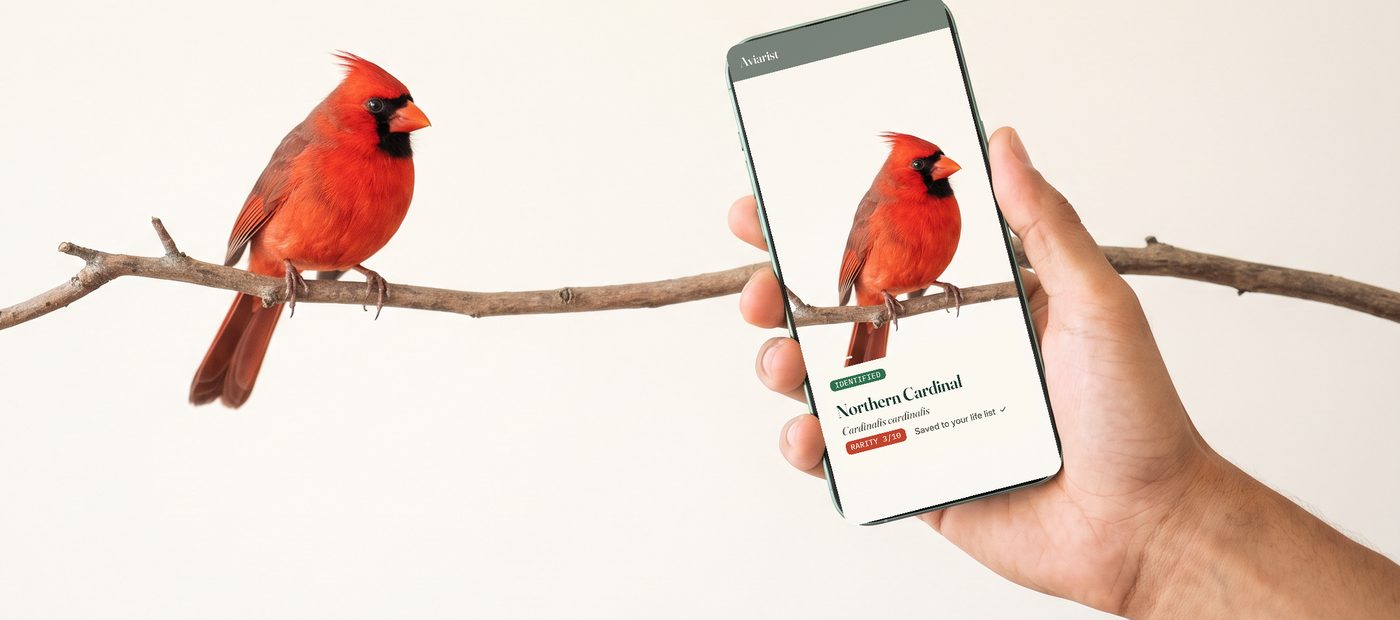
Spot one yourself?
Point your camera at any bird and Aviarist identifies it in seconds — then logs it to your life list.
Get Aviarist on Google Play
More backyard birds


Other apps we make