How to Identify aBlue-winged Teal
Spatula discors · 13.8–16.1 in (35–41 cm)
Male vs. female
Male
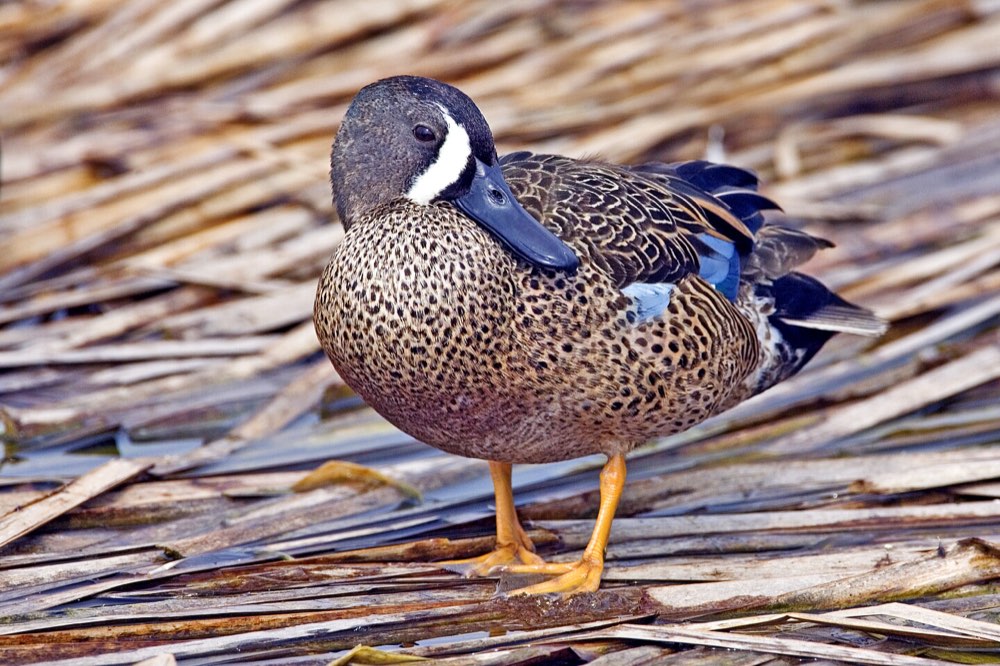
Slate-gray head with a white crescent before the eye, warm speckled brown body and a white flank patch.
Female

Mottled brown with a plain face and a pale spot at the base of the bill.
Male photo: Alan D. Wilson, www.naturespicsonline.com / Wikimedia, CC BY-SA 2.5 · Second photo: D. Gordon E. Robertson / Wikimedia, CC BY-SA 3.0
Field marks
- White crescent on the male’s face
- Powder-blue forewing patch flashing in flight
- Small and fast-flying
- White patch on the rear flank
Similar species
What it sounds like
A thin whistled "tsee-tsee" from the male; a soft quack from the female.
Behaviour that gives it away
One of the last ducks north in spring and among the first to leave, wintering further south than most North American ducks.
Habitat & range
Shallow marshes, prairie potholes and flooded fields, mostly in summer.
When you'll see it
Depending on where in North America you are, it is a summer visitor that arrives to breed and a passage migrant, seen mainly in spring and autumn.
What it eats
Seeds, aquatic plants and invertebrates dabbled from shallow water.
Did you know?
It migrates further than almost any other North American duck, with some birds wintering deep into South America.

Spot one yourself?
Point your camera at any bird and Aviarist identifies it in seconds — then logs it to your life list.
Get Aviarist on Google Play
More backyard birds


Other apps we make