How to Identify aSnow Goose
Anser caerulescens · 25–31 in (64–79 cm)
Male vs. female
Male
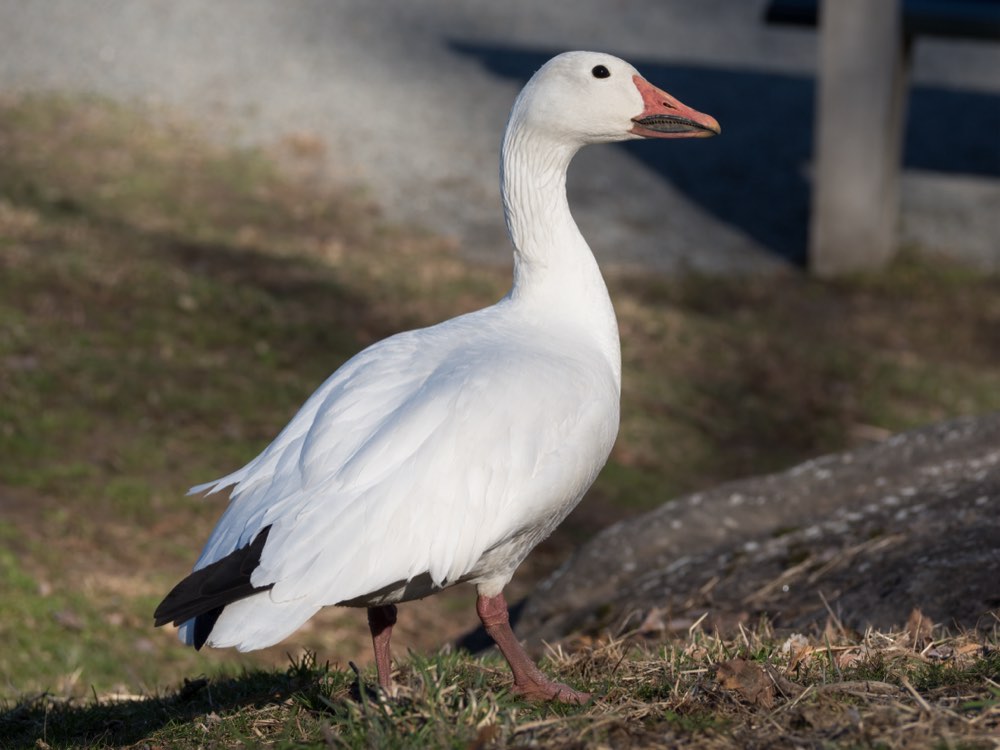
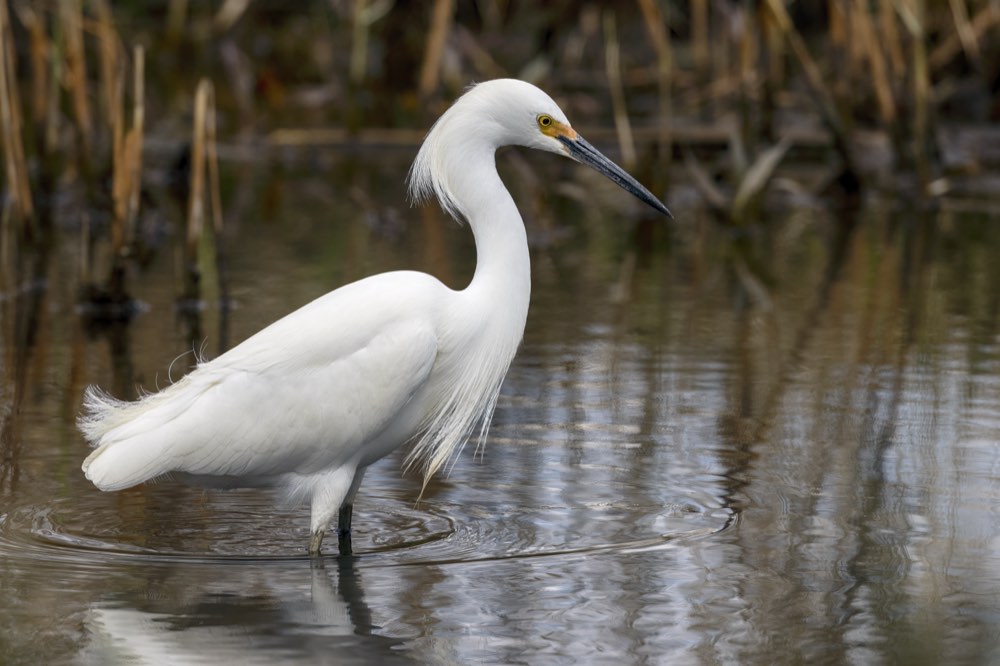
All white with black primaries and a heavy pink bill marked by a dark "grinning patch". Sexes look alike.
Female
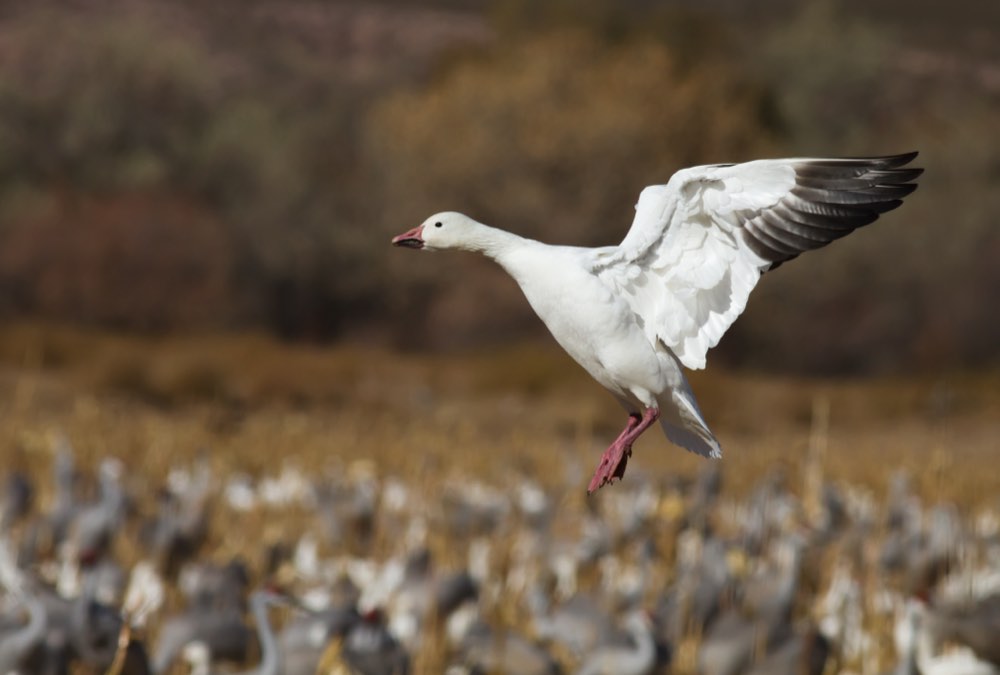
Identical to the male in the field.
Male photo: Rhododendrites / Wikimedia, CC BY-SA 4.0 · Second photo: Manjithkaini / Wikimedia, CC BY-SA 3.0
Field marks
- Black wingtips on an otherwise white bird
- Pink bill with a dark curved line along the edge
- A dark "blue morph" with a white head also occurs
- Enormous noisy flocks
Similar species
What it sounds like
A high, nasal, barking "houk" repeated constantly; a large flock is deafening.
Behaviour that gives it away
Grubs up whole plants including roots, and flocks are large enough to strip and damage the marshes they feed in.
Habitat & range
Marshes, grain fields and shallow lakes in winter; Arctic tundra in summer.
When you'll see it
Depending on where in North America you are, it is a winter visitor and a passage migrant, seen mainly in spring and autumn.
What it eats
Grasses, sedges, roots, grain and waste crops.
Did you know?
The dark "blue goose" was long thought to be a separate species; it is simply a colour morph of this bird.
Spot one yourself?
Point your camera at any bird and Aviarist identifies it in seconds — then logs it to your life list.
Get Aviarist on Google Play
More backyard birds
.jpg)

Other apps we make