How to Identify aCattle Egret
Bubulcus ibis · 18.1–22.1 in (46–56 cm)
Male vs. female
Male
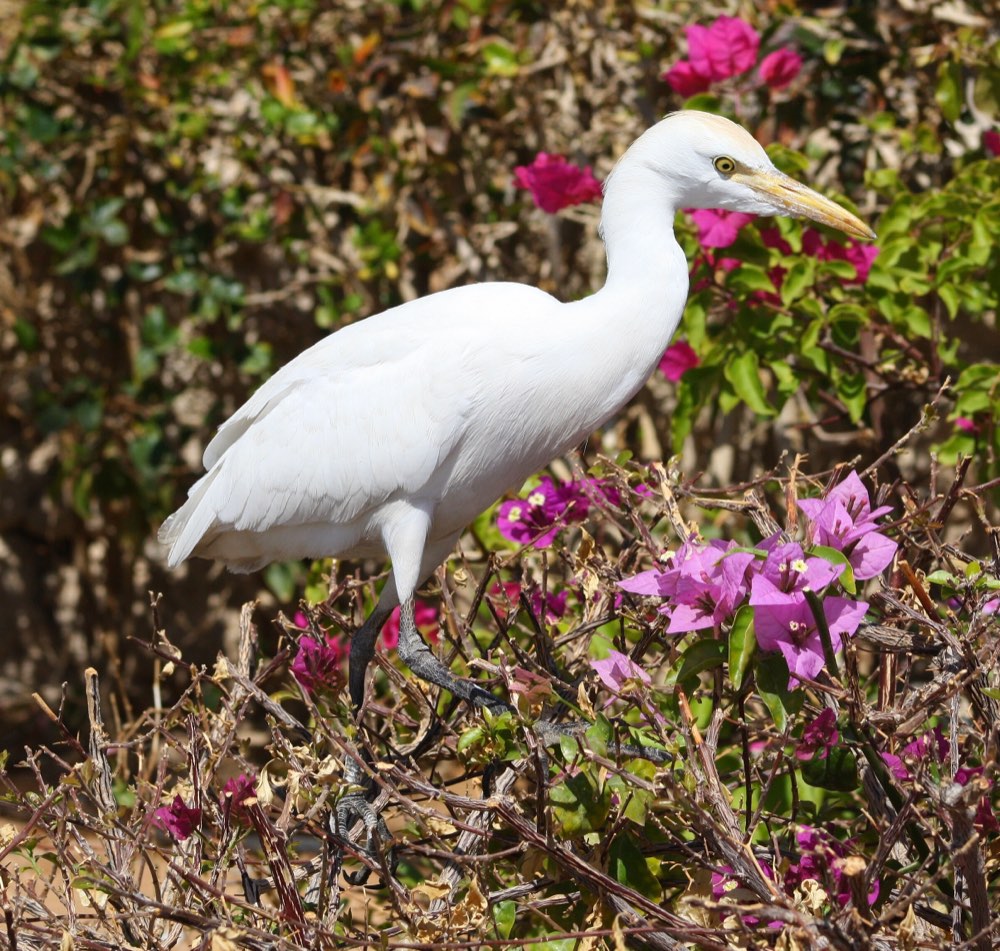
White with a yellow bill and, in breeding season, buff-orange patches on the crown, chest and back. Sexes look alike.
Female
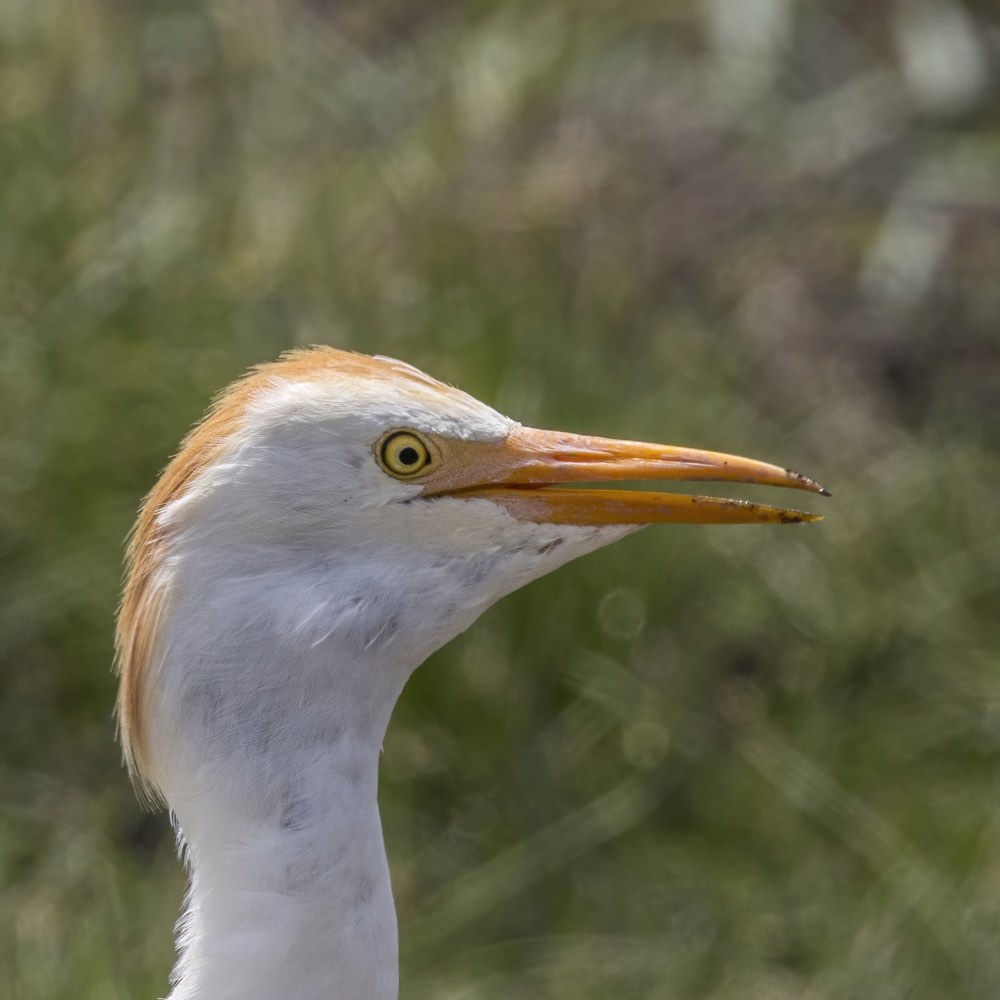
Identical to the male in the field.
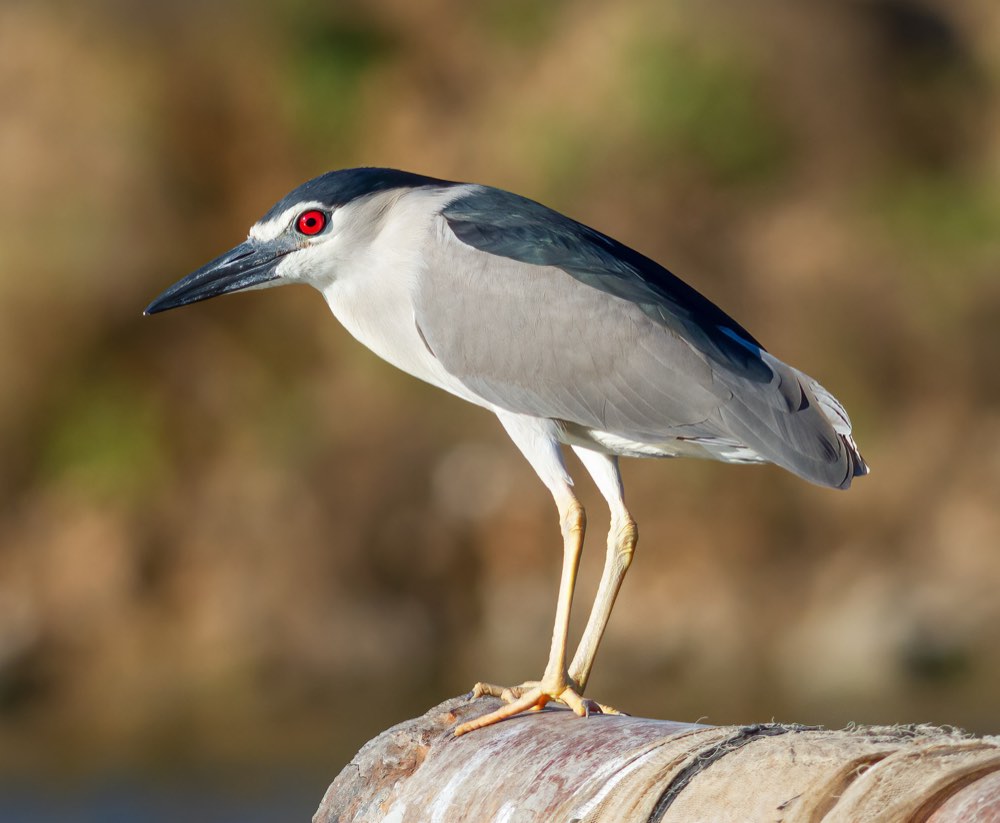
Male photo: Kora27 / Wikimedia, CC BY-SA 4.0 · Second photo: Charles J. Sharp / Wikimedia, CC BY-SA 4.0
Field marks
- Stocky, thick-necked and hunch-backed
- Short yellow bill
- Buff-orange wash on crown and back when breeding
- Found in dry fields far from water
Similar species
What it sounds like
A low croak at the colony; generally silent away from it.
Behaviour that gives it away
Follows cattle, tractors and mowers to snap up the insects they flush, which is how it makes a living away from water.
Habitat & range
Pastures, farm fields, roadsides and occasionally marshes across the southern and eastern states.
When you'll see it
Depending on where in North America you are, it is present all year and a summer visitor that arrives to breed.
What it eats
Grasshoppers, crickets, flies and other insects flushed by livestock and machinery.
Did you know?
It reached South America from Africa on its own in the 1800s and spread to North America by the 1950s, without human help.
Spot one yourself?
Point your camera at any bird and Aviarist identifies it in seconds — then logs it to your life list.
Get Aviarist on Google Play
More backyard birds

_summer_plumage_head_Cyprus.jpg)
Other apps we make