How to Identify aWillow Flycatcher
Empidonax traillii · 5.1–6.7 in (13–17 cm)
Male vs. female
Male
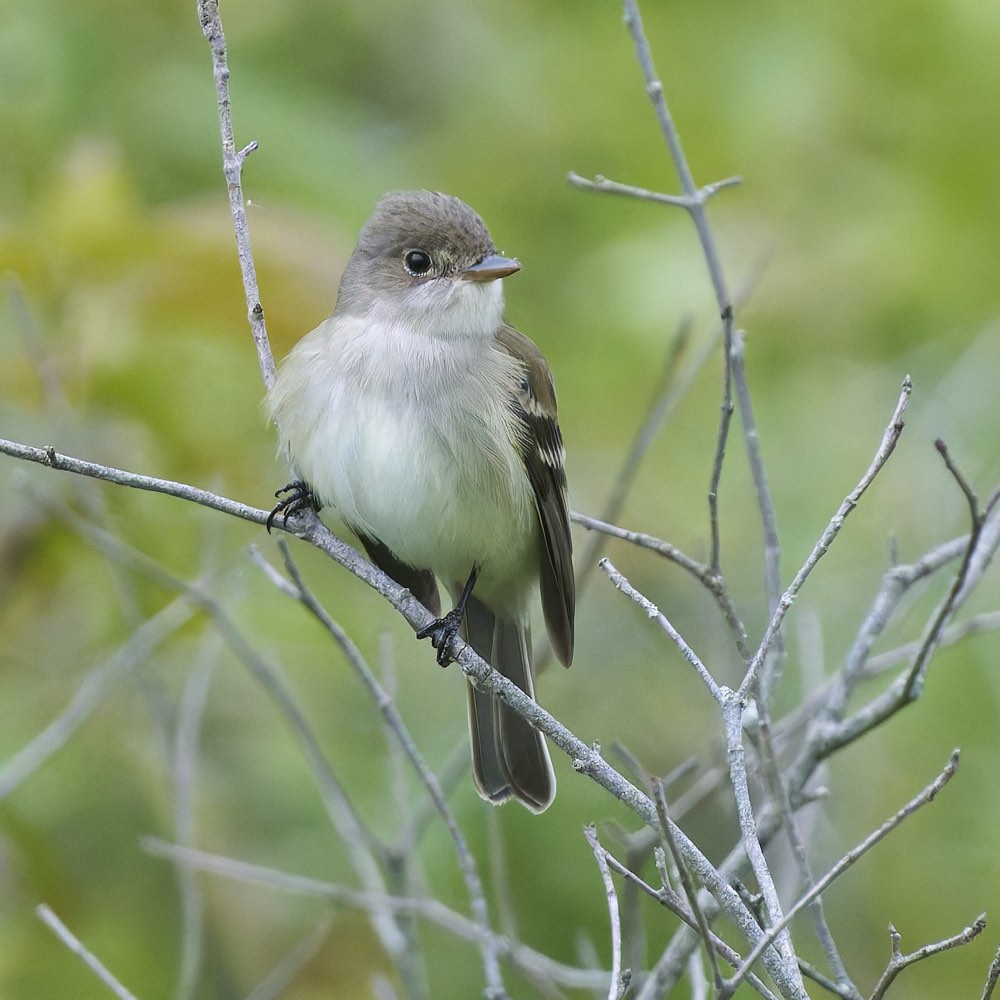
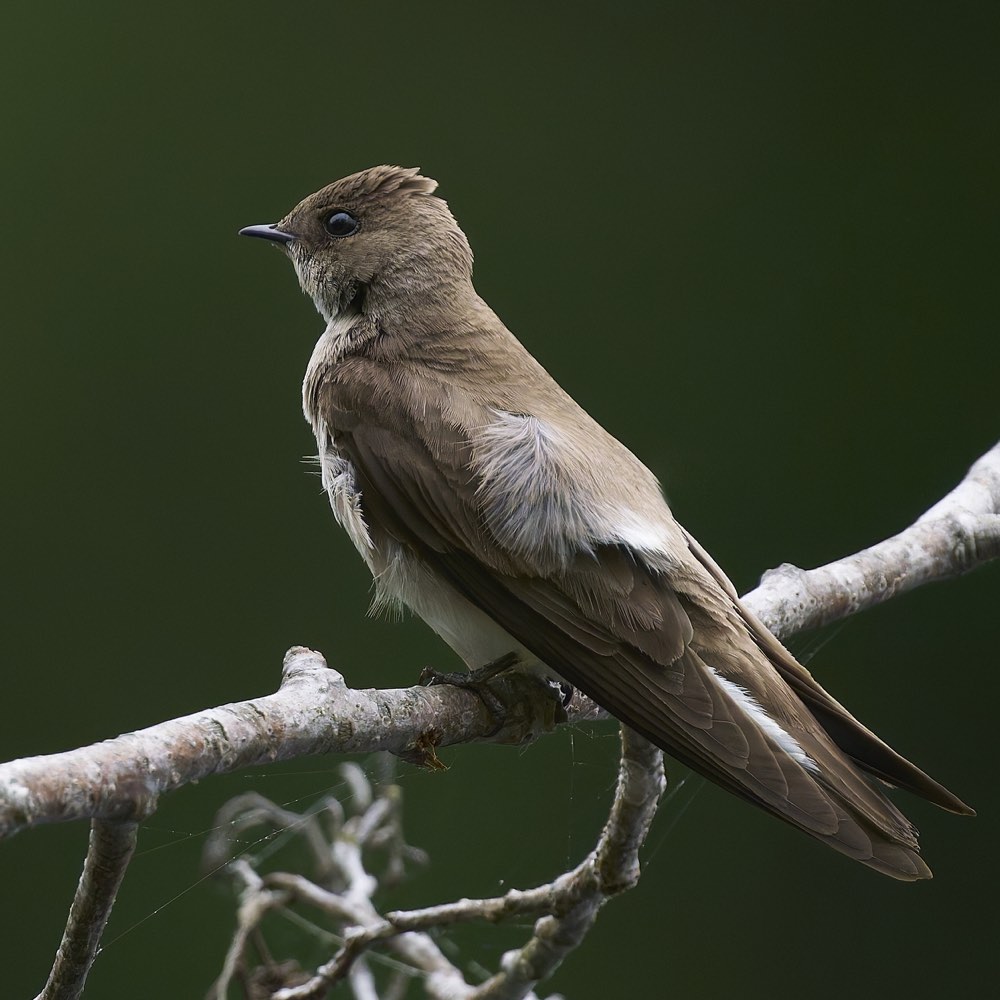
Olive-brown above, whitish below with a dusky chest wash, two pale wingbars and almost no eye-ring. Sexes look alike.
Female
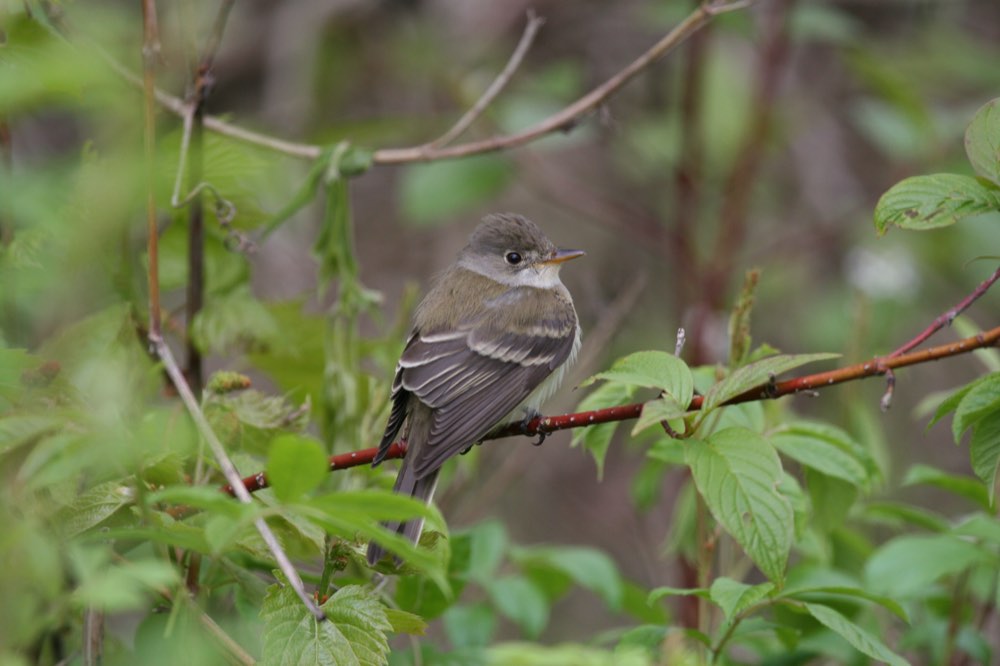
Identical to the male in the field.
Male photo: Paul Danese / Wikimedia, CC BY-SA 4.0 · Second photo: Dominic Sherony / Wikimedia, CC BY-SA 2.0
Field marks
- Little or no eye-ring — unusual among Empidonax flycatchers
- Two dull wingbars
- Brownish-olive rather than green tones
- Perches low in willow and shrub thickets
Similar species
What it sounds like
A sneezy, burry, two-syllable "FITZ-bew" — the only reliable way to identify it.
Behaviour that gives it away
Almost indistinguishable by sight from several close relatives, so experienced birders identify it by voice alone and leave silent birds unnamed.
Habitat & range
Willow thickets, streamside shrubs, wet meadows and brushy field edges.
When you'll see it
A summer visitor that arrives to breed in North America.
What it eats
Flying insects caught on short sallies from a low perch.
Did you know?
It and the Alder Flycatcher were treated as one species until 1973, and they are still separated in the field only by song.
Spot one yourself?
Point your camera at any bird and Aviarist identifies it in seconds — then logs it to your life list.
Get Aviarist on Google Play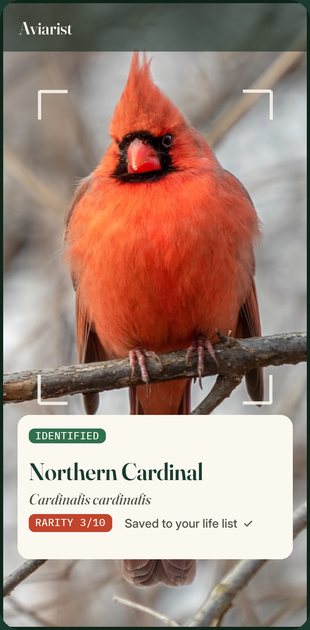
More backyard birds

_(4687321355).jpg)
Other apps we make