How to Identify aBlack-crowned Night-Heron
Nycticorax nycticorax · 22.8–26 in (58–66 cm)
Male vs. female
Male
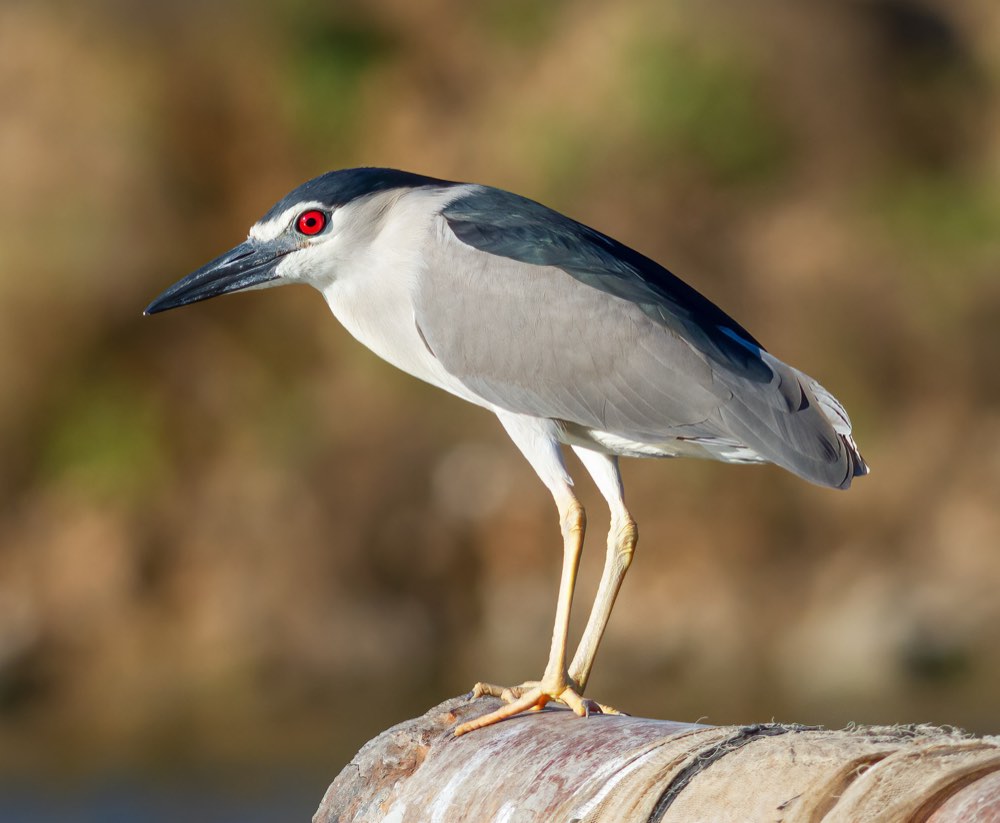
Black crown and back, pale gray wings, white underparts, red eyes and two long white head plumes. Sexes look alike.
Female
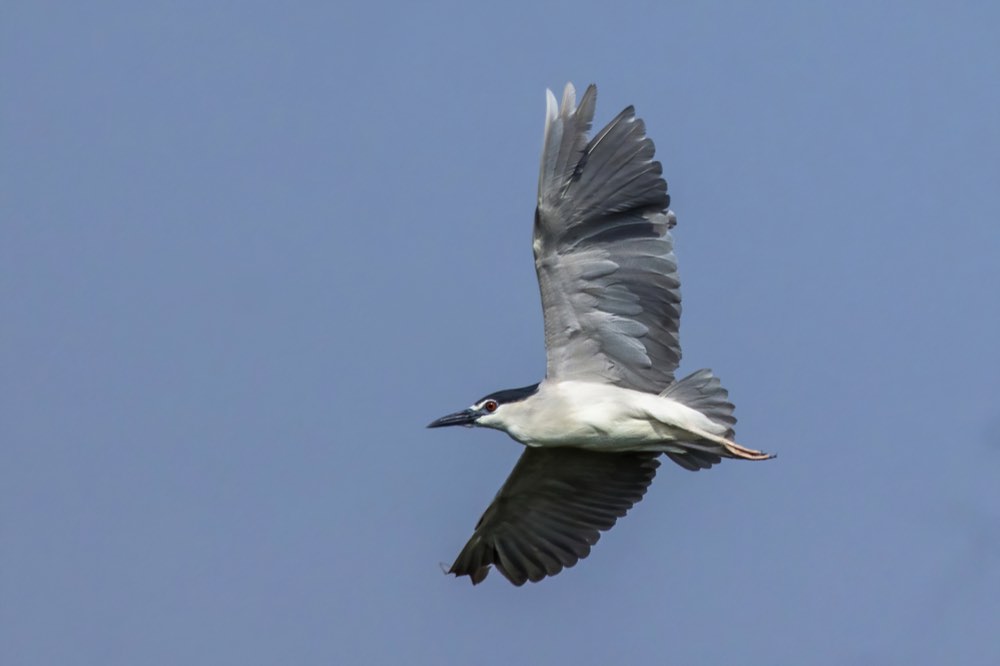
Identical to the male in the field, slightly smaller.
Male photo: ramidos / Wikimedia, CC BY 4.0 · Second photo: Charles J. Sharp / Wikimedia, CC BY-SA 4.0
Field marks
- Very short thick neck, usually hunched out of sight
- Black cap and back against pale gray wings
- Large red eyes
- Stout black bill
Similar species
What it sounds like
A loud, abrupt, barking "wok!" usually given in flight at dusk.
Behaviour that gives it away
Hunts mainly at dusk and through the night, which lets it use the same marshes as day-active herons without competing.
Habitat & range
Marshes, ponds, rivers, harbours and city parks with water, across most of the United States.
When you'll see it
Depending on where in North America you are, it is present all year and a summer visitor that arrives to breed.
What it eats
Fish, amphibians, crustaceans and the eggs and chicks of other birds.
Did you know?
Its loud barking "wok" overhead after dark is often the only sign it is around, since it roosts hidden in trees all day.
Spot one yourself?
Point your camera at any bird and Aviarist identifies it in seconds — then logs it to your life list.
Get Aviarist on Google Play
More backyard birds

_in_flight.jpg)
Other apps we make