How to Identify aMerlin
Falco columbarius · 9.4–11.8 in (24–30 cm)
Male vs. female
Male
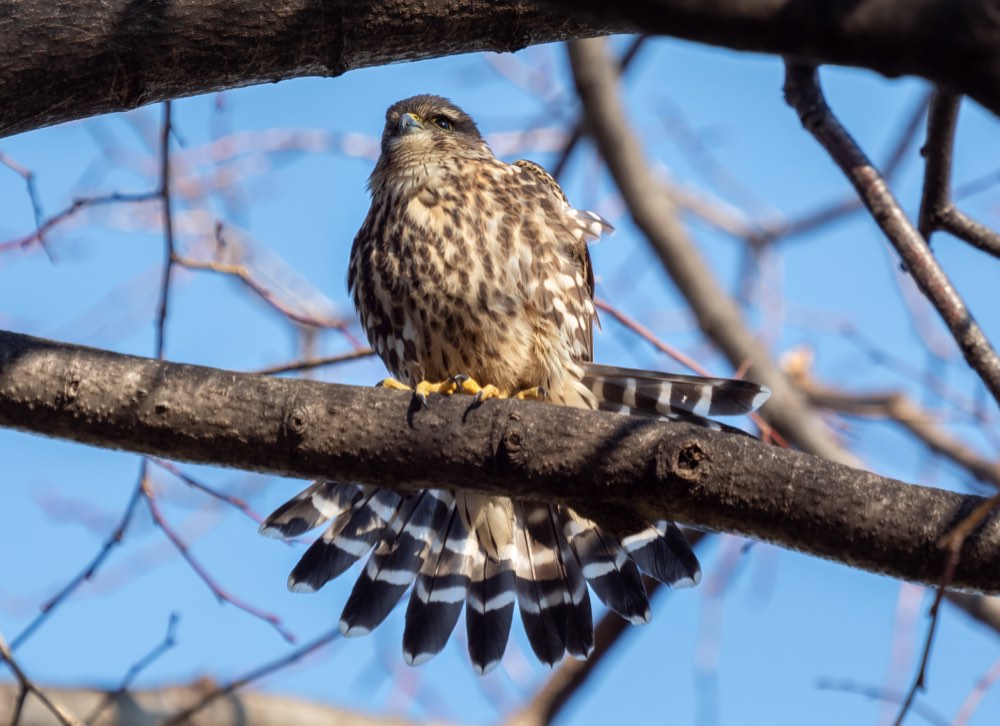
Slate-blue above with heavy dark streaking below and a weak facial stripe.
Female
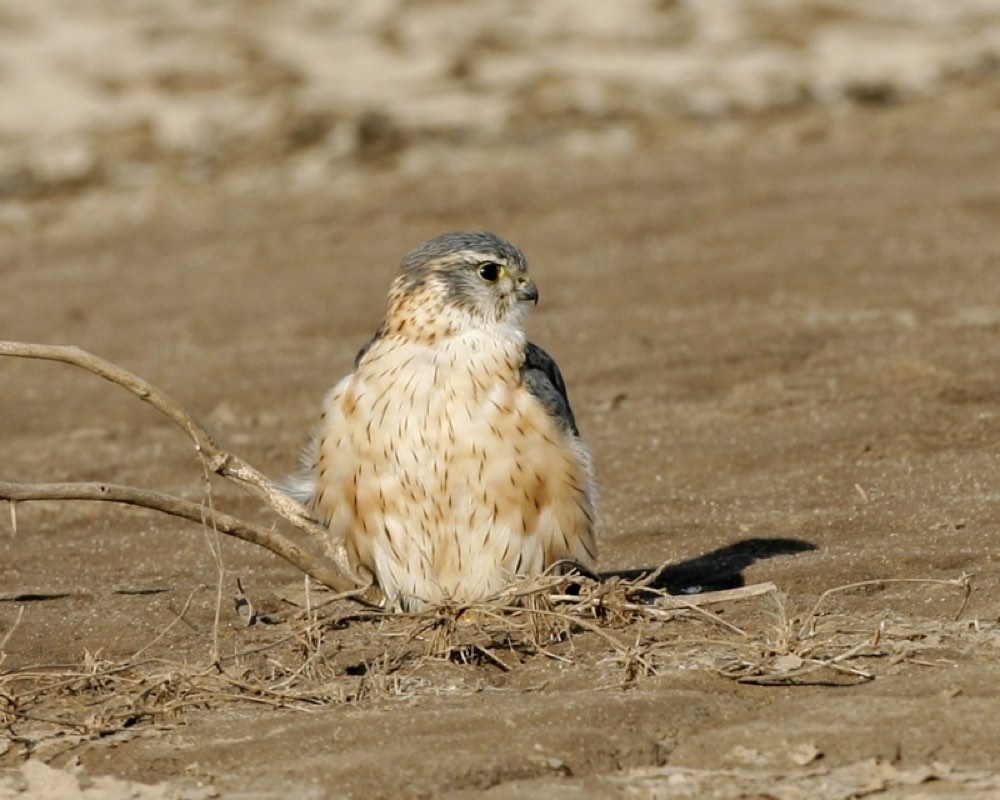
Dark brown above, heavily streaked below, and noticeably larger.
Male photo: Rhododendrites / Wikimedia, CC BY-SA 4.0 · Second photo: Lip Kee Yap / Wikimedia, CC BY-SA 2.0
Field marks
- Heavily streaked underparts
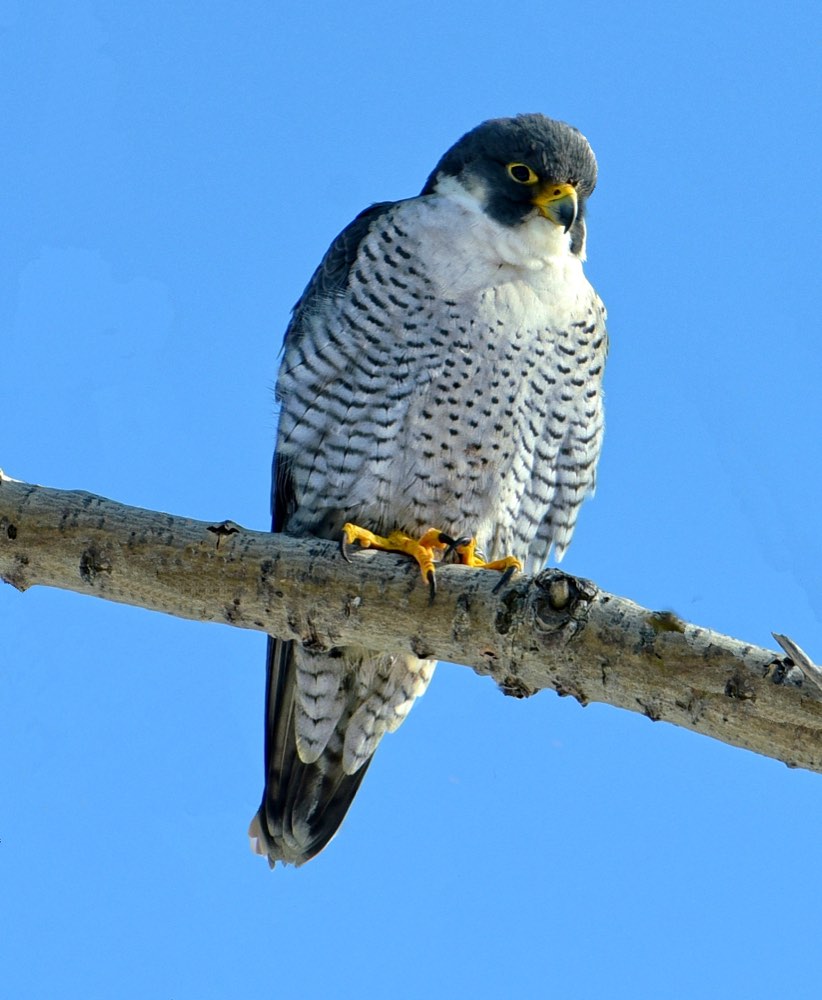
- Only a faint moustache mark, unlike a kestrel or peregrine
- Powerful, direct, rowing flight low to the ground
- Banded tail, dark with narrow pale bars
Similar species
What it sounds like
A rapid, shrill, chattering "kee-kee-kee-kee", higher than a kestrel’s.
Behaviour that gives it away
Hunts by flying fast and low then climbing sharply into a flock, relying on surprise and stamina rather than a stoop.
Habitat & range
Open country, coastlines, prairies and increasingly towns and cities in winter.
When you'll see it
Depending on where in North America you are, it is a winter visitor and a passage migrant, seen mainly in spring and autumn.
What it eats
Small birds caught in flight, plus large insects and small mammals.
Did you know?
It has taken to nesting in towns across the northern plains, using old crow and magpie nests in conifers.

Spot one yourself?
Point your camera at any bird and Aviarist identifies it in seconds — then logs it to your life list.
Get Aviarist on Google Play
More backyard birds
.jpg)
_440571831.jpg)
Other apps we make