How to Identify aChipping Sparrow
Spizella passerina · 4.7–5.9 in (12–15 cm)
Male vs. female
Male
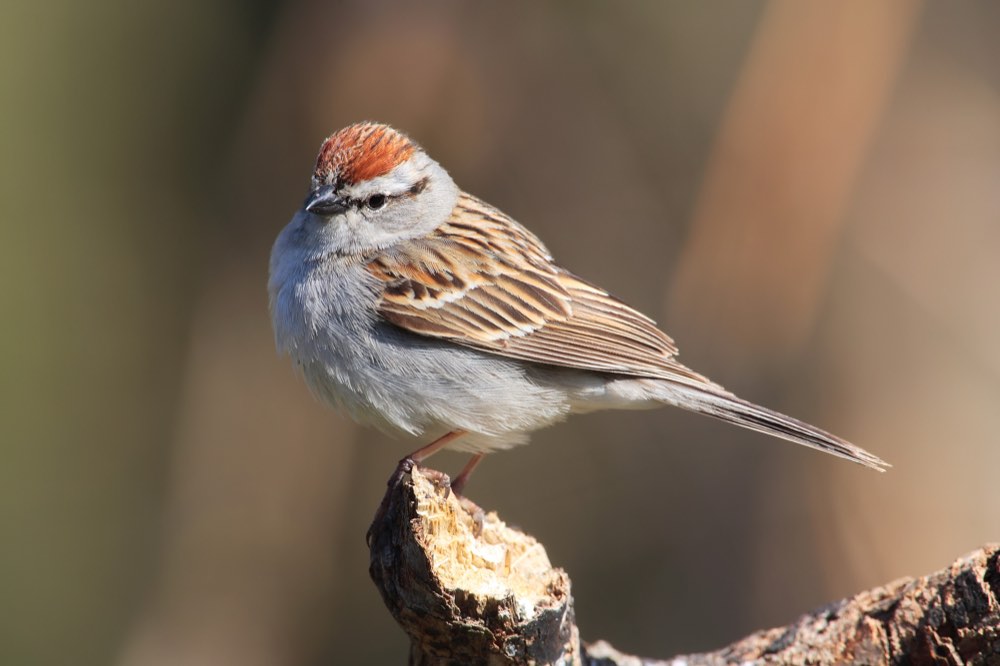
Breeding bird has a rufous crown, white eyebrow, black line through the eye, and a clean gray unstreaked breast.
Female
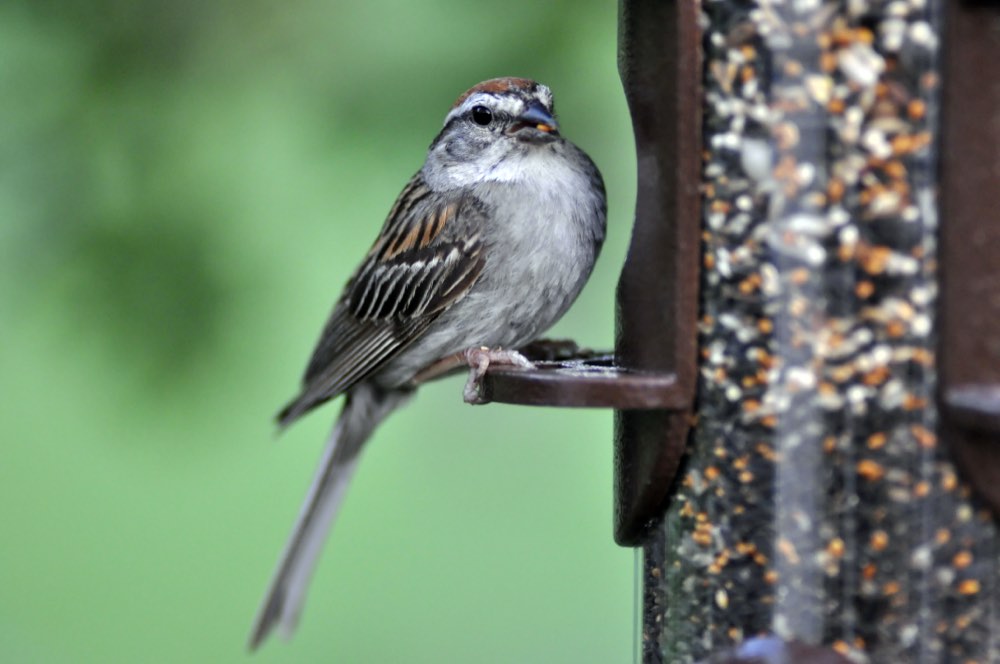
Like the male; winter birds of both sexes are duller with a browner, streaked crown.
Male photo: Mdf, Edited by Fir0002 / Wikimedia, CC BY-SA 3.0 · Second photo: Todd Hartz / Wikimedia, CC BY-SA 2.0
Field marks
- Bright rusty cap (breeding)
- White eyebrow over a black eye-line
- Clean, unstreaked gray underparts
- Small and slim with a notched tail
Similar species
What it sounds like
A dry, mechanical trill on one pitch, like a sewing machine running.
Behaviour that gives it away
Lines its nest so thickly with hair that the old name for it was the hairbird.
Habitat & range
Lawns, parks, open woods, and gardens across most of North America in summer.
When you'll see it
Depending on where in North America you are, it is present all year and a summer visitor that arrives to breed.
What it eats
Seeds and insects gathered on the ground and at feeders.
Did you know?
Its dry, mechanical trill is one of the most common — and most overlooked — sounds of a summer yard.
Spot one yourself?
Point your camera at any bird and Aviarist identifies it in seconds — then logs it to your life list.
Get Aviarist on Google Play
More backyard birds


Other apps we make