How to Identify aCooper's Hawk
Astur cooperii · 14.6–17.7 in (37–45 cm)
Male vs. female
Male
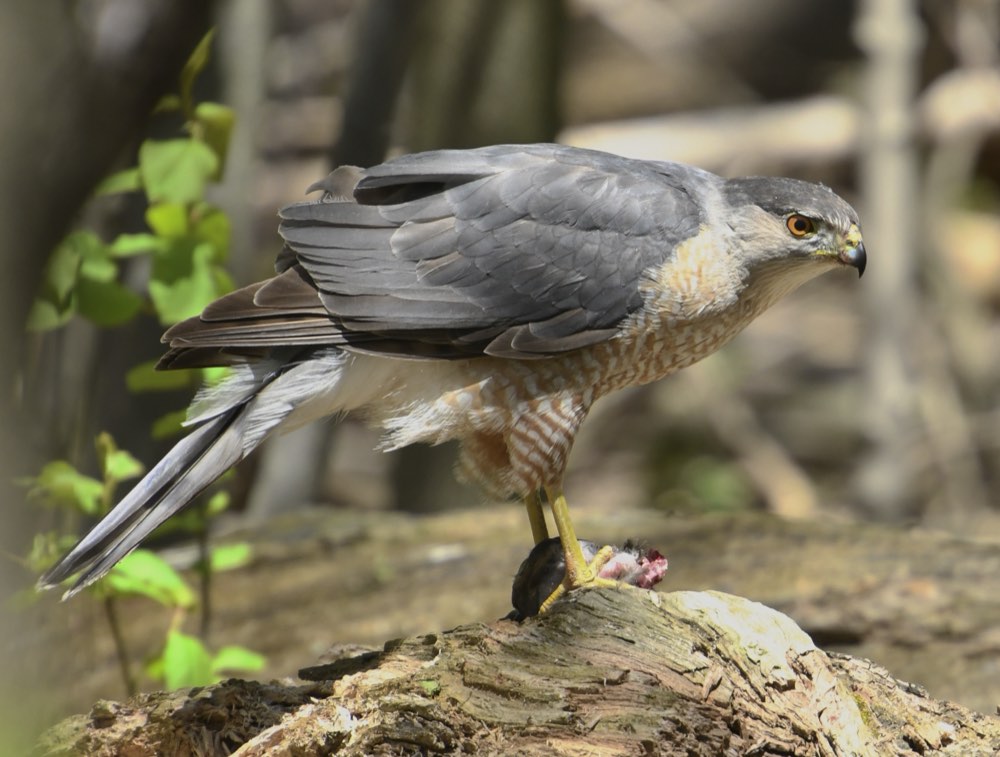
Blue-gray above, finely rust-barred below, with red eyes and a long, rounded, white-tipped tail.
Female
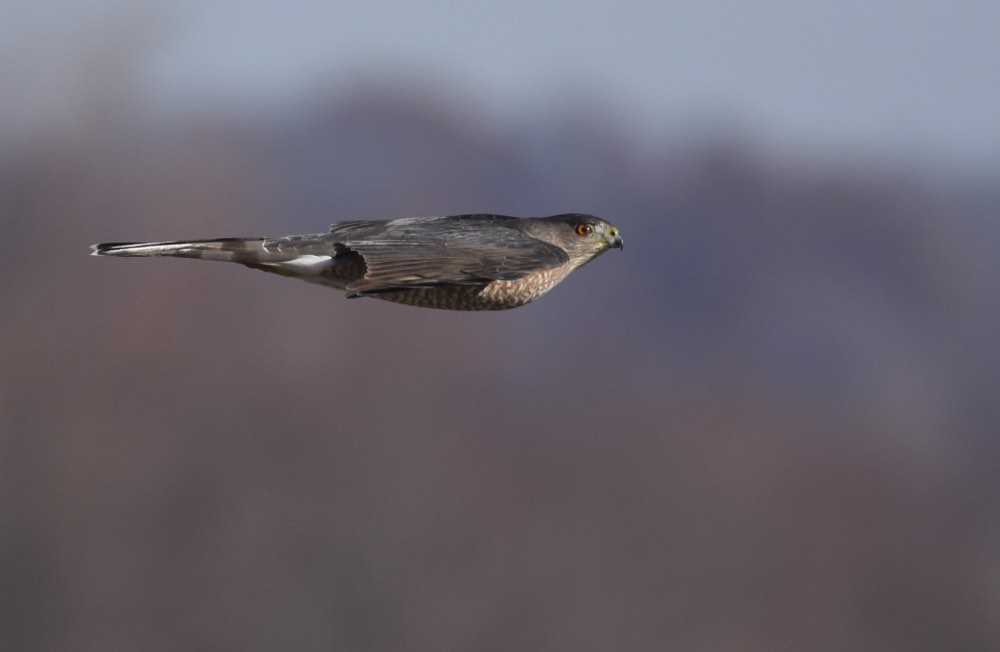
Same pattern but distinctly larger; juveniles are brown with streaked underparts.
Male photo: Mykola Swarnyk / Wikimedia, CC BY-SA 3.0 · Second photo: Andy Reago & Chrissy McClarren / Wikimedia, CC BY 2.0
Field marks
- Long, rounded, banded tail with a white tip
- Short rounded wings for weaving through trees
- Rusty-barred breast, blue-gray back (adults)
- Flap-flap-glide flight
Similar species
What it sounds like
A loud, flat, repeated "cak-cak-cak", usually heard near the nest.
Behaviour that gives it away
Flies with several quick flaps followed by a glide, and hunts backyard feeders by approaching under cover.
Habitat & range
Woodlands, leafy suburbs, and backyards across most of North America.
When you'll see it
Present all year in North America.
What it eats
Mainly medium-sized birds, seized in fast, agile pursuit through cover.
Did you know?
Its taste for feeder birds means the hawk you see scattering your sparrows is usually a Cooper's.
Spot one yourself?
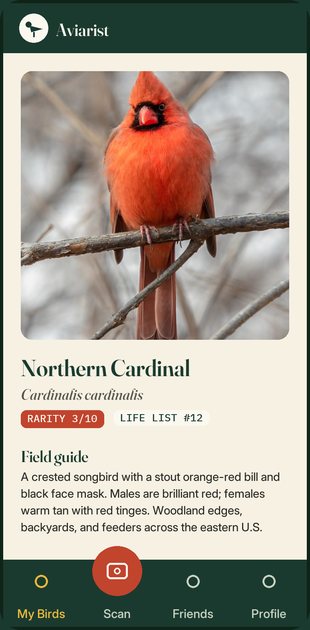
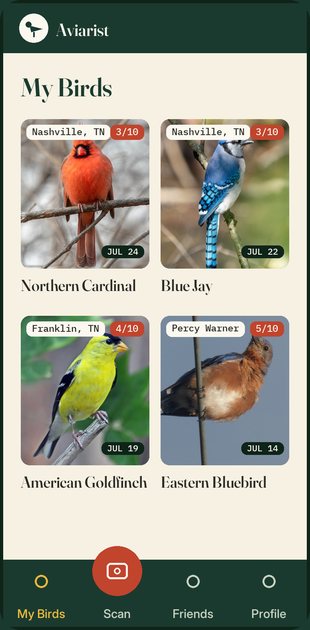
Point your camera at any bird and Aviarist identifies it in seconds — then logs it to your life list.
Get Aviarist on Google Play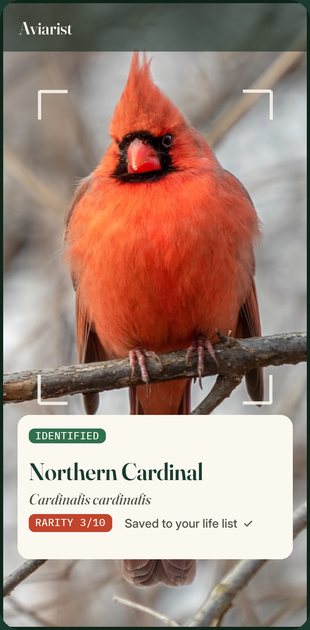
More backyard birds

.jpg)
Other apps we make