How to Identify aBald Eagle
Haliaeetus leucocephalus · 27.9–37.8 in (71–96 cm)
Male vs. female
Male
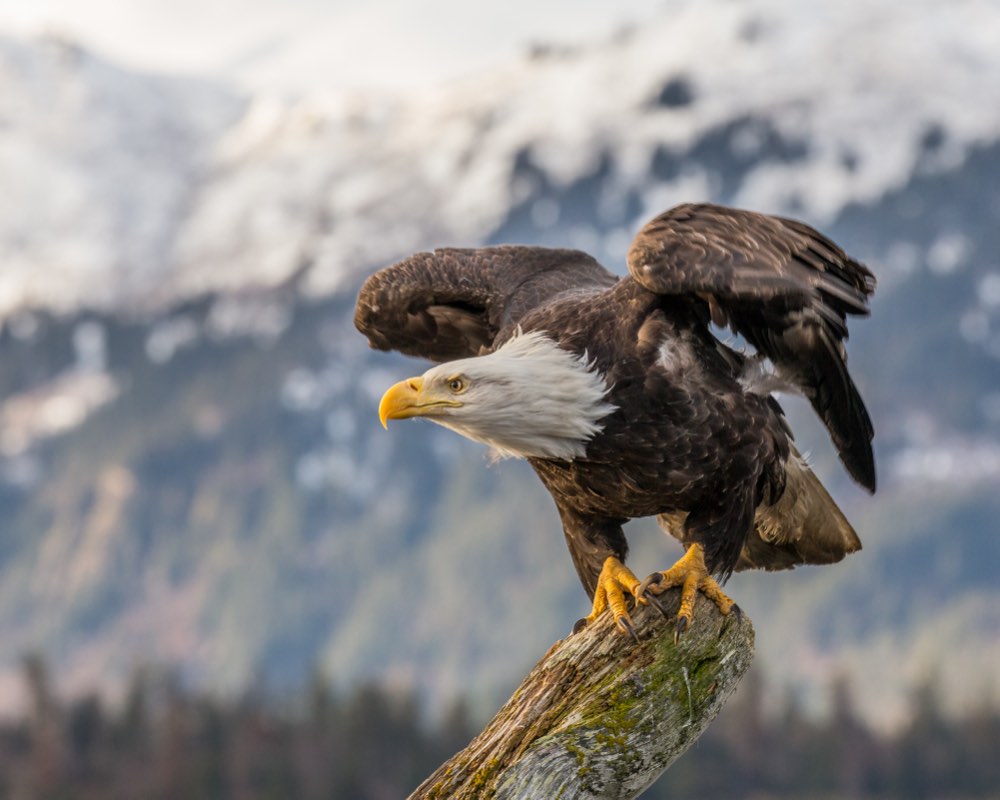
Dark chocolate-brown body with a clean white head and tail and a heavy yellow bill (adults).
Female
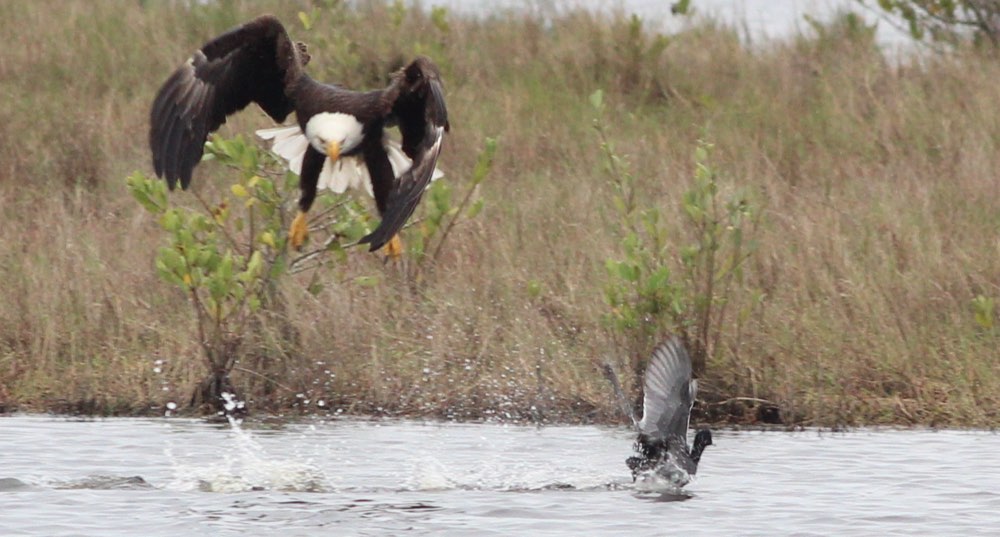
Identical in plumage but larger than the male.
Male photo: Andy Morffew from Itchen Abbas, Hampshire, UK / Wikimedia, CC BY 2.0 · Second photo: gary_leavens / Wikimedia, CC BY-SA 2.0
Field marks
- White head and tail on a dark body (adults)
- Massive yellow hooked bill
- Broad, plank-flat wings when soaring
- Juveniles all-dark with mottled white
Similar species
What it sounds like
A surprisingly weak series of high chirps and whistles — nothing like the scream used for it in films.
Behaviour that gives it away
Harasses Ospreys until they drop their catch, and builds the largest tree nests of any North American bird.
Habitat & range
Lakes, rivers, and coasts across North America, wherever there is open water and fish.
When you'll see it
Present all year in North America.
What it eats
Mostly fish, plus waterfowl and carrion; often pirates food from other birds.
Did you know?
Once nearly wiped out by DDT, the Bald Eagle rebounded and left the U.S. endangered list in 2007.
Spot one yourself?
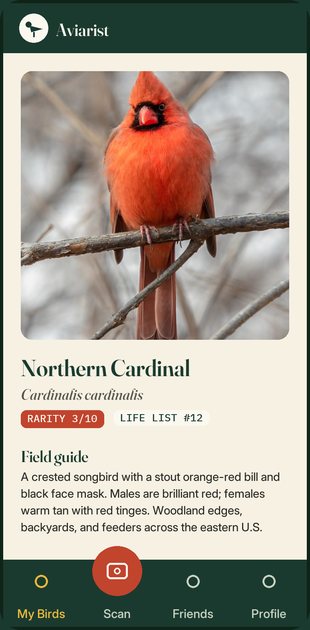
Point your camera at any bird and Aviarist identifies it in seconds — then logs it to your life list.
Get Aviarist on Google Play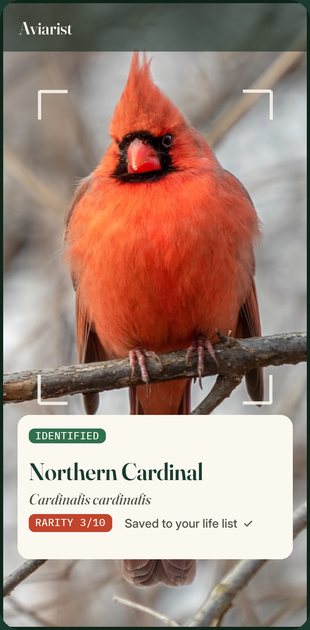
More backyard birds
.jpg)
_32.jpg)
Other apps we make