How to Identify aEvening Grosbeak
Coccothraustes vespertinus · 6.3–8.7 in (16–22 cm)
Male vs. female
Male
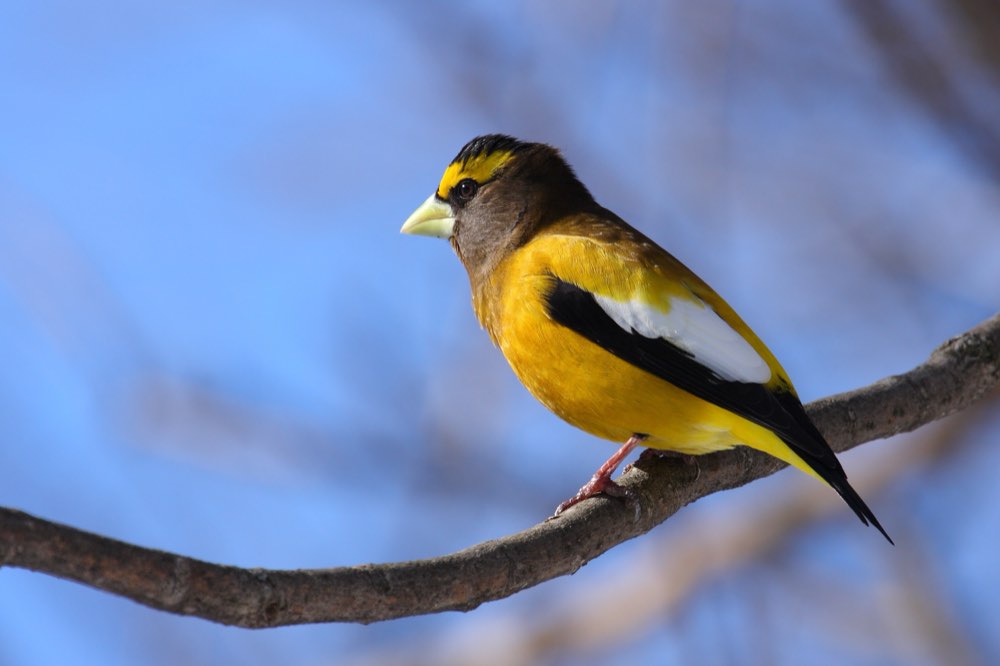
Golden-yellow body shading to a dark brown head, a bright yellow eyebrow, black wings with huge white patches and a massive greenish bill.
Female
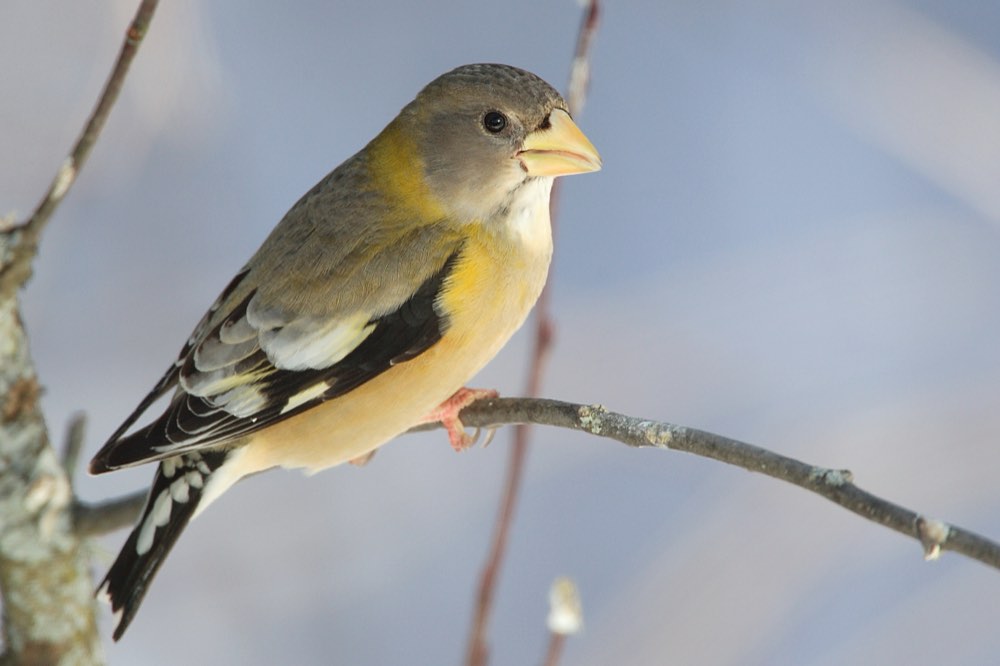
Soft gray with yellow-tinged flanks, black-and-white wings and the same massive bill.
Male photo: Cephas / Wikimedia, CC BY-SA 3.0 · Second photo: No machine-readable author provided. Mdf assumed (based on copyright claims). / Wikimedia, CC BY-SA 3.0
Field marks
- Enormous pale conical bill
- Big square white patches in black wings
- Male’s bold yellow eyebrow stripe
- Heavy, thick-necked body
Similar species
What it sounds like
A loud ringing "cleer" or "peer", plus burry chattering from flocks.
Behaviour that gives it away
Its bill can crush cherry and olive pits that other finches cannot open, giving it food nothing else can reach.
Habitat & range
Conifer and mixed forest in the North and West; irrupts south to feeders in some winters.
When you'll see it
Depending on where in northern, western and eastern North America you are, it is present all year and a winter visitor.
What it eats
Seeds, buds, berries and, at feeders, large quantities of sunflower seed.
Did you know?
Its bill can crack open cherry and olive pits, a job too heavy for almost any other North American songbird.
Spot one yourself?
Point your camera at any bird and Aviarist identifies it in seconds — then logs it to your life list.
Get Aviarist on Google Play
More backyard birds


Other apps we make