How to Identify aSwamp Sparrow
Melospiza georgiana · 4.7–5.9 in (12–15 cm)
Male vs. female
Male
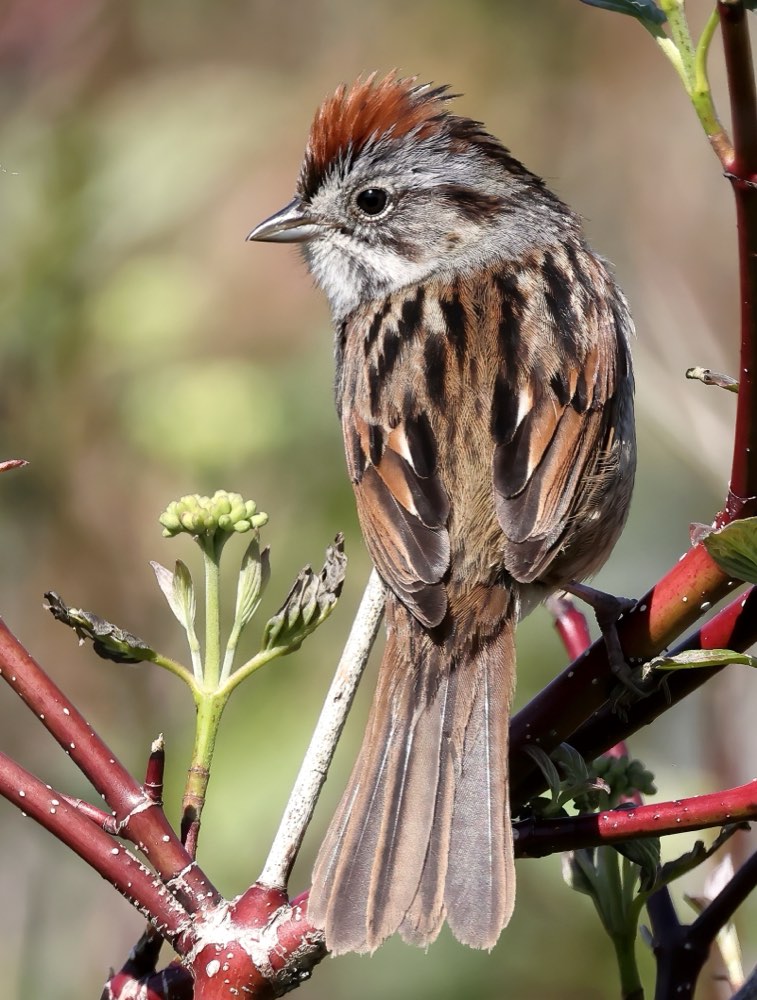
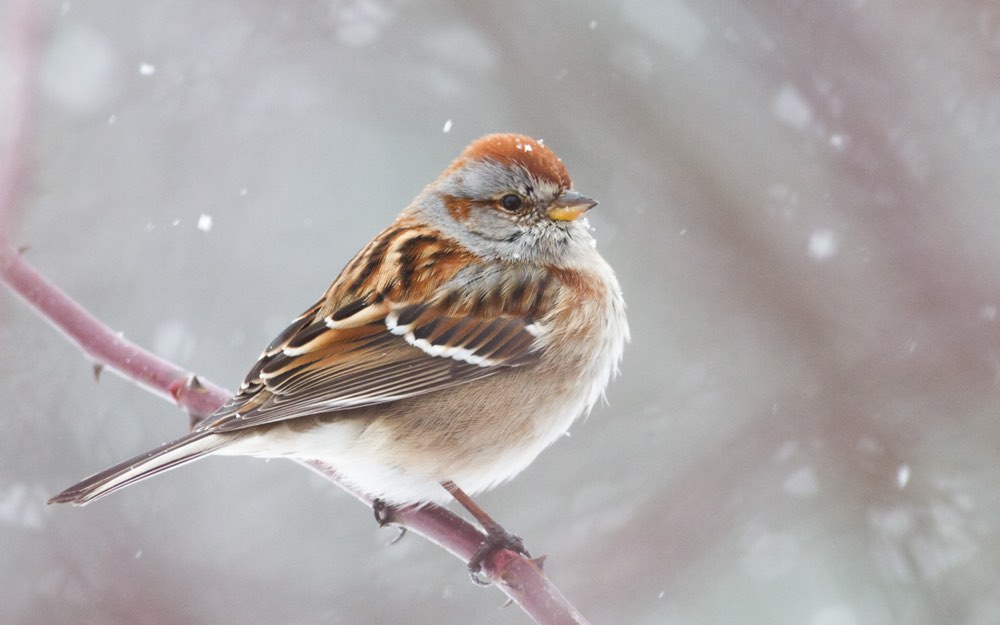
Bright rusty wings and cap, clean gray face and chest, white throat and a plain unstreaked breast. Sexes look alike.
Female
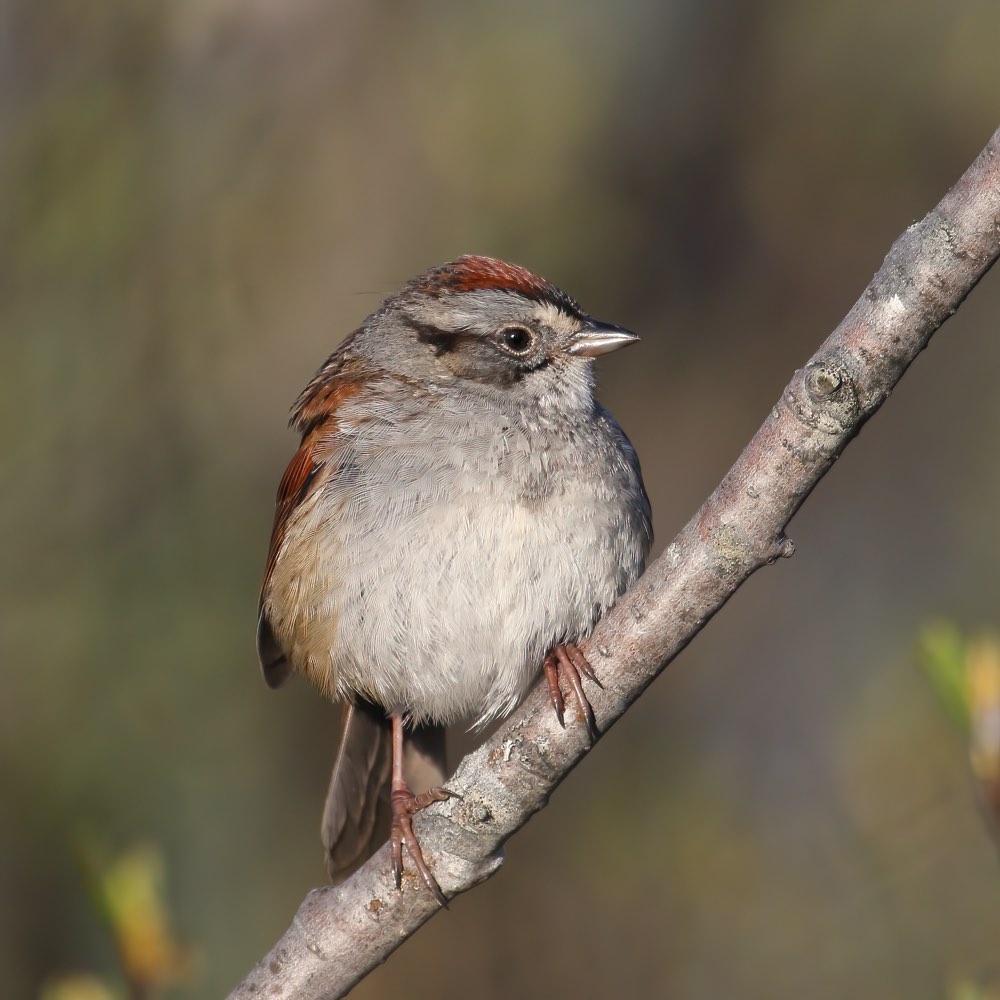
Identical to the male in the field, with a duller cap.
Male photo: Cephas / Wikimedia, CC BY-SA 4.0 · Second photo: Cephas / Wikimedia, CC BY-SA 3.0
Field marks
- Bright rusty wing panel
- Gray face and chest without streaking
- Clean white throat
- Rusty crown in breeding plumage
Similar species
What it sounds like
A slow, sweet, musical trill on one pitch, richer and slower than a Chipping Sparrow’s.
Behaviour that gives it away
Has longer legs than its relatives and wades in shallow water, sometimes sticking its head under to grab prey.
Habitat & range
Cattail marshes, wet meadows, bogs and shrubby wetland edges.
When you'll see it
Depending on where in eastern, central and northern North America you are, it is present all year and a winter visitor.
What it eats
Insects and aquatic invertebrates in summer, seeds in winter.
Did you know?
Its legs are noticeably longer than other sparrows’, letting it wade and forage in shallow water.
Spot one yourself?
Point your camera at any bird and Aviarist identifies it in seconds — then logs it to your life list.
Get Aviarist on Google Play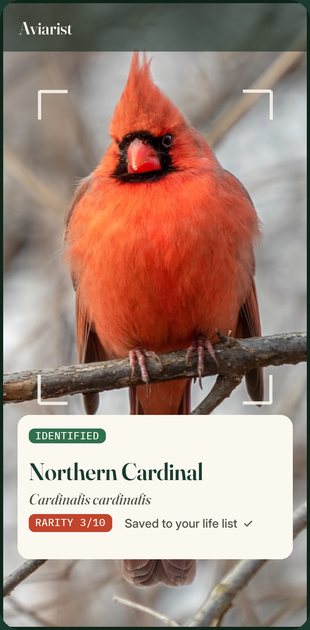
More backyard birds


Other apps we make